Introduction
In this article, we focus on discussing how different languages can be used in a multilingual educational project setting. In a case study on international education development, we use the term “linguistic landscape” to describe the practices that were used in in-service training for vocational teachers in Egypt. This training was planned and implemented under the Capacity Building Vocational Education and Training project (2023–2024) that is funded under Erasmus+ programme. In this article, we provide some background on the project goals and activities, describe practices regarding how the different languages were used, and, based on this we define the linguistic landscape specific to this project and discuss its role in terms of the project goal to ensure good learning experiences for all training participants. Finally, we consider some educational benefits of the multilingual collaboration that were identified in our case project and that align with earlier international projects that have been discussed in research on the topic. Before going further into the case, as the conceptual framework, we reflect on the multi-language approach and the concept of linguistic landscape in educational settings.
Multi-language Approach and Linguistic Landscape as an educational tool
According to Okal (2014), the term “multilingualism,” which originates from the Latin words “multi” (many) and “lingua” (language), refers to a person’s ability to express themselves in many languages at a level equivalent to that of a native speaker. Nonetheless, in a multilingual setting, it is typical that individuals are more proficient in one of the languages, and less skilled in the others. This article considers multilingualism as an inclusive term that encompasses bilingualism, trilingualism, and in general the situations where people speak more than one language, even if the terms are sometimes used interchangeably.
In today’s globalized world, multilingualism is highly prized because it improves communication skills, leads to new professional opportunities, expands career prospects and promotes intercultural understanding. Worldwide, multilingual education promotes multilingualism and enhances linguistic, cognitive, and sociocultural abilities. Nevertheless, there are difficulties in creating and putting into practice inclusive language policies, necessitating thoroughly thought-out resource allocation, cultural preservation, and linguistic rights (Malakar & Datta, 2023).
As a field of study, linguistic landscape still fairly new, but its importance has grown especially in sociolinguistics over the last two decades (Bernardo-Hinesley, 2020). The term is commonly used to describe how language is visibly used in public areas, impacting how people engage with their surroundings and communicate in a variety of settings (see, e.g., Calovkova, 2019; Napu, 2024). Landry and Bourhis (1997; as cited in Bernardo-Hinesley, 2020, p. 14) define linguistic landscape as something where “…the language of public road signs, advertising billboards, street names, place names, commercial shop signs, and public signs on government buildings combines to form the linguistic landscape of a given territory, region, or urban agglomeration”. The linguistic landscape offers a framework for analyzing language usage within social spaces and settings. This analysis helps shape language ideologies, increases awareness of power dynamics, and identifies how the presence or absence of certain languages – such as in public websites – reflects the relative status and influence of various language communities (Bernardo-Hinesley, 2020).
Although many scholars follow the definition of Landry and Bourhis, nowadays the term linguistic landscape varies in scope from researcher to researcher. For example, Kallen (2023) understands the concept of linguistic landscape as “a temporally and spatially dynamic fusion of text, materiality, and discourse” (p. 247). Based on this idea, the term can be used for language learning as a pedagogical tool that enables learners to critically engage with languages across various dimensions. This means that the focus is not only on indications of multilingualism that have to do with translation. Instead, understanding the type of linguistic landscape (whether there are one or many languages, how are they used, etc.) can foster language awareness by highlighting how language shapes communication and societal interactions. This, in turn, can provide learners with skills to navigate and interpret multiple languages and cultural nuances. Furthermore, learning does not have to be integrated directly only for language learning; it can be connected to the growth and learning of individuals and communities in the broader setting. For example, applying the reflections of Dagenais (2009), Duizenberg (2020) and Enfield (2008) on the languages used in public signage, we can conclude that using one or several languages in education can have an effect on constructing individual and collective identities.
Overall, earlier research has identified a multitude of educational benefits arising from multilingual collaboration (Algryani & Syahrin, 2021; Huang et al., 2023), including enhanced intercultural understanding (Muriungi & Mudogo, 2021; Porto, 2019, Verzella & Tommaso, 2014), improved communication skills (Saito et al., 2020), and expanded educational horizons (Mouboua, Atobatele, & Akintayo, 2024; Ramirez-Marin et al., 2021). It is these kinds of benefits that were identified also in the case of our project, as discussed below.
International educational projects play an important role in facilitating learning and they have an impact on learners’ identities by providing platforms for cross-cultural communication, by increasing knowledge and understanding on different contents, by enhancing intercultural competence, and by improving language skills. As an example of the types of practices that can enhance communication in both social and professional settings, in the following we describe the practices that we developed in an education development project in Egypt. Four of the article authors were actively involved in planning and implementing this project, and the Egyptian authors also acted as the interpreters in the project activities.
The linguistic landscape in the education development project in Egypt
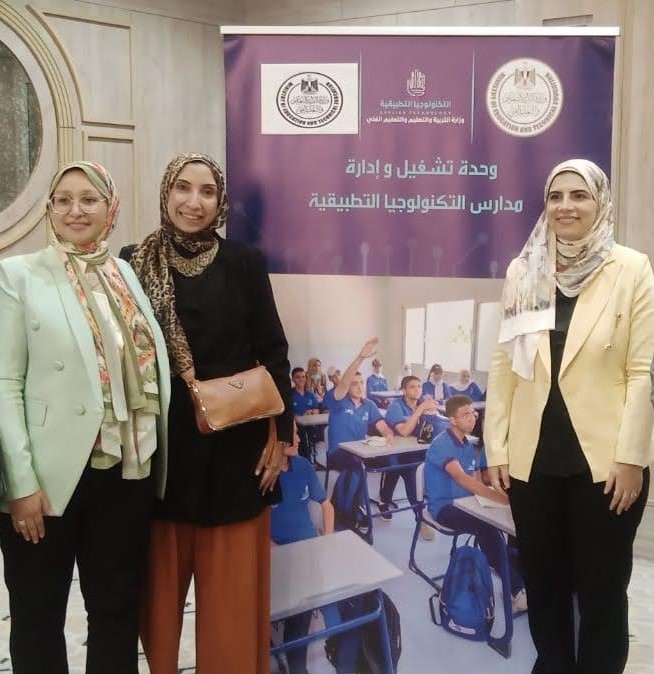
Running from 2023 to 2024, the project Advanced Competencies of Teachers to Improve Vocational Education in Applied Technology Schools (ACTIVE-ATS) included both three intensive weeks in Cairo and online teaching. The main partners were the Häme University of Applied Sciences (HAMK) in Finland which acted as the project coordinator, the Ministry of Education and Technology Education (MoETE) in Egypt, Helwan University in Egypt, and IHK-Projektgesellschaft mbH (IHKGP) in Germany. The objective of the project was to strengthen the capacity of technical and vocational education and training (TVET) teachers and trainers in Egypt in a way that helps them to work in competence-based TVET which is implemented in cooperation with operators from the world of work. The project goal was to enhance the TVET teachers’ and trainers’ competencies in pedagogy, student-centred approaches and work-based learning of technical specialists. Teachers and trainers (44 persons altogether) from five Applied Technology Schools (ATS) in Egypt participated in the pedagogical enhancement programme that was piloted during the project and developed further for broader use in the TVET sector in Egypt. The on-the-job period at the company for these same teachers and trainers was planned in collaboration with the companies that were involved in the project, and it was also implemented during the project.
None of the project participants had English as their native language. English was used because it was the language that all educators were able to use both in verbal and written communication. The ability to use English was also one of the recommended criteria for selecting the participants (teachers and trainers from ATS schools) for the pedagogical programme of the project. In practice, not all participants were comfortable with writing and speaking in English, and some used their native language, Arabic, in their communications. This does not mean that they were not able to use English at all, but it was obvious that some participants could use English for communication more effortlessly than others. Because of this, there was a range of proficiency levels among participants that led the educators to develop practices which would ensure active participation in the project activities and guarantee comprehension of the teaching and assignments.
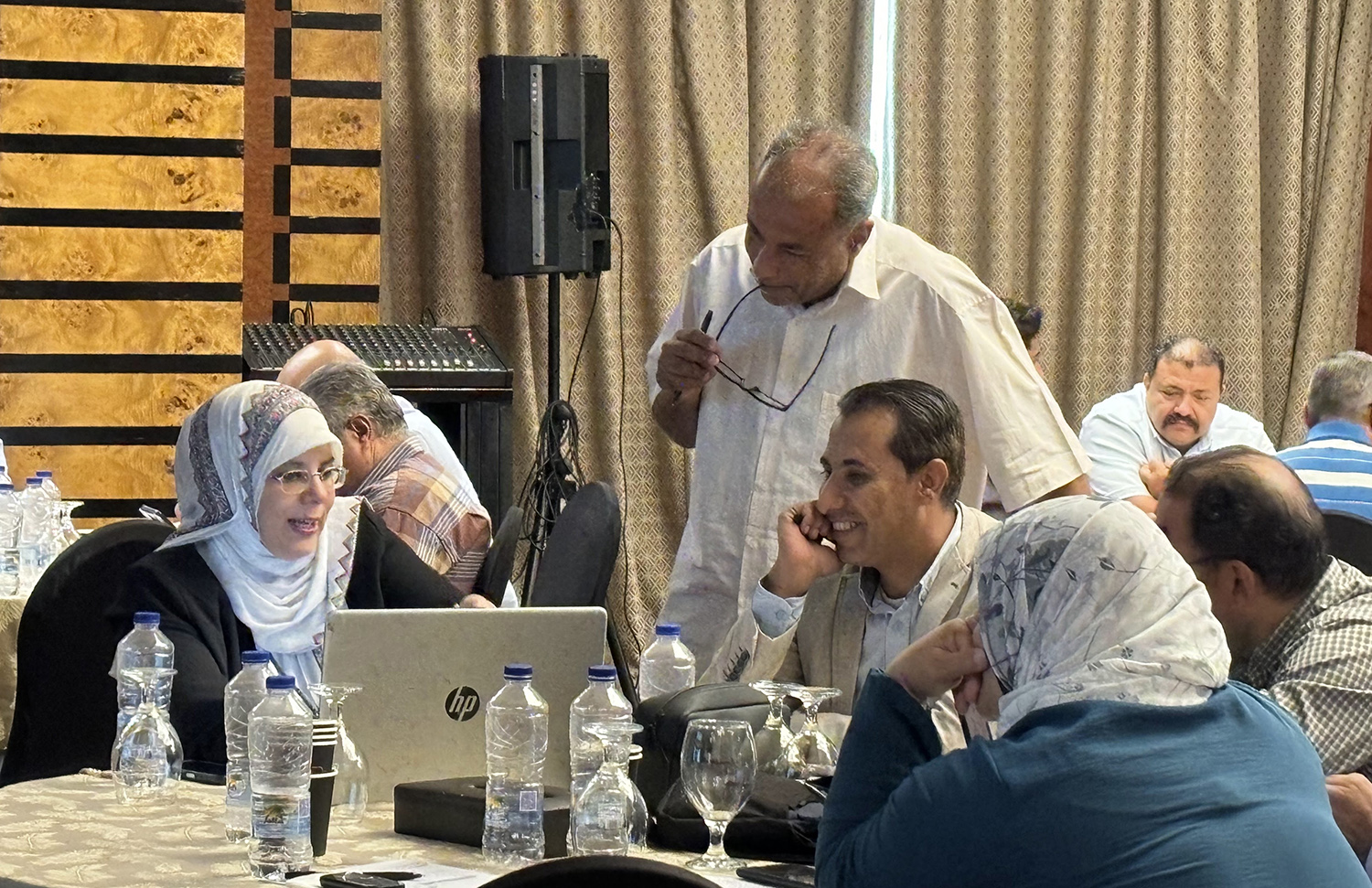
The most important practice to ensure the participants’ involvement in the training was simultaneous interpretation during the off-line and online training events. The junior and more senior researchers, who acted also as interpreters in the project, were affiliated with one project partner, Helwan University in Egypt. During the intensive training weeks held in Cairo and online, they provided simultaneous translation services for all training sessions. At the same time as the Finnish and German trainers delivered the training content in English, the translators accurately and promptly rendered this content into Arabic, enabling Egyptian trainees to more easily receive the training in their native language and to understand the information. Hence, simultaneous interpretation was a practice that ensured a good learning process for the trainees. The educators were also requested to send their slides for the training events in advance, so that the interpreters could prepare for the events.
During the offline training weeks, the interpreters’ role extended from providing mere verbal translation to relaying feedback and inquiries from the trainees in Arabic into English. This allowed all trainers to receive constructive feedback and respond immediately. The project activities also made the interpreters aware of new pedagogical concepts and methods that they could apply in their university teaching practices in Arabic. As their own educational background was in education, the interpretation task aligned quite well with their own professional development interests. In this way, the role of an interpreter was broader in the communication, and through this activity they became fully, and in multifaced ways, participants of this training community. This interactive process underscores the vital role of simultaneous translation in creating an inclusive educational environment where communication between different cultures is facilitated and language barriers are minimized, thereby enhancing the quality of education and training in international projects.
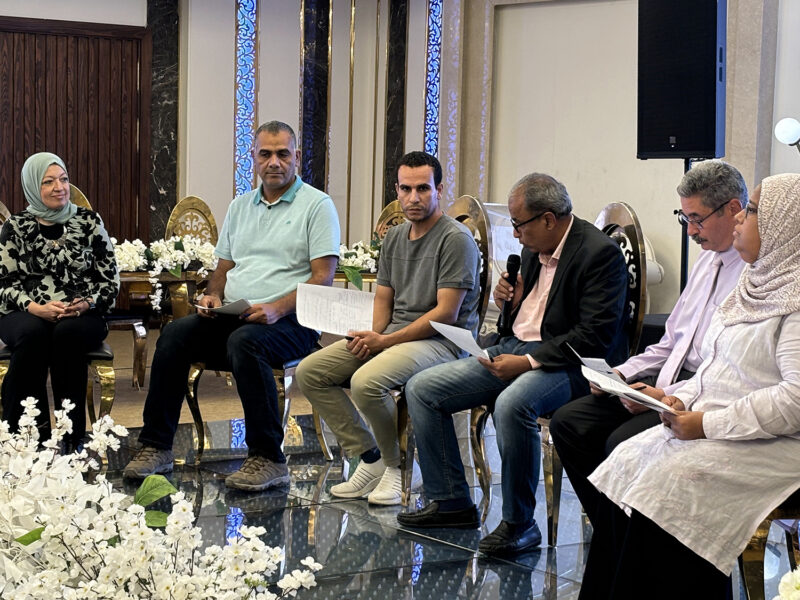
In addition to the central role of simultaneous interpretation, there were also other practices for using two languages in the project. The off-line intensive weeks used debate (e.g., Tomperi, Korhonen & Mielityinen 2022) and panel as the pedagogical methods. These methods were introduced by the Finnish educator explaining the principles, benefits, and learning objectives of the methods, and they also explained that the debate discussion and the panel will be implemented in Arabic. At these implementations, whispering interpretation was used for the educators who did not have any Arabic language skills. These two situations highlighted the difference in how the participants who were not comfortable with using English were able to participate when they could use their native language. The trainee teachers who were communicating less actively in the group activities that used simultaneous interpretation were now, through this different practice, able to express themselves in the whole group discussion verbally much more actively. These pedagogical methods – using the Arabic language as the main language in the discussion and combining this with the whispering interpretation – received highly positive comments also on the written feedback that the trainees gave.
While working in small groups, the participants used Arabic by themselves, both during the off-line training and in the breakout room activities of the online training events. As there were many participants among the training groups that were comfortable with using English (e.g., some were English teachers at an ATS school), in several training situations they acted as the group work presenters in English. They also provided simultaneous translation into Arabic during their group presentations. In the individual assignments, there was also flexibility to develop the task further by using both languages, for example, so that the final version of the assignment, which was to be created as an e-Portfolio (see, e.g., Rodrigues, Pinto, & Pires, 2018), could be done in Arabic.
All members of the ACTIVE-ATS project also used some technological tools that facilitate translation into different languages, such as the Google Translate machine translator that provides many language options. This practice supported the communication and learning process in alignment with the learning objectives.
Table 1 below visualises the project activities and demonstrates the linguistic landscape in the collaboration.
| Languages used | Function | Examples |
|---|---|---|
| English (official language in the project) | Project coordination | Zoom meetings with EU partners |
| Project implementation | Training events (simultaneous interpretation or whispering interpreting to Arabic) | |
| Educational material development (English, translated to Arabic) | Manuals and toolkits | |
| International reporting | Final reports to the EU commission | |
| External visibility, dissemination | Bilingual social media posts and banners, web pages | |
| Arabic | Local engagement | Awareness sessions for Egyptian teachers |
| Cultural/local context adaptation | Localization of project examples | |
| Project implementation | Local stakeholder meetings, training events (simultaneous interpretation) | |
| Study materials | Assignments, pedagogical activities (translated from English) | |
| External visibility, dissemination | Bilingual social media posts and banners, web pages | |
| Finnish | Project communication among Finnish project members | Internal meetings, informal communication |
| Study materials translated and developed further from Finnish into English, and further into Arabic | Training and workshop materials, assignments | |
| German | Project communication among German project members | Internal meetings, informal communication |
| Study materials translated and developed further from German into English and further into Arabic | Training material |
This visualisation of the language practices at the project itemises the details related to the multilingual collaboration among the participants, showing how different languages were used for different functions. The examples for each function in table 1 further clarify the linguistic landscape.
Discussion
The ACTIVE-ATS project in Egypt exemplifies the advancement of both multilingual and intercultural education. In this case, it enhances awareness of different learning cultures by uniting educators from Egypt, Finland, and Germany, which in turn fostered mutual appreciation for diverse educational approaches and cultural perspectives. In addition, such experiences help the participants to develop vital intercultural skills through engaging in multilingual communication and interpretation, enabling them to effectively bridge linguistic and cultural gaps. Moreover, the project’s collaborative environment was seen to encourage reflective learning, prompting individuals to critically assess their own cultural assumptions and educational practices.
The pedagogical goal in international educational development projects at HAMK is usually to engage all project participants in the collaborative process, to provide possibilities for ownership of their own learning process, and also to encourage them to contribute to the training content. In this setting, it is important to focus on the linguistic landscape of each project and to clarify this also to the stakeholders. Critical lenses should be used when assessing the learning products and process in the context of a linguistic landscape that involves several languages. In an education development project like this, it is an essential learning objective for all participants, trainees and trainers alike, to gain communication skills and awareness on the significance of language in the learning process. The purpose of this is to embrace the international and multilingual context, and these kinds of projects can help participants to develop a deeper understanding of different cultures, improve their foreign language proficiency, and engage in meaningful cross-cultural interactions. Hence the focus is not to become highly proficient in the foreign language but to develop practices that enable every participant to understand the challenges and central aspects of communication in a way that helps with developing communicative practices that improve intelligibility, especially in multicultural and multilingual contexts. Thus, international projects serve as powerful tools for language and cultural exchange by fostering intercultural competence and by providing authentic communication experiences.
Conclusion
Overall, this discussion on experiences from the project illustrates the interconnection between several key elements in multilingual education. Firstly, examining the multilingual context and the exchange between languages provides a foundation for understanding the mechanisms of linguistic interaction and cultural exchange within diverse educational and global settings. This highlights the role of language in constructing identity and facilitating multilingual communication, in turn making it possible to further examine the concept of linguistic landscape. Secondly, this study shows that it is essential to further define the notion of linguistic landscape. This will not only help with using a language and its translations in public spaces, but also enhance how the concept of linguistic landscape can be used in educational contexts and for learning purposes. Indeed, the definition of this concept highlights the intrinsic relationship between learning and language, turning focus on its functional implementation in pedagogy. Within this framework, our project in Egypt served as an empirical case study, demonstrating how these theoretical concepts can be applied into practice in international education development. Hence, this analysis of the language practices within our project demonstrates how identifying the case-specific linguistic landscape can act as a catalyst for improved educational performance and facilitate effective communication among participants from varied linguistic backgrounds. As seen in this case study, we were able to identify several educational benefits that align with earlier research on the topic. These benefits that arise from multilingual collaboration included, for example, enhanced intercultural understanding, improved communication skills, and expanded educational horizons. Together with earlier research, these findings show how a comprehensive understanding of the multilingual context, coupled with the strategic application of the linguistic landscape concept, can yield significant positive outcomes in the quality and international engagement of educational practices.
As this study demonstrates, it is useful to approach multilingual projects through a coherent progression that starts with the educators building a shared understanding on the roles of different languages that will be used in the collaboration. This applies both to the official project language and to the other languages used in the project. As discussed above, when this understanding is then used to plan the practical implementation of collaborative activities and to identify the educational objectives and their benefits, the project has a good foundation on which to build. Such increased understanding, then, can lead to better inclusion of all the stakeholders and make a more significant impact on their learning.
References
- Algryani, A., & Syahrin, S. (2021). Utilizing learners’ linguistic landscape as a pedagogical resource in the translation classroom: A case study in the Sultanate of Oman. Arab World English Journal, 12(1), 357–373. https://doi.org/10.24093/awej/vol12no1.24
- Bernardo-Hinesley, S. (2020). Linguistic landscape in educational spaces. Journal of Culture and Values in Education, 3(2), 13–23. https://doi.org/10.46303/jcve.2020.10
- Calovkova, S. (2019). Linguistic landscape. Linguistic Bulletin, 26, 124–129. https://doi.org/10.31651/2226-4388-2019-26-124-129
- Dagenais, D., Moore, D., Sabatier, C., Lamarre, P., & Armand, F. (2009). Linguistic landscape and language awareness. In E. Shohamy & D. Gorter (Eds.), Linguistic landscape: Expanding the scenery (pp. 253–269). Routledge.
- Duizenberg, M. R. (2020). Linguistics landscape: A cross culture. Linguistics and Culture Review, 4(1), 15–28. https://doi.org/10.37028/lingcure.v4n1.17
- Enfield, N. J. (2008). Natural deixis and the social organization of acts of reference. Cambridge University Press.
- Huang, Y.-M., Zhussupova, R., Feng, Y., & Shadiev, R. (2023). Intercultural competence development through a tele-collaborative project supported by speech-enabled corrective feedback technology. Journal of Computer Assisted Learning. https://doi.org/10.1111/jcal.12782
- Kallen, J. L. (2023). Linguistic landscapes: A sociolinguistic approach. Cambridge University Press. https://doi.org/10.1017/9781316822807
- Malakar, J., & Datta, S. (2023). Exploring the benefits and challenges of multilingual education: A theoretical analysis. International Journal for Multidisciplinary Research (IJFMR), 5(5), 1–4.
- Mouboua, P. D., Atobatele, F., & Akintayo, O. (2024). Language as a tool for intercultural understanding: Multilingual approaches in global citizenship education. Magna Scientia Advanced Research and Reviews, 11(1), 19–30. https://doi.org/10.30574/msarr.2024.11.1.0071
- Muriungi, S. W., & Mudogo, B. A. (2021). Linguistic landscape in a multilingual context: A case of Kenyan universities. LLT Journal: A Journal on Language and Language Teaching, 24(2), 450–460. https://doi.org/10.24071/llt.v24i2.3673
- Napu, N. (2024). Linguistic landscapes in multilingual urban settings: Insights from translation perspectives. Studies in English Language and Education, 11(1), 530–548. https://doi.org/10.24815/siele.v11i1.29559
- Okal, B. O. (2014). Benefits of multilingualism in education. Universal Journal of Educational Research, 2(3), 223–229. https://doi.org/10.13189/ujer.2014.020302
- Porto, M. (2019). Does education for intercultural citizenship lead to language learning? Language, Culture and Curriculum, 32(1), 16–33. https://doi.org/10.1080/07908318.2017.1421642
- Ramirez-Marin, F., Blair, N., & Núñez-Figueroa, L. d. (2021). Collaborative online international learning: Language and cross-cultural experiences of university participants. Matices en Lenguas Extranjeras, 15(1), 1–21. https://doi.org/10.17533/udea.mile.n15a02
- Rodrigues, M., Pinto, J., & Pires, A. (2018). ePortfolio as a learning and assessment tool. In I. Kunnari & M. Laurikainen (Eds.), Empowering ePortfolio process. HAMK Unlimited Journal. https://unlimited.hamk.fi/ammatillinen-osaaminen-ja-opetus/eportfolio-learning-assessment-tool
- Saito, R., Thor, M. H., & Inose, H. (2020). Developing intercultural competence and language skills through international online collaborative learning. In C. H. Xiang (Ed.), Multicultural instructional design: Concepts, methodologies, tools, and applications (pp. 712–730). IGI Global. https://doi.org/10.4018/978-1-5225-9279-2.ch033
- Saveleva, L. A., & Lukyanova, M. I. (2021). Implementation of international educational projects as a resource of increasing students’ intercultural intelligence. Современные наукоемкие технологии (Modern High Technologies), 182–186. https://doi.org/10.17513/snt.38515
- Tomperi, T., Korhonen, O., & Mielityinen, S. (2022). Debate as a pedagogical practice: A case study from Finland on teaching international law. Journal of Legal Education, 72(1–2), 156–175.
- Verzella, M., & Tommaso, L. (2014). Learning to write for an international audience through cross-cultural collaboration and text-negotiation. Changing English, 21(3), 310–321. https://doi.org/10.1080/1358684X.2014.927722
Authors
Enas Ahmed Elkadi
Assistant Professor of Comparative Education and Educational Administration, Helwan University, Egypt
Nouran Saleh
Lecturer Assistant at Comparative Education and Educational Administration Department, Faculty of Education, Helwan University, Egypt

Norhan Bahaa
Lecturer Assistant at Comparative Education and Educational Administration Department, Faculty of Education, Helwan University, Egypt


About the project
As part of the ACTIVE-ATS project (Advanced Competencies of Teachers to Improve Vocational Education in Applied Technology Schools, 2023–2024), a Pedagogical Enhancement Development program was designed and implemented for technical and vocational training (TVET) teachers and trainers in Egypt. The program participants also took part in an on-the job learning period in a private sector company. This was a pilot implementation of this new practice, which will be further developed in the TVET sector in Egypt. The project is funded by European Union Erasmus+ programme, Capacity Building (VET).