Introduction
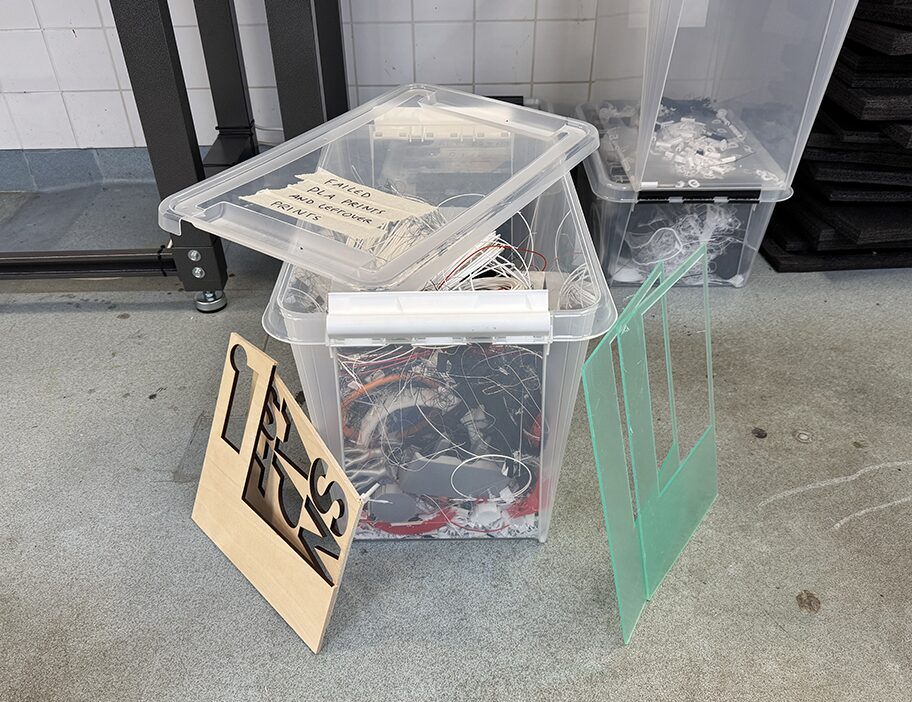
HAMK Design Factory (HDF) first opened its doors in August 2019 (Kiiski, 2019). This was six years ago, and with the passing of time, the facilities get older, people come and go, and the physical elements, including decorative wall panels, chairs, tables, shelving systems, signage and other tangible components that contribute to the aesthetic identity and the practical usability of the HDF environment gradually become worn out. This raises the question: How can we maintain, preserve, and perhaps even revive these deteriorating objects around us?
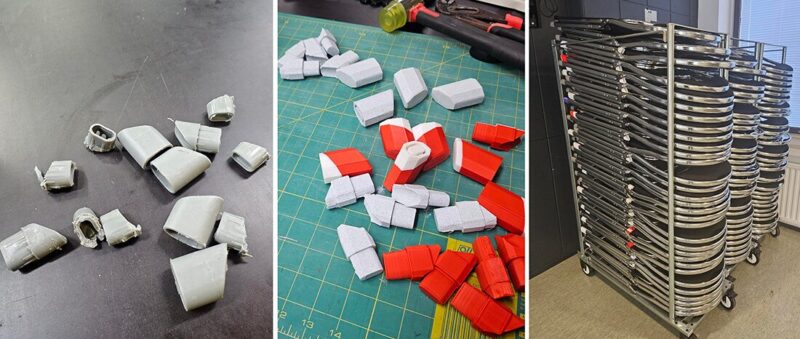
Here at HDF, the students, staff, and other visitors can use a range of different equipment, machines, materials, and the provided spaces for a variety of projects and purposes. One of these projects has been and ongoing drive to find ways to restore missing or broken parts so that we can maintain and improve the quality of life within the HDF spaces. For example, when several chairs in the HDF common areas became unstable due to missing or cracked foot caps, we used 3D modelling and printing to preserve the usability of the objects, also adding some design improvements that make the parts more durable. These parts were replaced with 3D-printed foot caps, extending the lifespan of the furniture without needing to acquire new chairs.
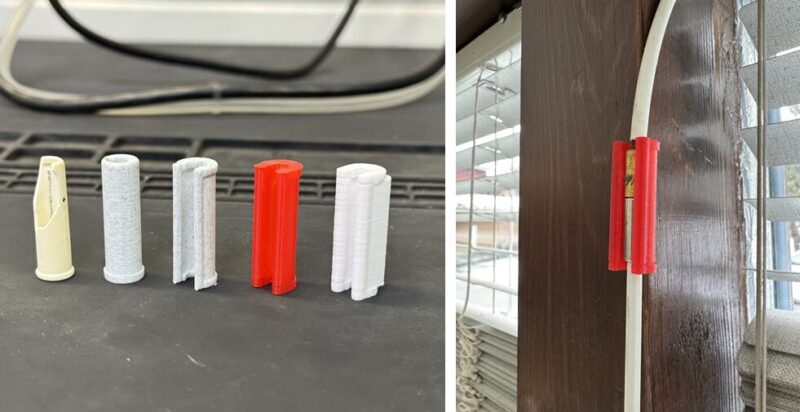
As another example from the HDF facilities, the adjustment rod connectors for window shaders wear down over time, and this prevents using the shaders (figure 1). Rather than completely replacing the adjustment rods, which would also require replacing the shaders, we could instead use 3D modelling to create digital models of the broken parts 3D print the required parts. This way we were able to avoid purchasing brand new equipment by preserving the original parts.
Extending the lifespan of everyday objects
At HDF, camera accessories, small parts of furniture and stage chairs were recognized as some of the first objects in need of replacement parts (figure 2). After years of use, the wear and tear was showing on some of their items. Usually this would mean that they would be destined for disposal, either ending up in landfills or being sent to recycling plants. However, both of these options require energy and resources for the recycling process, resulting in additional emissions and operational costs (Gil Muñoz et al., 2020). But there is also a third option: why not just make it last longer? With the technologies, materials, and equipment at the HDF facilities, parts such as the replacement connector for shader rods and the common area chair footcaps (figures 1 and 2) could be re-created or improved in-house. This is where 3D printing, and laser cutting and engraving can open entirely new possibilities for creating more sustainable options.
With 3D printing, replacement parts that are no longer produced, or that were never available as individual pieces, can be recreated through 3D modelling. Custom pieces and small components can be designed and printed on demand using durable, recyclable, and leftover filament materials (figure 3). Not only does this eliminate the need to discard the entire product due to a single missing component, it also encourages experimentation. The design of the parts can be improved on, so that they are reinforced and redesigned to last longer than the original piece, or they can be designed to include extra features for quality-of-life improvements such as easier assembly, intuitive attachment mechanisms and ergonomic comfortability.
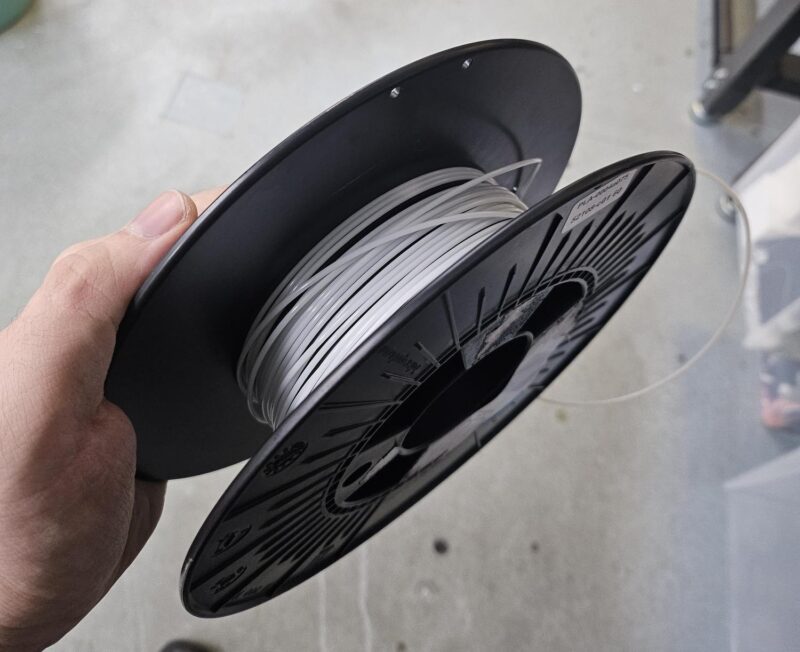
Figure 3. Leftover filament after multiple prints.
Laser printing opportunities
Laser cutting and engraving adds another layer of versatility to sustainable maintenance. Broken panels, decorative elements, or structural pieces can be recreated quickly and precisely by using the original as a base model. Laser cutting makes it possible to fabricate flat components in a matter of minutes, while engraving allows for personalization or labelling, adding both function and aesthetic value.
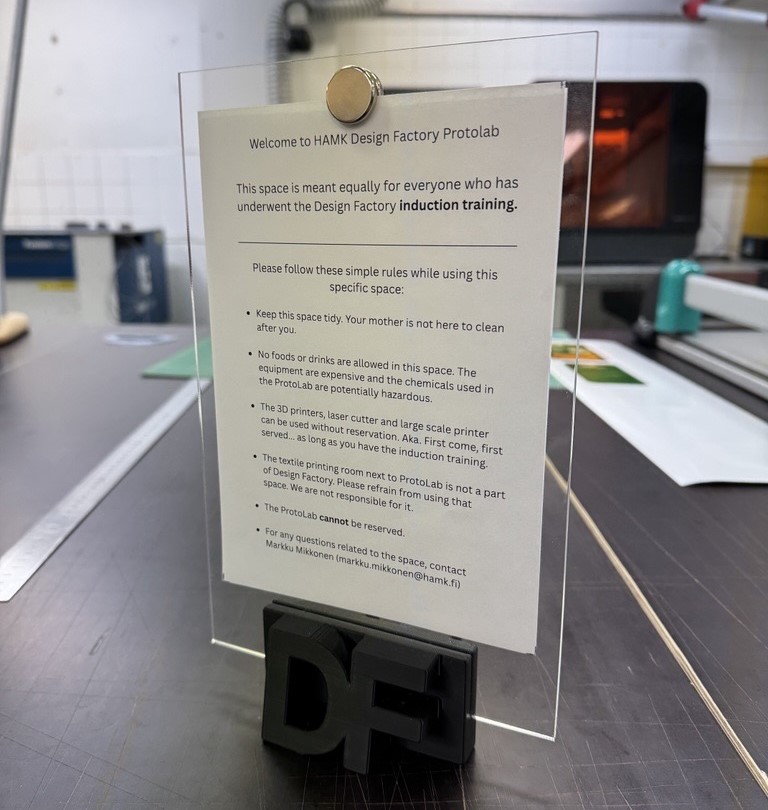
Together these tools can help to shift the mindset in maintenance of physical objects from replacing to repairing. Instead of contributing to the cycle of disposal, with this technology we are able to restore, repair and improve on the items that we rely on in the HDF facilities. As another example, tabletop notice board holders were needed in various HDF spaces to better inform users of what the spaces are for and what are the guidelines for working in them. For this kind of a rather minimalistic object, leftover acrylic sheets from past projects can be a great source of material.
Recycling 3D waste filaments
From the perspective of 3D printing, leftover filament and failed prints are common extra sources of waste, so their recycling should be considered from a more sustainable perspective. At the HDF, one of the soon-to-be-added solutions to this is a filament shredder that was developed as a bachelor’s thesis work by Gleb Vakarjuk (Vakarjuk, 2025). This device would allow for shredding leftover 3D materials in a way that makes them more recyclable with a filament extruder (Figure 5). Although the shredder is a prototype model and an extruder machine to process the shredded material is still needed, this shredder is one step closer to a more sustainable culture at the HDF. Overall, the 3D printers at HDF see much use throughout the year, and while this leads to a lot of successful prints, there are always also some failed attempts. As a way to reduce the waste from failed prints and excess support structures that need to be used in 3D printing, the filaments from these print jobs are collected into dry containers for future recycling.
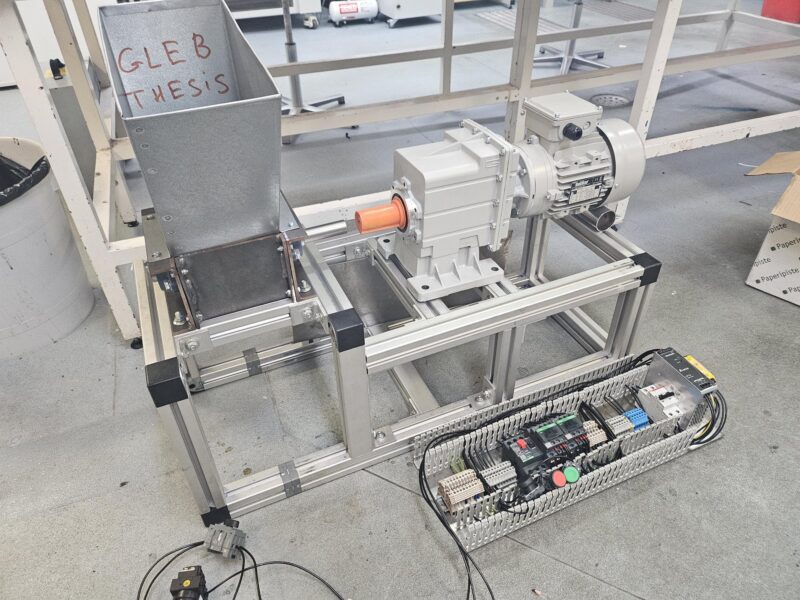
In terms of recycling the 3D printing materials, polylactic acid (PLA) filament, which is a thermoplastic polyester, is one of the most commonly used materials in commercial 3D printing. This creates a need for recycling this material. When recycling PLA, the leftover material should be first shredded and then typically mixed with new PLA to improve the quality and usability of the recycled filament. This mixture combines the strength and stability provided by the new PLA with the sustainability of the shredded PLA filament. Adding fresh PLA enhances the strength, adhesion and consistent extrusion of the printing process (Mohammad Raquibul Hasan et al., 2024).
Conclusion
The work carried out at the HDF demonstrates how accessible digital fabrication tools such as 3D printing, laser cutting, and material recycling technologies can meaningfully extend the lifespan of everyday objects. By recreating or improving broken components rather than replacing entire products, HDF promotes a culture of repair that aims to reduce waste, minimizes environmental impact, and makes more efficient use of resources. At the same time, these practices encourage creativity and experimentation, allowing students and staff to design customized, durable, and user-friendly solutions.
As the HAMK Design Factory continues to evolve, developing tools like the filament shredder and incorporating recycled materials into the process further strengthen our commitment to sustainability. Ultimately, these initiatives illustrate that even small interventions, such as replacing a chair foot cap or reconstructing a window shade connector, can cumulatively contribute to a more responsible and more circular approach to maintenance. By integrating this kind of technology, practicality, and ecological awareness, HDF seeks to set a forward-looking example on how learning environments can preserve their functionality while reducing their environmental footprint.
References
- Gil Muñoz, V., Muneta, L. M., Carrasco-Gallego, R., de Juanes Marquez, J., & Hidalgo-Carvajal, D. (2020). Evaluation of the Circularity of Recycled PLA Filaments for 3D Printers. Applied Sciences, 10(24), 8967. https://doi.org/10.3390/app10248967
- Kiiski, K. (2019, September 4). HAMK Design Factory opening – Design Factory. Design Factory. https://blog.hamk.fi/designfactory/opening/
- Mohammad Raquibul Hasan, Davies, I. J., Alokesh Pramanik, John, M., & Biswas, W. K. (2024). Potential of Recycled PLA in 3D Printing: A Review. Sustainable Manufacturing and Service Economics, 3, 100020–100020. https://doi.org/10.1016/j.smse.2024.100020
- Vakarjuk, G. (2025). Design of a 3D Printing Filament Shredding Device for 3D Printing Waste Recycling. Theseus.fi. https://www.theseus.fi/handle/10024/886444
Authors