Curious Minds and Candid Questions: What Stood Out to a Visiting Lecturer at HAMK Mustiala
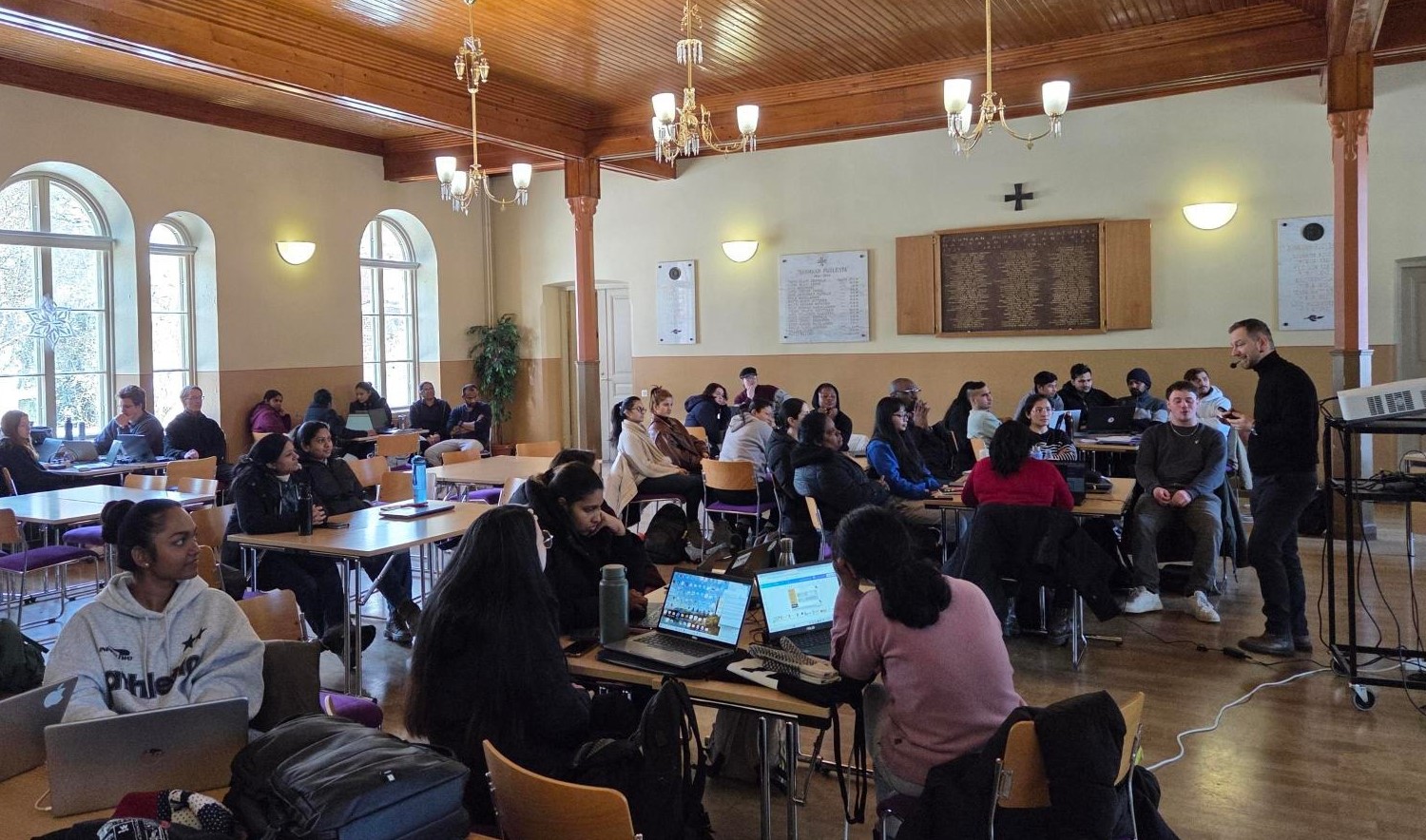
We were happy to have a guest from Romania to lecture in Mustiala. Our students were offered the opportunity to gain an international perspective on agriculture and the lectures generated lively and sharp discussion.
Ciocan Horia Nicolae, a Senior Lecturer at the University of Agronomic Sciences and Veterinary Medicine of Bucharest (USAMV Bucharest), Faculty of Management and Rural Development, visited Mustiala at the end of February. He kindly answered some questions and shared his thoughts about teaching Finnish students and week in Finland and Mustiala.
Tell us a little bit about how you ended up visiting HAMK Mustiala?
“This visit to HAMK University of Applied Sciences was part of an inter-institutional academic cooperation initiative funded by the Erasmus+ programme. It was designed to strengthen collaboration in the fields of agriculture and rural development and to create opportunities for knowledge exchange between our students and academic communities. This collaboration was made possible through the valuable support and involvement of Andra Ruutiainen, Guidance Counsellor at the School of Biotechnology and Natural Resources, Häme University of Applied Sciences, whose contribution played an important role in facilitating this academic exchange.
For me personally, it was also an opportunity to gain a deeper understanding of how agricultural education is structured in Finland, particularly within a system that effectively combines strong practical training with strategic thinking about rural areas.”
What topics have you lectured on here?
“At Mustiala, I delivered a series of lectures on rural development with a focus on structural transformation in agriculture, food system resilience, and the relationship between farm-level decisions and national food security.
We discussed the European agri-food trade balance, the idea of self-sufficiency versus strategic interdependence, and the risks associated with global supply chains — such as geopolitical tensions, input dependency, and energy price volatility. I encouraged students to think beyond production efficiency and to consider resilience, diversification, and local value chains as strategic elements of rural development.
Because many of the students come from farming backgrounds, we also explored practical questions: how farm management decisions today influence long-term viability, generational renewal, and the broader stability of rural communities.”
What has it been like to lecture our students?
“It was a very rewarding experience. The students were attentive, thoughtful, and not afraid to ask difficult questions. I particularly appreciated that they connected theoretical concepts to real farm situations. When we spoke about risk exposure or market volatility, they immediately translated that into discussions about their own family farms.
There is a certain maturity in the way Finnish students approach agricultural topics. They seem to understand that farming today is not only about production, but also about strategy, technology, sustainability, and positioning within global markets. That made the discussions dynamic and intellectually stimulating.”
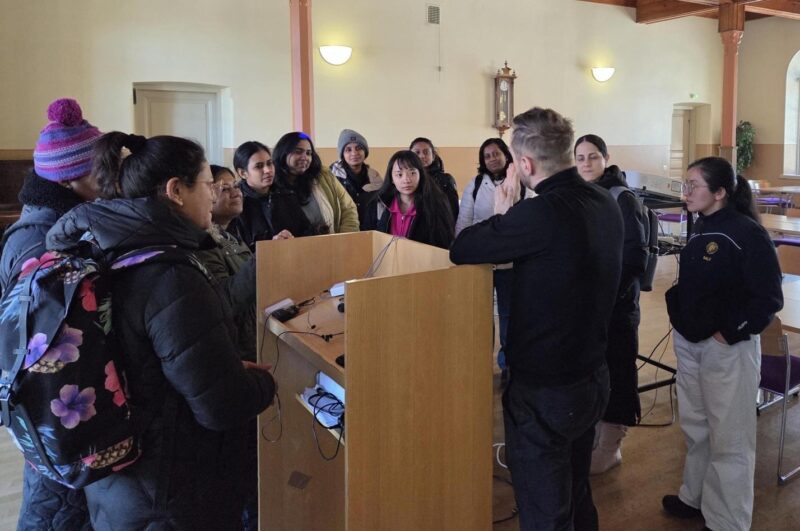
Have you enjoyed Mustiala and what do you think of the campus?
“I have truly enjoyed my time at Mustiala. The campus has a unique atmosphere — it feels both historical and forward-looking at the same time. Being surrounded by farmland while discussing rural development creates a strong sense of coherence between theory and practice.
What impressed me most is how integrated everything feels: teaching, applied research, and practical agricultural training. It is clear that Mustiala is not just an academic environment, but a living agricultural ecosystem. That alignment between place and subject matter gives the campus a distinct identity.”
I was struck by the quiet confidence of the students. They do not romanticize agriculture, but they take it seriously as a profession and as a societal responsibility.
What was the most memorable part of this visit?
“The most memorable part was the conversations — both inside and outside the classroom. The informal discussions with students about the future of Finnish agriculture, about climate uncertainty, and about the responsibility of farmers in ensuring national resilience were particularly meaningful.
I was also struck by the quiet confidence of the students. They do not romanticize agriculture, but they take it seriously as a profession and as a societal responsibility. Seeing that combination of realism and commitment has stayed with me.
On a personal level, experiencing Mustiala in winter — the landscape, the light, the stillness — added something symbolic to the topic of resilience we were discussing. It reminded me that agriculture in northern Europe requires not only technical competence, but also long-term vision and determination.”
Thank you, Ciocan Horia Nicolae, for your visit to HAMK Mustiala. It is great that we can offer our students new perspectives on agriculture and enable them to become part of the international discussion and community.