LÄMPÖ

Waste heat in Häme and its technological utilization
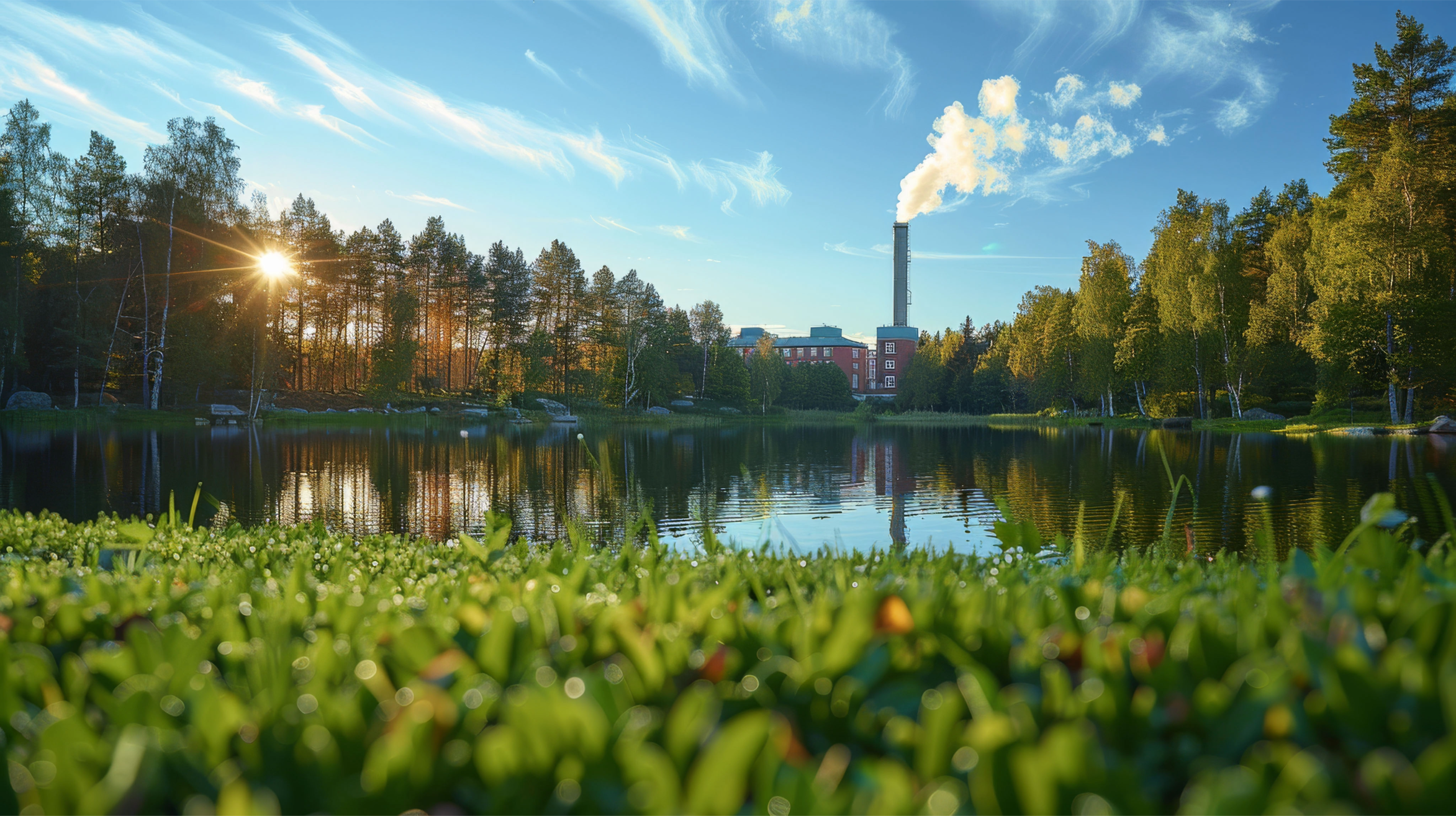
Picture is generated with AI.

Project information
| Project | Waste heat in Häme and its technological utilization (LÄMPÖ) |
| Duration | 1.3.2026-29.02.2028 |
| Partners | Häme University of Applied Sciences, Lappeenranta–Lahti University of Technology LUT, LAB University of Applied Sciences |
| Funders | European Regional Development Fund (ERDF) / Economic Development Centre of Southeast Finland |
| Budget | 481 215 € |
In the Waste heat in Häme and its technological utilization (LÄMPÖ) project, we map waste heat sources in the Häme region, assess waste heat potential based on technological feasibility, and strengthen regional energy efficiency. The project creates conditions for improved utilisation of waste heat in current and future energy systems.
Utilising waste heat reduces the use of primary energy, improves the overall energy efficiency of energy systems, and supports the transition towards low‑carbon and sustainable energy production. However, more effective use of waste heat requires renewed contractual and pricing models as well as improved forms of cooperation. The LÄMPÖ project addresses these challenges by identifying where waste heat is generated in the Häme region and how it can be efficiently utilised as part of existing and future energy systems.
The project will deliver a comprehensive, updatable map‑based service of waste heat sites in the Häme region and assess the utilisation of waste heat using various technologies, such as direct heat recovery, heat pumps, electricity generation, and cooling. In addition, the project examines waste heat‑related business opportunities, pricing and contractual models, and the impacts of Finnish and European legislation. Through case studies and modelling, the role and profitability of waste heat in future energy systems are evaluated, including perspectives from data centers and district heating networks.
The benefits of the project are significant for both companies and public organisations. Stakeholders gain access to accurate and visual information on regional waste heat potential, along with clear recommendations for its utilisation. Companies can identify cost savings, develop new services, and prepare for energy efficiency obligations, while energy companies and municipalities receive support for investment planning and strategic decision‑making. The project also provides up‑to‑date information on technologies, legislation, and contractual models, as well as opportunities to participate in interviews, case studies, and collaborative development activities. The results support the entire region’s transition towards more energy‑efficient and low‑carbon operations.
The project is implemented by the Sustainable Energy Systems research group in collaboration with Lappeenranta–Lahti University of Technology (LUT) and LAB University of Applied Sciences.
Read more about waste heat utilization from our previous project Waste heat for utilization (Hukka).
Target group
The project targets major waste heat producers, users, and intermediaries in the Päijät‑Häme and Kanta‑Häme regions. The primary target groups include energy and technology companies, energy‑intensive industries, data center companies, and large energy consumers with potential to utilise waste heat. In addition, the target groups include municipalities, cities, and development companies in Päijät‑Häme and Kanta‑Häme, with particular emphasis on areas where waste heat utilisation potential is greatest.
Operating area
The project operates in the Kanta‑Häme and Päijät‑Häme regions.
Project goals and results
PROJECT GOALS
- Identify waste heat–producing sites in the Päijät‑Häme region and update them in the regional map service.
- Technically assess waste heat utilisation technologies, including system‑level efficiency evaluation; analysis of technologies based on waste heat temperature, capacity, and quality; and the use of waste heat for heating (direct use, heat pumps), electricity generation, and cooling.
- Develop a technology roadmap for waste heat utilisation solutions.
- Examine waste heat–related business opportunities, pricing and contractual models, and review current legislation related to waste heat utilisation in Finland and Europe.
- Investigate waste heat utilisation through case studies, either via energy systems or through bilateral agreements.
- Assess the future role of waste heat as part of a functioning renewable energy system and examine its role in district heating systems across energy systems of different scales.
EXPECTED PROJECT RESULTS
- An open, region‑wide map‑based service covering the entire Häme region, making waste heat sites visible and supporting their utilisation.
- A technology roadmap that helps companies and municipalities select suitable technologies for waste heat recovery.
- Up‑to‑date information on waste heat business opportunities as well as pricing and contractual models.
- A study on the utilisation of waste heat from data centers, particularly in district heating systems.
- Calculation‑ and simulation‑based examples demonstrating the role of waste heat in an energy‑efficient and low‑carbon energy system.
Project events and communications
Content will be added later.
New project explores the possibilities of utilizing waste heat in Häme as part of a low-carbon energy system, HAMK website news 9.4.2026
Content will be added later.
Contact information
Project managers:
HAMK Kaisa Kontu
LAB, Raisa Pajarinen




raisa pajarinen
Development engineer, LAB
raisa.pajarinen@lab.fi
+358503256396

Vilppu eloranta
RDI specialist, LAB
vilppu.eloranta@lab.fi
+358447085237
Antti Uusitalo
Associate Professor (Tenure Track), LUT
antti.uusitalo@lut.fi
+358405837741