Why Environmental Awareness Doesn’t Always Lead to Responsible Behaviour in Forests
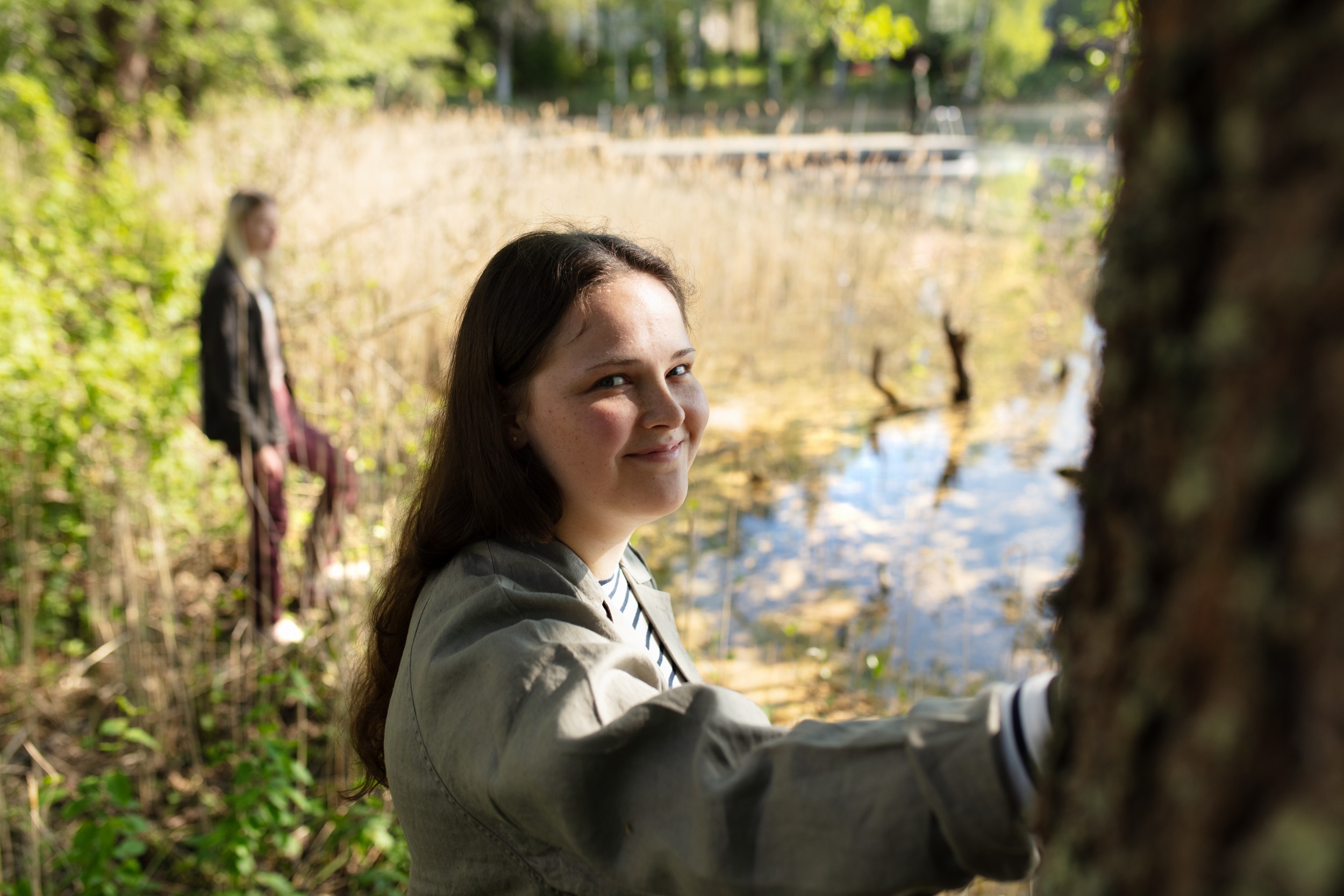
A closer look at how people interact with nature in Finland’s recreational forest areas.
Introduction: A Simple Idea… That Isn’t So Simple
This article is based on a small-scale qualitative research project exploring how environmental awareness influences behaviour in forest recreation areas in Finland. Through an online questionnaire, 17 participants shared their experiences, opinions, and everyday decisions when interacting with nature.
In countries like Finland, forests are more than landscapes—they are part of daily life. People walk through them after work, spend weekends hiking, and find a sense of calm and connection in nature.
As access to forest recreation areas has increased, so has their popularity. More people are engaging with nature for leisure, exercise, and tourism. At first glance, this seems like a positive trend—after all, a stronger connection to nature should lead to more responsible behaviour.
But reality tells a different story.
Despite growing environmental awareness, forest areas continue to face challenges such as littering, vegetation damage, and disturbance to wildlife.
This raises an important question:
If people know better, why don’t they always act better?
Growing Pressure on Forest Recreation Areas
Forests in Finland play a vital role—not only in environmental sustainability but also in supporting public wellbeing. However, increased use comes with consequences.
Across many recreational areas, the signs are visible:
- Small pieces of litter left behind
- Trails slowly widening due to off-path walking
- Wildlife disturbed by human presence
Individually, these actions may seem insignificant. But when repeated by thousands of visitors, they begin to reshape the environment.
This is the hidden challenge of modern forest recreation: balancing access and enjoyment with protection and responsibility.
Why Awareness Alone Doesn’t Change Behaviour
Environmental awareness is often seen as the solution. The assumption is simple:
if people understand environmental issues, they will act responsibly.
But human behaviour is rarely that predictable.
Our findings show that many individuals are fully aware of environmental issues—yet their actions do not always reflect that knowledge.
One participant expressed this honestly:
“I know it’s important to protect nature, but sometimes convenience comes first.”
This is where the reality of human behaviour becomes clear.
People do not make decisions based on knowledge alone. Their actions are shaped by:
- habits
- comfort
- social context
- and the situation they are in
This creates what researchers call the awareness–action gap—a disconnect between what people know and what they actually do.
Beyond Awareness: What Really Shapes Behaviour?
To better understand this gap, we looked at which factors participants believed had the strongest influence on responsible behaviour.
| Most Influential Factor | Number of Participants |
| Personal Values | 8 |
| Environmental Knowledge | 5 |
| Attitudes | 4 |
| All equally | 1 |
Less than one-third of participants identified knowledge as the main driver of behaviour.
Instead, many pointed toward something deeper: personal values and emotional connection.
“Values, of course. Some people respect everything in the forest… others simply don’t.”
Another participant described it in a more personal way:
“When you think of the forest as someone else’s home, your behaviour changes naturally.”
This shift—from knowing to feeling—is crucial.
Because people are more likely to protect what they feel connected to.
The Awareness–Action Gap in Real Life
The gap between awareness and action was not just theoretical—it appeared clearly in the data.
Out of 17 participants, 11 explicitly stated that awareness does not always lead to responsible behaviour.
Why?
Because real-life decisions happen in small, everyday moments:
- when the nearest waste bin is far away
- when carrying trash feels inconvenient
- when others around us behave carelessly
In these moments, even strong awareness can fade.
Awareness may shape intention—but it does not always control behaviour.
The Role of Social Norms: We Follow What We See
Human behaviour is not only individual—it is social.
Participants noted that people often adjust their actions based on their surroundings.
- A clean forest encourages people to keep it clean
- Visible litter can signal that irresponsible behaviour is acceptable
“Most people are responsible… but there is always a small group who don’t care.”
Even a small number of negative actions can influence the behaviour of many others.
This highlights the power of social norms—the unwritten rules that shape how we behave in shared spaces.
When Convenience Overrides Responsibility
Another important factor is practical convenience.
Even environmentally aware individuals may act irresponsibly when the situation makes responsible behaviour difficult.
Participants mentioned:
- long distances to waste bins
- unclear signage
- limited infrastructure
“Sometimes the trash bin is kilometers away… and people just give up.”
This shows that behaviour is not only about intention—
it is also about how easy or difficult it is to act responsibly.
From Awareness to Action: What Actually Works?
If awareness alone is not enough, what can make a real difference?
The findings suggest that promoting responsible behaviour in forest recreation areas requires a more human-centered approach.
Emotional Connection to Nature
When people feel emotionally connected to nature, responsible behaviour becomes more natural—not forced.
Supportive Infrastructure
Well-designed environments make it easier to do the right thing.
Simple improvements—like accessible bins and clear trails—can have a big impact.
Value-Based Communication
Messages that appeal to identity are more powerful than rules.
Instead of:
- “Do not litter.”
Try:
- “Leave no trace.”
- “You are a guest in the forest.”
Strengthening Social Norms
People follow what they see. Encouraging visible, responsible behaviour helps create a culture of care and respect.
Key Takeaways
- Environmental awareness is important—but not enough on its own
- Values and emotional connection are stronger drivers of behaviour
- Social norms and infrastructure shape real-life actions
- The awareness–action gap remains a key challenge in sustainable forest management
Final Reflection: It’s About People, Not Just Forests
This study is not only about forests—it is about people.
It is about the small decisions we make:
- when no one is watching
- when convenience competes with responsibility
- when our values are quietly tested
Because in the end, responsible behaviour does not come only from knowing what is right.
It comes from feeling connected enough to care—and choosing to act on it.
This article is based on a group research project conducted by
Fateme Haft Akhtan, Milla Nomm, and Sachini Mitchell
Author
Fateme Haft Akhtan, student,Sustainable Forest Management
References:
Ajzen, I. (1991). The theory of planned behavior.
Chawla, L. (1999). Life paths into effective environmental action.
Clayton, S., & Myers, G. (2015). Conservation psychology.
Kollmuss, A., & Agyeman, J. (2002). Mind the gap.
Natural Resources Institute Finland (Luke). (2025). Multiple use of forests.
Sganzerla, F. et al. (2025). Effects of recreational activities on wild mammals.
Steg, L., & Vlek, C. (2009). Encouraging pro-environmental behavior.
Stern, P. C. (2000). Environmentally significant behavior.