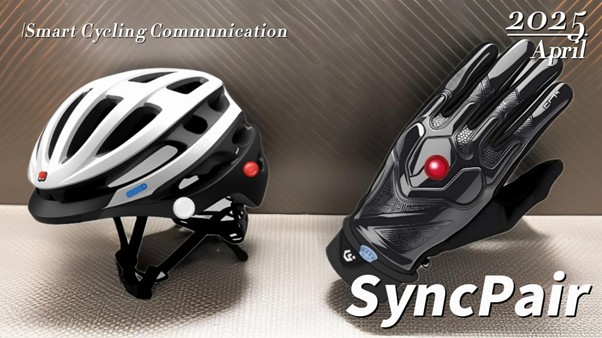
SyncPair – Smart Cycling Communication
Educational program: Information and Communication Technology, Bioeconomy
Project implementation period: September 2024 – April 2025
Project team members: Victor Betiku, Madhavi Deshpariya, Abdelghafour Elalgi, Diljot Singh Johal, Sabin Poudel, Weiwei Zhang
Contact person: Weiwei Zhang
Purpose and Objective of the Project
To strengthen connection and coordination among group cyclists by enabling intuitive, non-verbal communication through wearable technology, such as smart gloves and helmets, which enhance teamwork, mutual awareness, and shared riding experiences without relying on verbal cues or internet connectivity.
Solutions and Technologies
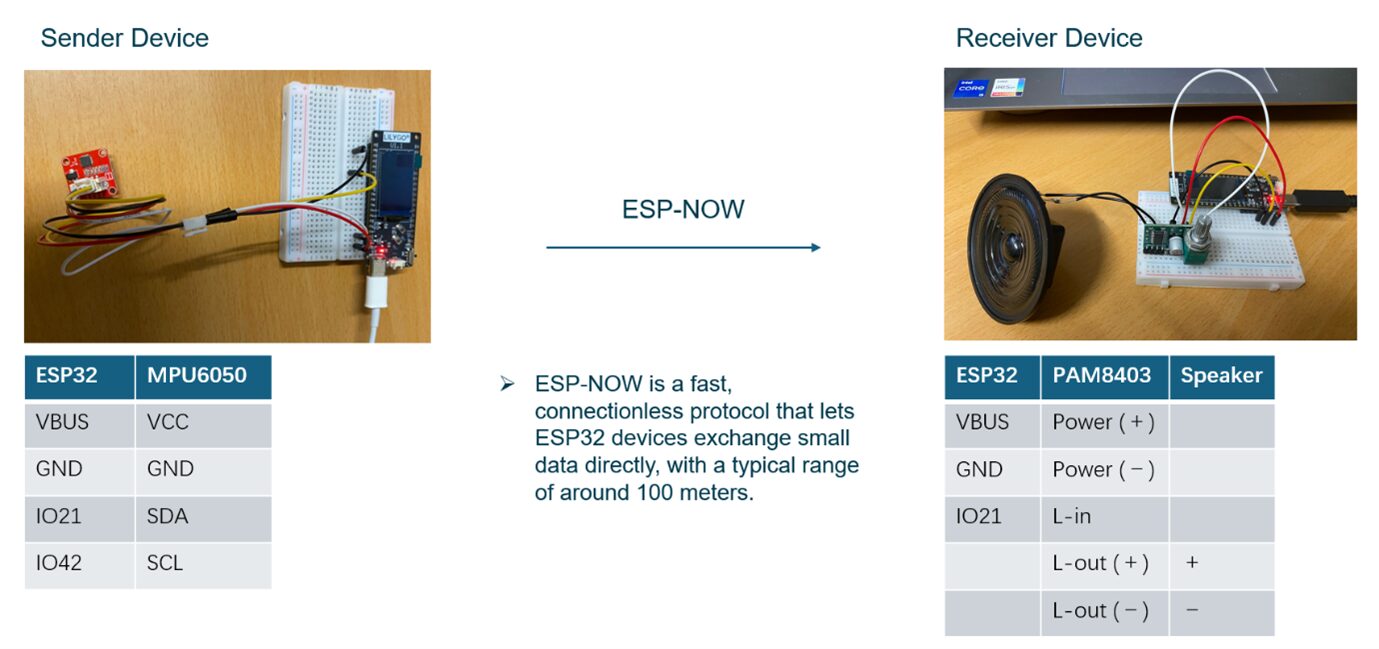
SyncPair enhances group cycling experiences by enabling gesture-based, non-verbal communication through smart helmet and gloves. The system is built using ESP32-S2 microcontrollers and MPU6050 sensors to detect hand gestures, which are transmitted wirelessly using ESP-NOW and translated into real-time audio feedback. It operates offline, making it suitable for remote or urban environments, with optional cloud syncing for extended functionality. By supporting silent coordination and intuitive signaling, SyncPair fosters team cohesion, improves communication efficiency, and enhances emotional connection during rides, while also adding a layer of safety and inclusivity for all cyclists in a group.
Results and Impact
The prototype successfully demonstrated a gesture-based communication system using ESP32 and ESP-NOW technology, allowing non-verbal signals to be transmitted wirelessly and received as audio feedback. This proves that intuitive, offline communication is achievable in dynamic outdoor settings like group cycling. The system enhances coordination, mutual awareness, and emotional connection among cyclists, reducing reliance on verbal communication or mobile networks. For potential users—especially in team or recreational cycling—it promotes inclusiveness by supporting diverse communication needs and strengthens the overall riding experience. The project also highlights how low-cost IoT solutions can improve social interaction in physical activities.
Sustainable Development Goals

In Cooperation