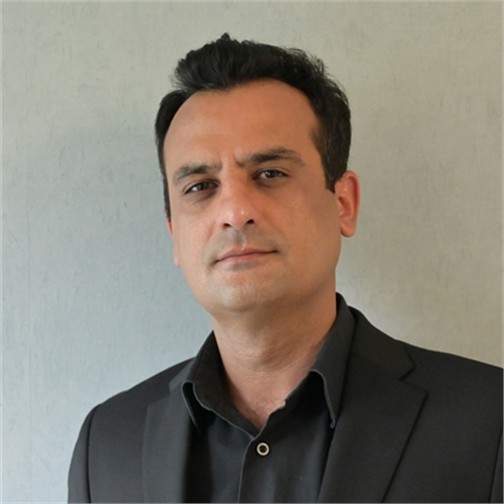
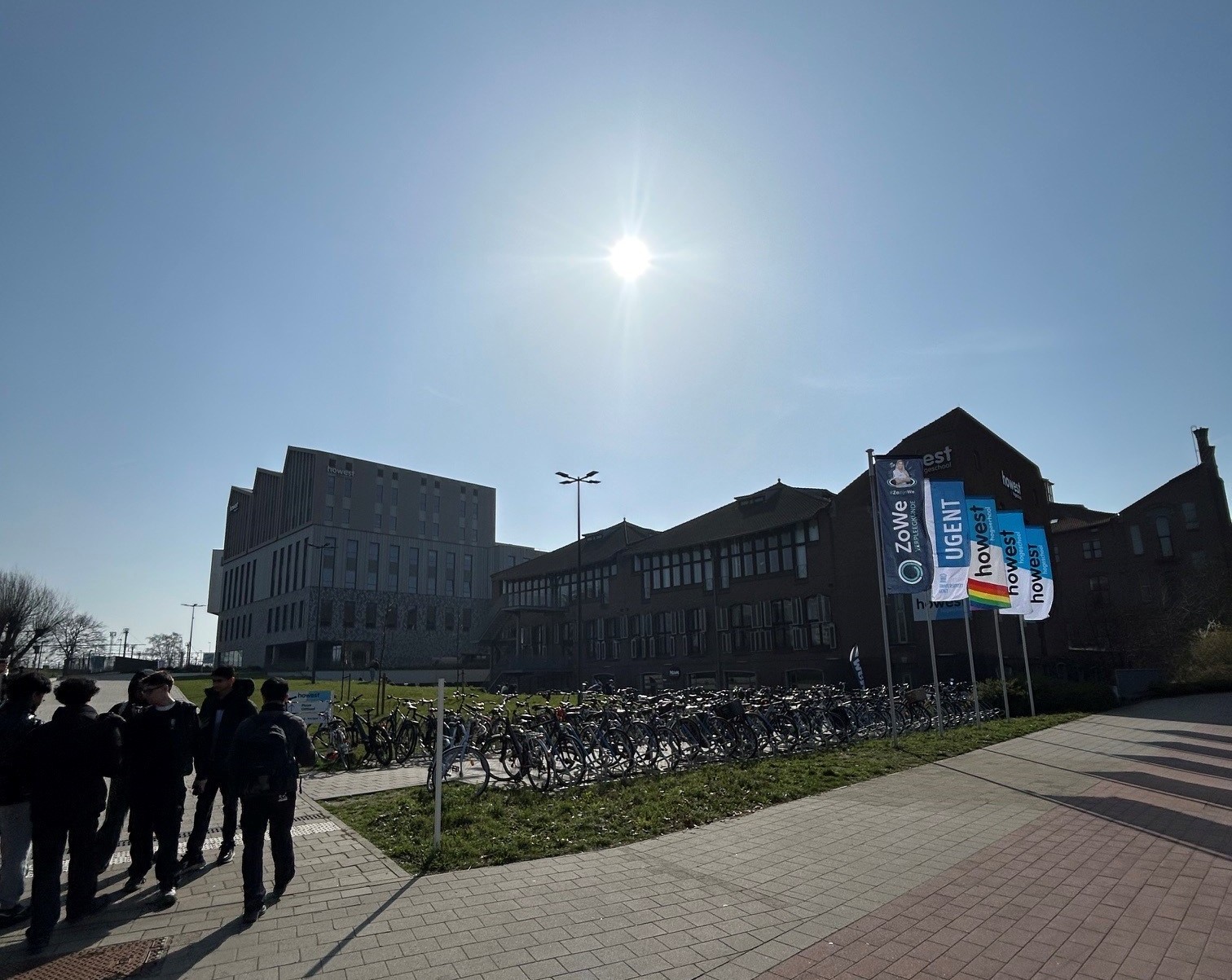
The Belgian Howest University of Applied Sciences is part of the RUN-EU network (RUN Regional University Network, n.d.) and is therefore an international partner of Häme University of Applied Sciences (HAMK). Howest organized the first ever International IT Week 2026 on 9–13 March at its campuses in Bruges and Kortrijk (Howest, n.d.). The aim of the week was to bring together international teachers, students, and partners to share expertise, develop new ideas, and inspire a next generation of IT professionals. The program included workshops, keynote presentations, a hackathon day, and various networking activities.
In this article, we discuss the IT Week and consider how it provided a unique opportunity to build international networks, share expertise with students and other participants, and explore different approaches to IT education. The event also reinforced cooperation between higher education institutions and generated new ideas for the future development of education and research.
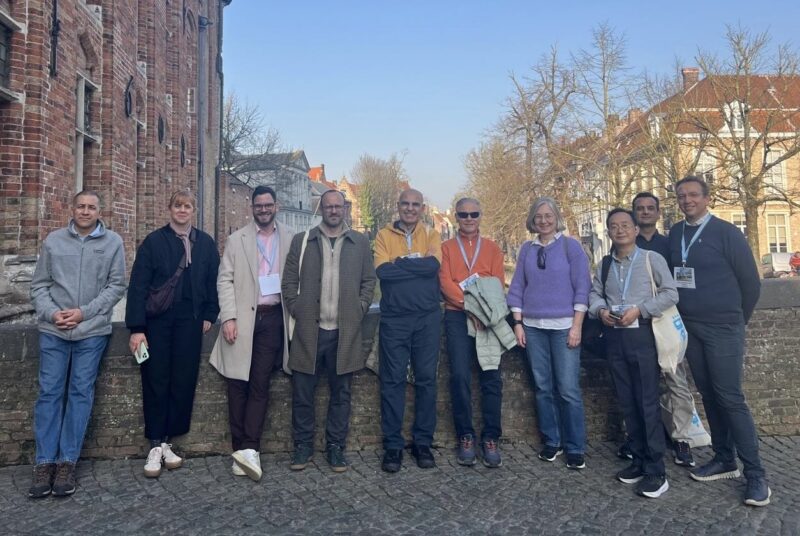
In addition to the two of us from HAMK, teachers from several universities around the world participated in the event (image 1). The participating institutions within the RUN-EU network included the Vorarlberg University of Applied Sciences (FHV), as well as the Hafen City University (HCU) from Germany, the University of Applied Sciences St. Pölten (USTP) in Austria, the Østfold University College in Norway, and the Istanbul Atlas University in Türkiye. The event also saw participants travelling from as far away as the Monterrey Institute of Technology and Higher Education (ITESM) in Mexico and from the Central South University in China.
During the week, visiting lecturers had the opportunity to give lectures and lead workshops for Howest’s IT students. The program also featured keynote presentations, university introductions during the International Fair, and mentoring student teams during the Vibe Code Hackathon. In addition, participants learned about practical examples of Howest’s research activities. The social program, including guided tours of the historic cities of Bruges and Kortrijk, complemented the week’s academic activities.
Practice-oriented IT education
The IT Week also provided valuable insight into how IT education at Howest is firmly built around practical, hands-on learning. Studies progress through projects that gradually increase in complexity. At the end of the first year, the students complete an individual project in which they apply the skills they have acquired during their studies. During the second year, they move on to team projects based on topics provided by the university. Later in their studies, the students move on to work in teams on real assignments commissioned by companies.
This project-based learning approach gives the students valuable experience in real-world development tasks and teamwork already during their studies. Student projects are also presented in exhibitions where other students, teachers, and partners can explore and discuss the outcomes. This is very similar to what HAMK students do in their studies. They work on project assignments received from companies both individually and in teams, and present their results to the client, for example, at the project’s Final Gala.
Artificial intelligence as part of software development
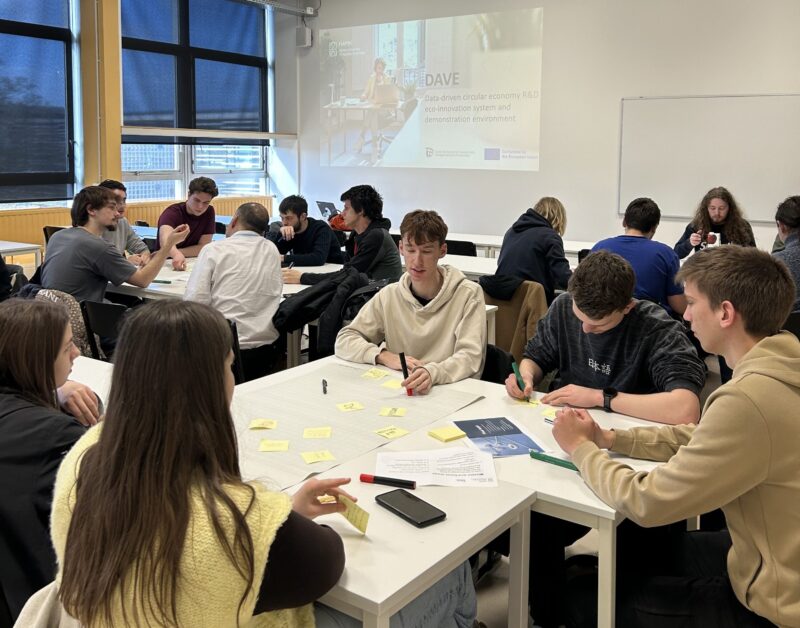
Artificial intelligence played a significant role throughout Howest’s IT Week, not only in lectures delivered by visiting experts, but also in the hackathon where AI was a central component of the development work. During the Vibe Coding Hackathon (image 2), second-year IT and business students formed multidisciplinary teams to develop new digital solutions.
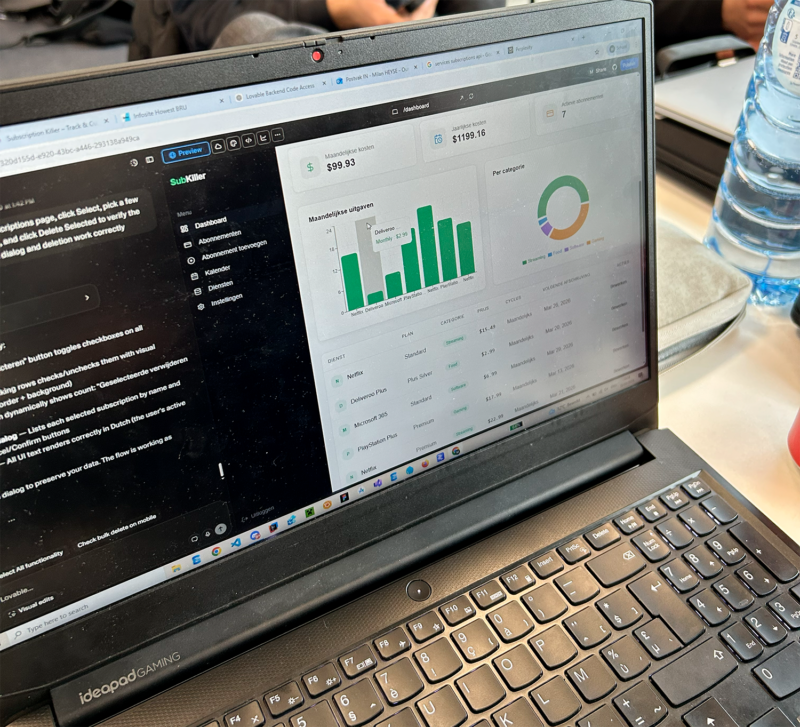
Vibe coding (IBM, 2026) is an emerging approach to application development that makes use of artificial intelligence as a development tool. Using this approach, IT students already need to have the knowledge on coding, so that AI can be used to support programming tasks. At the hackathlon, AI generated parts of the code while the students focused on ideation, system architecture, and user experience. It is important that students understand the possibilities and limitations of all types of coding tools. This is why it is good to learn using also different kinds of AI coding environments. The development environment used during the hackathon was Lovable.dev (image 3).
During the day, each team defined the core functionality of their solution, developed a prototype, and presented it to the mentoring teachers. The projects were then evaluated using an assessment form that scored several aspects, including the realism of the business case, the meaningful use of AI, the intuitiveness and usability of the user interface, and the quality of teamwork within the group.
Based on the scores, the best solution and team were selected. The winning team presented their final product and received a prize at the end of the day. The goal of the hackathon was to strengthen the students’ ability to utilize AI in software development and to encourage collaboration between technical and business expertise.
International Day and global networking
The participating students also received other working-life skills during the IT Week, as it also included an International Day where international guests delivered presentations and workshops for first-year IT students at Howest’s campuses in Bruges and Kortrijk. The day began with joint keynote talks, after which visiting lecturers organized sessions based on their own areas of expertise.
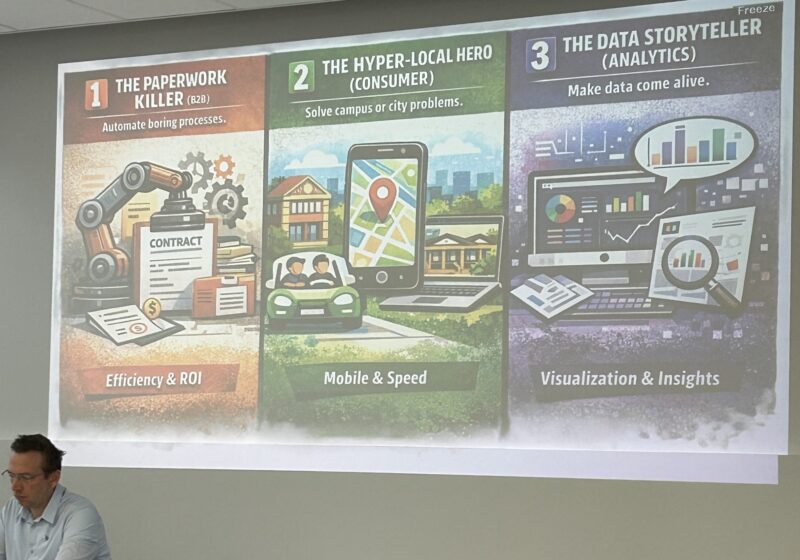
Also the authors of this article contributed items to the program: Johanna Salmia conducted a two-hour “Multidisciplinary Innovation Workshop” for students at both campuses (image 4). The workshop was implemented as a pilot within the DAVE project (HAMK, n.d.). The assignment for the students was to “innovate how data and visualization can be used to guide people toward more sustainable behaviour and support better decision-making in everyday life”. This innovation workshop pilot is discussed in further detail in another article (Salmia, 2026).
The second author of this article, Mazhar Mohsin, presented an info session on the topic “How Generative AI is Shaping the Future of Learning and Work” where he discussed insights into the rapid evolution of generative AI technologies and their impact on education and professional environments. He discussed practical applications, emerging trends, and how students and educators can adapt to these changes.
Mohsin also conducted a two-hour workshop on the topic of “Build Your First Chatbot” where participants were introduced to the fundamentals of chatbot development and guided through creating their own simple chatbot. In both sessions, many teachers and students from Howest, ranging from undergraduate first to third year, actively participated.
An inspiring week for the future of the IT field
Howest International IT Week highlighted the importance of international collaboration in the rapidly evolving IT sector. The week provided an excellent opportunity to learn about educational practices in different countries. Bringing together students, teachers, and experts from around the world created an environment where ideas could be shared, new ways of working explored, and education developed to better meet future competence needs.
During the week, we were able to form new contacts, new collaboration ideas emerged, and above all, the event fostered inspiration for both students and teachers. Following this highly positive experience, we hope that the event will be organized again next year, allowing us to bring our own students to participate as well.
References
- HAMK. (n.d.). Data-driven circular economy R&D eco-innovation system and demonstration environment. Retrieved 25.3.2026 from https://www.hamk.fi/en/projects/dave/
- Howest. (n.d.). International IT Week. Retrieved 26.3.2026 from https://www.howest.be/en/news/international-it-week
- IBM. (2026). What is vibe coding? Retrieved 29.5.2026 from https://www.ibm.com/think/topics/vibe-coding
- RUN Regional University Network. (n.d.). About us. Retrieved 26.3.2026 from https://run-eu.eu/about-us/
- Salmia, J. (2026). Kahden päivän Innovaatiopäivistä kahden tunnin Innovaatiopajaksi – pilotit Howest International IT Weekillä. HAMK Pilkku. https://doi.org/10.63777/6b20
Authors