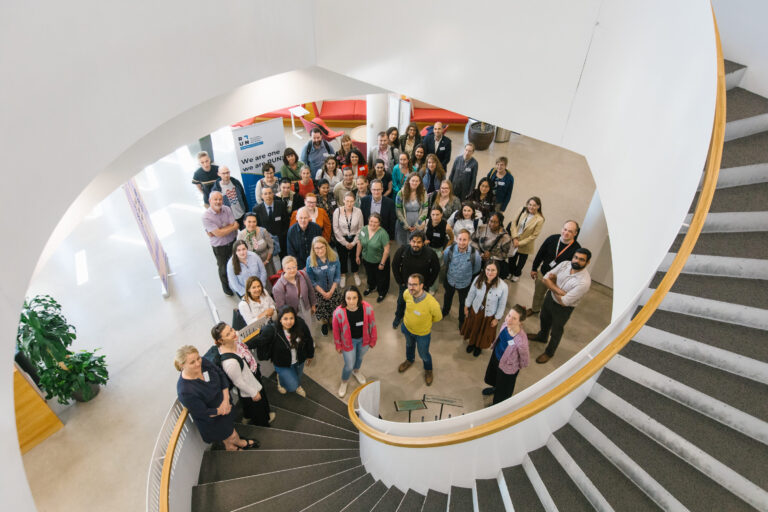
A multidisciplinary cooperation brought engineering students together on Valkeakoski campus in November
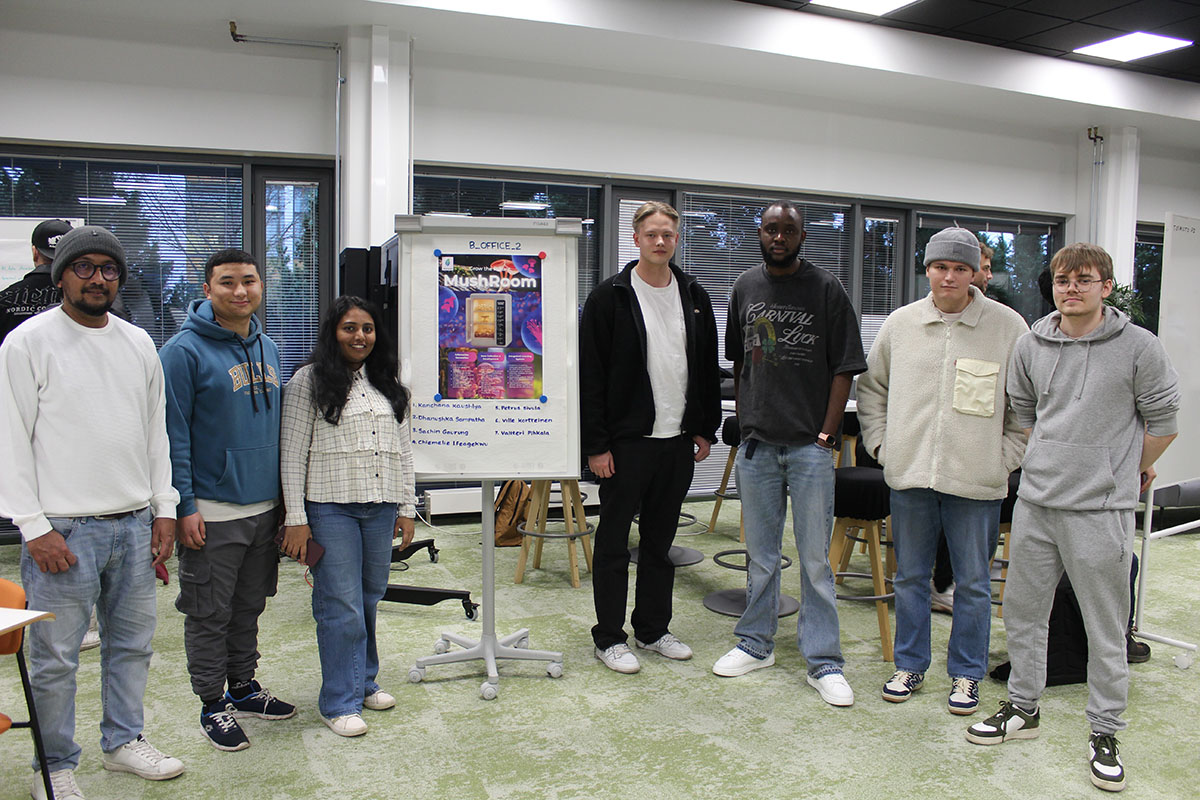
In project work, the central aim is to develop collaboratively and to learn the kinds of working methods students will need in their future careers.
Students are always given genuine objectives from companies to solve, which provides an inspiring learning environment and brings working life closer during the studies. This time the development challenges came from the HAMK Bio research unit, Aste Finland Oy and the DAVE project (HAMK).
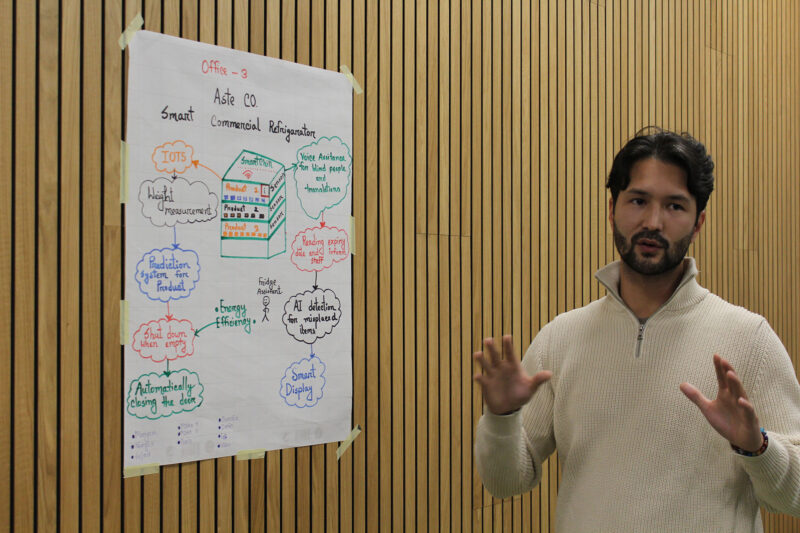
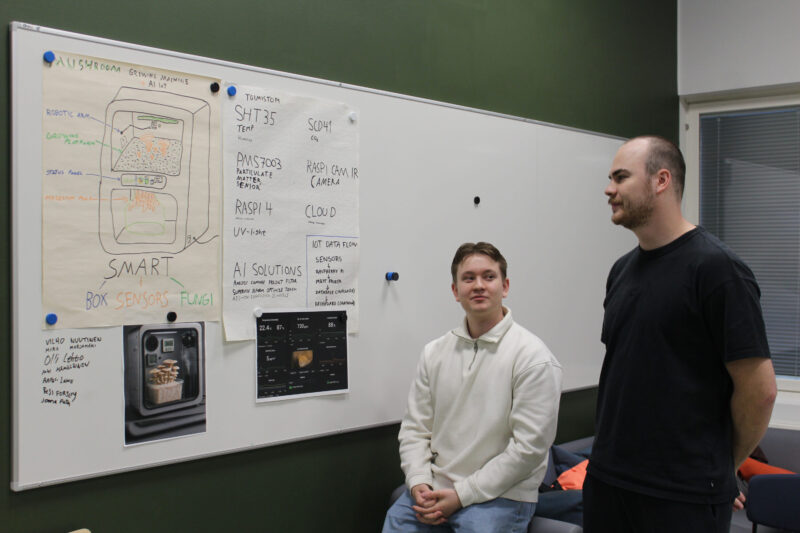
The objective for the bio-research unit was to devise products and services required for mushroom cultivation. Aste Finland set out to develop refrigeration units that enhance the consumer experience and increase purchases. The DAVE project sought solutions for the reuse of 3D printing filament waste.
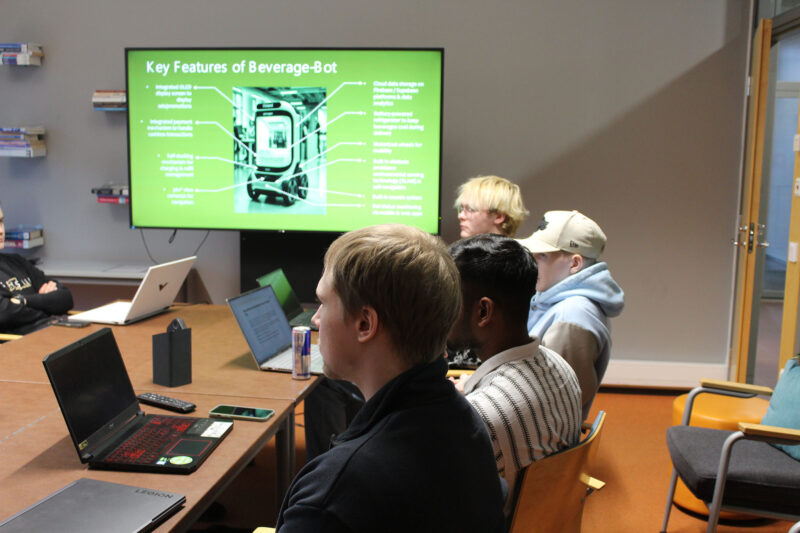
The project included both Finnish- and English-speaking electrical and automation engineering students from Valkeakoski, and information and communications technology students from Forssa specialising in the circular economy.
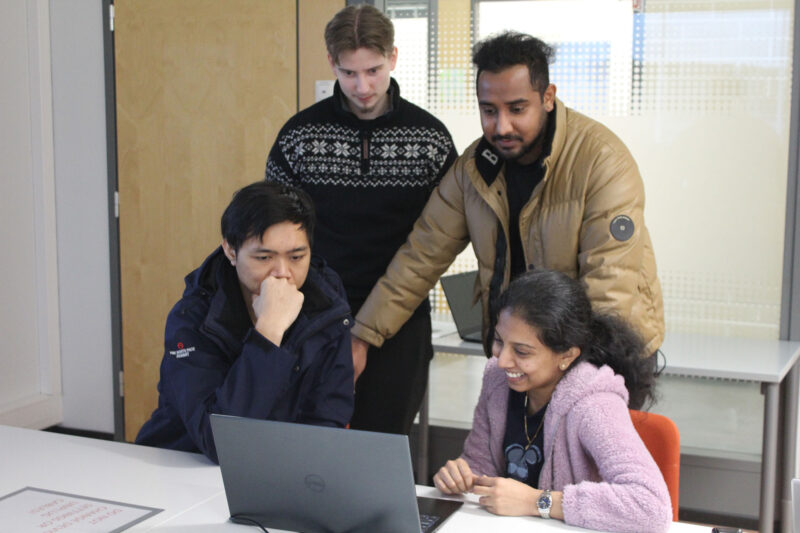
Good interpersonal skills are core engineering skills
Interpersonal skills are practised extensively during studies through various group assignments. In this project, a distinctive aspect was that there were many international students also from two different campuses, and the language of communication was English.
The multidisciplinary approach to working has become a permanent, rewarding practice in our educational institution.
Students from Forssa began working on the projects already in the first module. Students from Valkeakoski brought an AI perspective to the project. After the work, the results were presented in an exhibition-style setting, where students toured and viewed each other’s different solutions.