

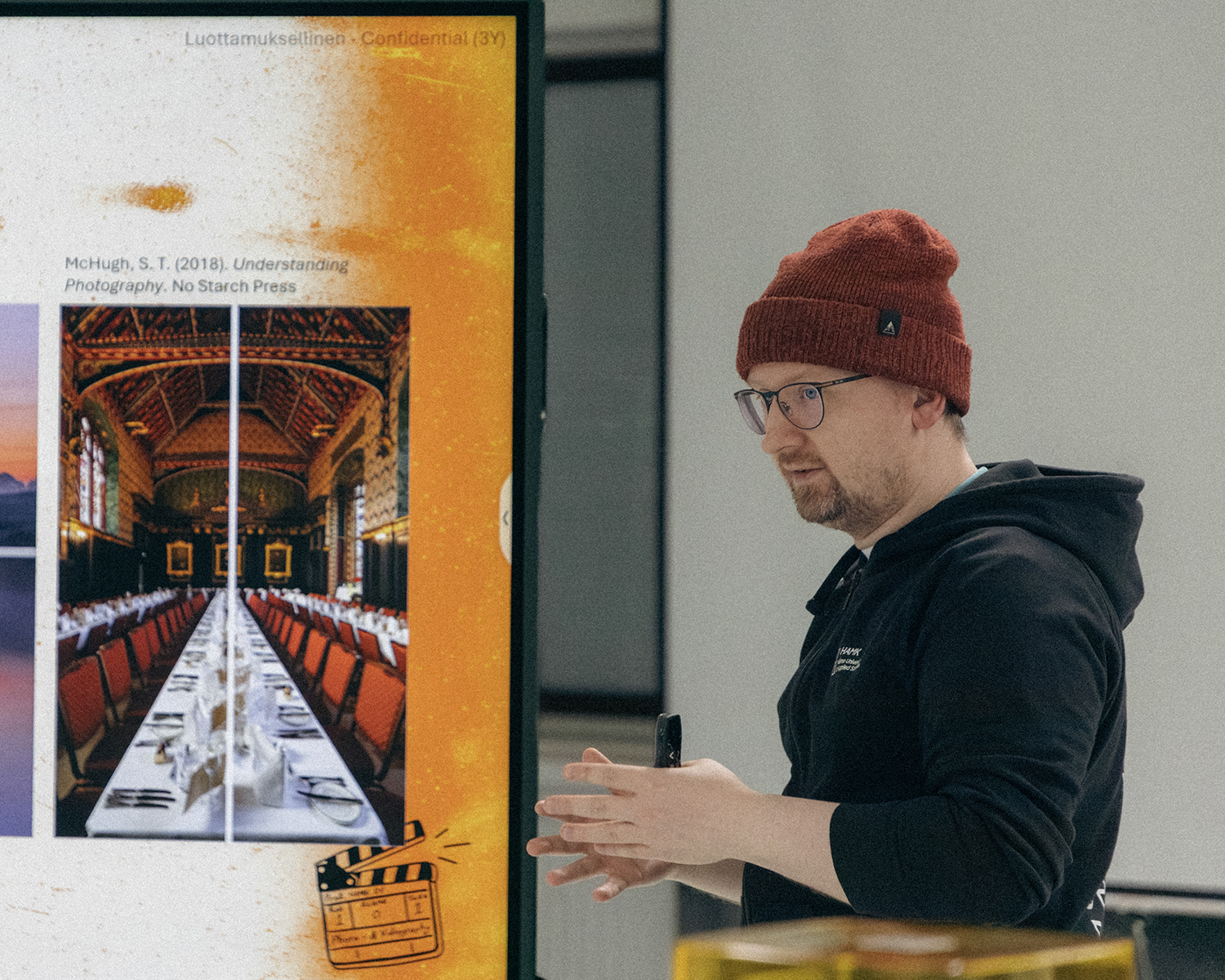
The first Photo and Videography course (5 ects) at the Häme University of Applied Sciences (HAMK) Design Factory launched at the start of 2026, with 10 seats available for the students to enroll. The course was full in a record-breaking time of 30 minutes after the enrollment process opened. This demonstrated that the course is needed, or at least interesting, for the students, as many seem to wish to gain more knowledge on photography and videography. In this article, I continue from my discussion of building these facilities in last December (Närhi, 2025) which worked as a jumpstart for creating more accessible photography and videography learning opportunities at the HAMK Design Factory.
How did the first course go?
On the first version of the course, there were 11 different topics that focused on preparing students for using the different aspects of photography and videography. New topics were introduced every week on a specific day, always at 16:30. This made sure that students who had other daytime studies could focus on their current curriculum and join the course as an optional one in the evenings. Deciding on a specific lecture day was one pain point, as we let the students decide on the time. This meant that the students who did not want the chosen weekday had difficulties attending the lectures every week.
All the lectures were held in person at the HAMK Design Factory, located at HAMK’s main campus in the Hämeenlinna University Centre, and there was no option for joining the sessions remotely. After every session, students were given assignments that they could then complete at their own pace. Our multifunctional snapshot room was available for reservations every Monday, Wednesday and Friday from 8:00 to 16:00. By making a reservation, the students could use the space or get the cameras to be used outside the campus area. Typical challenges that we faced were cases where some students did not join on time for their reservation, so that the space was still occupied or the cameras were in use when the next student joined. The frequency of reservations also increased towards the end of the course, as many students had scheduled to complete their assignments at the last minute.
Overall, we received positive feedback from the students: they felt that they learned the basics of photography and videography, and that they gained good coaching from the lecturer. The students also pointed out that they would like to have more practical work during the lectures, or alternately they would like to have time right after the lecture itself to train what they learned. Another challenge that was pointed out was the fact that the chosen lecture day was Friday which made it challenging for the students to maintain their focus on the topics.
Based on the feedback and on the lecturer’s observations on the course, it can be said that the first course went very well. Now there is a clear pathway for developing the course forward based on the student feedback, and we know that there is good reason to increase the number of seats for the next version of the course.
How was the snapshot room perceived?
The multifunctional snapshot room that we had built on the Design Factory facilities prior to the course (Närhi, 2025) was well received by the students. There were enough options to choose from when it came to backdrops, lighting, and other setups needed for photo or video shoots. No equipment breakdowns happened during the course, and all the students were aware of how the room needs to be reorganized after use. One of the challenges that surfaced, however, was that there needs to be a more accessible way of showing what type of equipment is available for the students to use, as now most of the equipment is “hidden” in cabinets.
What happens next?
The next Design Factory Photo- & Videography 5 ects course has been opened with 20 seats available. Within the first week of opening the enrollment process, the seats were already full. The course kick-off took place on October 20th, 2026, where the students gained more insights into the course topics, schedule and grading criteria. As the course has progressed, the students have already received lectures on ISO and aperture, and the upcoming lectures include topics such as image layouts and shutter speed. We have also purchased one used camera and lenses to increase the availability of equipment to better facilitate the increased number of students joining the course. The used camera and lenses were bought with a view on ensuring that the equipment is on the affordable side, in case the students plan on creating their own company in the future. The second-hand market is one opportunity to increase sustainable consumption, extending the lifetime of equipment that still works, and this also helps to reduce the need to produce new equipment while also keeping the prices of second-hand products reasonable (Rodrigues et al., 2023, p. 14). This also decreases the risk of capital loss if the equipment breaks during use, as the purchases are less pricy than new ones.
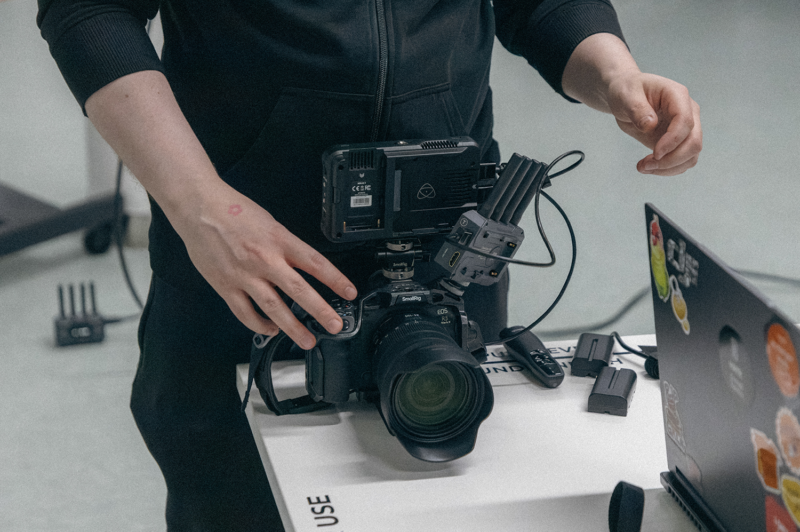
The new version of the course will have the same total number of topics as the previous one, and it also has a fixed lecture timeslot, this time on Tuesdays, from 16:30 onward. This information was already given to the students when the course marketing and enrollment started, meaning that there is now a better chance that the students who have enrolled can attend the lectures. Also based on the student feedback from the earlier version of the course, the amount of practical work will be increased during the lectures.
By working this way, we follow what also Liu (2023, p. 44) notes on how such an approach helps to enhance the students’ practical skills while also increasing their confidence in doing photography. This is further enabled by the fact that the students can immediately apply the knowledge they acquire, and they can also begin to experiment with the things they have learned. This increases the students’ interest and helps to spark their enthusiasm for looking further into the topics of photography and videography (Liu, 2023, p. 44). What is more, this second version of the course will provide an interesting benchmarking opportunity to see how increasing the amount of practical work at the lectures will affect the students’ knowledge and abilities. Also having the lectures at a different time might be better, as the students can jump right into the assignments and reserve the room for the next day after a lecture, rather than having to wait over the weekend and possibly forget some of the things they learned.
Liu (2023, s. 44) also mentions that, together with feedback, discussions play an important role in interactive teaching, as students can raise any questions, receive feedback from others or share their perspectives with others. These interactions encourage the students’ ability to think critically, express themselves and analyse their own work (Liu, 2023, s. 44). Of course, a safe discussion environment does not come into existence right away or on its own, and because of this further development and discussion with students is needed to enable a safe environment for learning.
Overall, the second course iteration will be an interesting opportunity to see how the changes will affect the outcome. As the course lecture have started, it is already clear that the students have been actively participating in the experiment parts of the lectures. They have also asked about tips and tricks from the lecturer and tried out various camera equipment that have been available during the practical work parts. It also seems that the new reservation schedule has helped a bit, but as the students are not obligated to complete their assignment every week, the reservation calendar has been emptier than expected. Looking back at last year, this might completely change later when the course end deadline is getting closer. As the course continues, also these observations and gathering feedback will continue, with the aim of making this course and the multipurpose snapshot room even better for future students.
References
- Liu, R. (2023). A Study on the Practical Reform of Digitizing Photography and Videography Course. Teaching Art and Performance Letters, 13(4), 42-48. http://dx.doi.org/10.23977/artpl.2023.041307
- Närhi, J. (2025). Towards More Accessible Photo and Videography Learning Opportunities at HAMK Design Factory. HAMK Pilkku. https://doi.org/10.63777/eaca
- Rodrigues, M., Proença, J. F., & Macedo, R. (2023). Determinants of the Purchase of Secondhand Products: An Approach by the Theory of Planned Behaviour. Sustainability, 15(14), 10912. https://doi.org/10.3390/su151410912
Author
Jali Närhi
Project Coordinator
HAMK Design Factory
Häme University of Applied Sciences