Capacity for Future Change
Strengthen the competitiveness of companies and society.
Ability to change helps companies and society to understand changes and adapt to the demands of technology and sustainable development. We develop solutions that strengthen anticipation and accelerate adaptation. In the study, we focus on analysing the current situation, setting goals and designing functional solutions together with those affected by the change.
In a changing operating environment, organisations and individuals must be able to renew and adapt to remain competitive. Our research supports this goal by developing innovation, change and renewal capabilities and by promoting networking both regionally and internationally. We support organisations in building sustainable structures and operating culture that enable change and continuous development through co-creation and research-based innovation.
Digitalisation offers significant opportunities for promoting sustainable development and the circular economy. In our research, we focus on supporting companies in utilizing digitalization, optimizing material flows, and developing regenerative business models. We develop solutions that help companies respond to changes in legislation and improve their sustainability communication and enable more efficient use of resources in a circular economy.
The green transition requires society to be able to change and find fair solutions. We will study how the resilience of livelihoods and rural communities that utilise natural resources can be strengthened and how the benefits and challenges of the green transition can be shared fairly. We focus on local solutions that support climate change adaptation, regional vitality and participatory decision-making.
In the development of services for the elderly, we focus on customer-oriented and digital services delivered to the home. Our research promotes the participation of older people and other stakeholders in the development of services and supports the introduction of new technological solutions. Our goal is to build a centre of excellence that strengthens the competence of operators and promotes the wider use of digital health and social services regionally, nationally and internationally.
Our research groups
Capacity for Future Change focus area consists of four research groups.
Our research group focuses on the opportunities and challenges brought by digitalization in the contexts of health, well-being, and working life. Digitalization is reshaping our everyday lives and competence needs – whether as users of digital solutions, professionals supporting their adoption, or experts developing them. Amidst these changes, there is a need for new forms of understanding and expertise, as well as collaboration between diverse actors and stakeholders. Key themes in our work include the diversifying requirements for digital competence, the digitalization of working life, community in the digital age, and the development of digital and technological services in the social and health care sector. Our aim is to strengthen digital skills across different professional groups, promote the development of customer-oriented digital services, strengthen the ethics of human–technology interaction, and create new, innovative service concepts in collaboration with various stakeholders.
In our research and development projects, we address digitalization and digital competence in working life as well as the development of customer-oriented services. We collaborate with wellbeing services counties, companies from various sectors, third sector organizations, local residents, and students. The methods we develop are implemented in cooperation with our partners. In our research and development work, we utilize the experiences and perspectives of professionals from different fields, as well as those of service users and developers.
Digitalisation enables progress towards sustainability and circular economy goals. We develop innovative solutions to help businesses adapt to changing legislation and promote circular practices. Our research supports the transition to a carbon-neutral circular society. We focus on sustainable industry and innovation, sustainable cities, and responsible consumption and production, aligned with the UN Sustainable Development Goals. At the EU level, we address waste and recycling, industrial emissions, environmental claims, and critical raw materials. Nationally, we promote reduced use of non-renewable resources and improved material efficiency, as well as digital solutions that support circularity.
Our team creates user-driven, data-based solutions and strengthens companies’ innovation and digital capabilities. We support reliable digital information sharing, efficient recycling markets, and high-quality waste management. We help businesses analyse and optimise material flows, verify green claims, and develop regenerative business models and responsible communication. Our work serves companies, recycling and waste operators, and producer organisations, and contributes to the development and verification of the circular economy system.
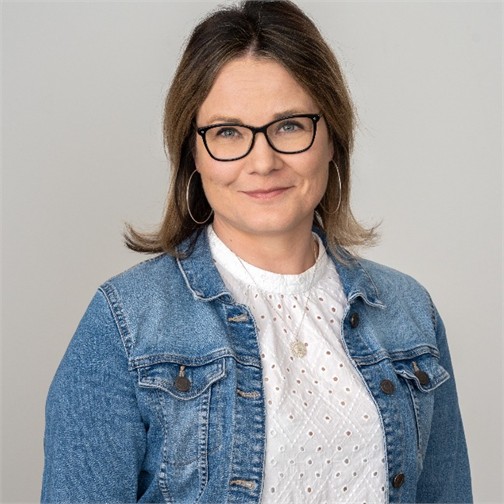
Anne-Mari Järvenpää
Principal Research Scientist, tenure track
Our research group examines renewal in a context where the operating environment is changing rapidly due to digitalisation, sustainability challenges and uncertainty, and where prevailing solutions, competence and innovation practices are no longer sufficient as they are. We do not aim to increase competence quantitatively, but to redefine what kinds of skills, learning and innovation the future truly requires.
We support organisations and communities in identifying drivers of change, in making deliberate choices
and in directing attention, expertise and innovation capacity. Our starting point is that not all innovation is automatically desirable: innovation activity must be assessed according to constraints, impact and purpose. We help translate new ideas into practice so that they generate genuinely meaningful value, not just more activity.
We research and develop, in particular:
- organisations’ change and innovation capabilities, emphasising direction, prioritisation and the ability to let go
- the use of digitalisation and AI to support decision-making, foresight and leadership, not as ends in themselves
- skills and learning that enable genuine change of direction at the interfaces between working life and education
- the implementation, embedding and evaluation of innovations, without the assumption of continuous scaling
- innovation ecosystems and regional vitality built on collaboration rather than intensified competition
- resilience, security and foresight as part of the long-term operational capacity of organisations and regions.
Our work is based on experimentation, co-development and critical evaluation of impact. We combine the perspectives of digitalisation, sustainability, skills development and foresight in a way that challenges prevailing assumptions about innovation and renewal. Our group’s strength is a practical yet research-based approach, in which innovation capability, vitality and resilience are examined as part of a broader change of direction at both individual and organisational levels.
This section is a work in progress.
Our research group focuses on regenerative renewal, in which the development of individuals, organisations, communities and regions goes beyond adaptation and minimising harm and aims to build systems that strengthen vitality, resilience and future opportunities. Our work is linked to an operating environment where digitalisation and artificial intelligence, the sustainability and nature crises, geopolitical uncertainty and the transformation of skills and work challenge prevailing institutional structures and ways of thinking.
Regenerativity serves as the value base and guiding framework of our research group, in which we combine net-zero thinking, enoughness and degrowth/post-growth perspectives.
Our strategic work is structured around four research themes:
- Regenerative transition within planetary boundaries: We study how organisations, regions and ecosystems can progress towards net-zero targets and operate within planetary boundaries so that vitality is enhanced. The emphasis is on strategic, cultural and decision-making changes, not just technological solutions.
- Regenerative enoughness and novel value creation (enoughness): We examine how organisations and communities can generate more wellbeing and value with less growth in material and ecological burden.
- Regenerative economy beyond growth (degrowth / post-growth): We bring a critical and constructive perspective to alternatives to growth-dependent economic and operational models. We explore how businesses, the public sector and education systems can remain viable and vibrant even in situations where growth slows or is consciously limited.
- Regenerativity, leadership and anticipatory renewal: We study the capacity to renew and strengthen after disruptions. Comprehensive security, preparedness, strategic foresight, and learning and leadership are seen as part of regenerative operational capacity at organisational and regional levels.
Our activities are based on co-creation, experiments, foresight and service design. Our aim is to support long-term, systemic renewal.
Our projects
Accelerating Climate-Friendly Waterway Investments
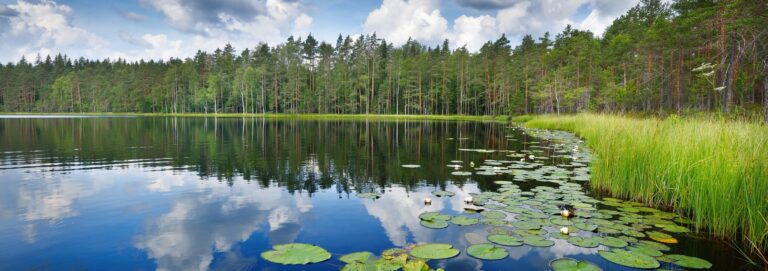
In the project “Vauhtia ilmastomyönteisiin vesistöinvestointeihin (VIIVI)”, we aim to improve water well-being in Kanta-Häme, prevent nutrient runoff, adapt to climate change, and safeguard biodiversity.


AI TEKO!
We develop use of artificial intelligence in social services

AMKmicro – Continuous learning and micro-credentials for working life development
In the AMKmicro project, we strengthen universities of applied sciences’ capabilities to develop continuous learning — particularly the offering, design, implementation, and visibility of micro-credentials — to maintain, enhance, and renew the skills of the working-age population and working life.


Coordination Project for the National ERDF Themes for Green Transition
The task of the coordination project is to strengthen the impact and effectiveness of the national themes of the green transition (energy efficiency and greenhouse gas emission reduction, climate change adaptation and mitigation measures, as well as a carbon-neutral circular economy society) by supporting projects implementing these themes and facilitating collaboration between the projects and…

Cutting Food Loss and Waste in Europe (CIBUS)
CIBUS aims to reduce food loss and waste by increasing regions’ capacity to develop innovative regional policies. Local and regional authorities have an important role in creating a policy environment that stimulates prevention and reduction of food loss and waste.

DAVE – Data-driven circular economy R&D eco-innovation system and demonstration environment
The project creates a data-driven circular economy hub in Kanta-Häme, advancing eco-friendly solutions through digitalization.

DEFINE – Defence Innovation Network Finland
Defence Innovation Network Finland (DEFINE) is an open network that brings together The Finnish Defence Forces, defence and security companies, educational institutions and research institutes, as well as other stakeholders in Riihimäki and the Kanta-Häme region.
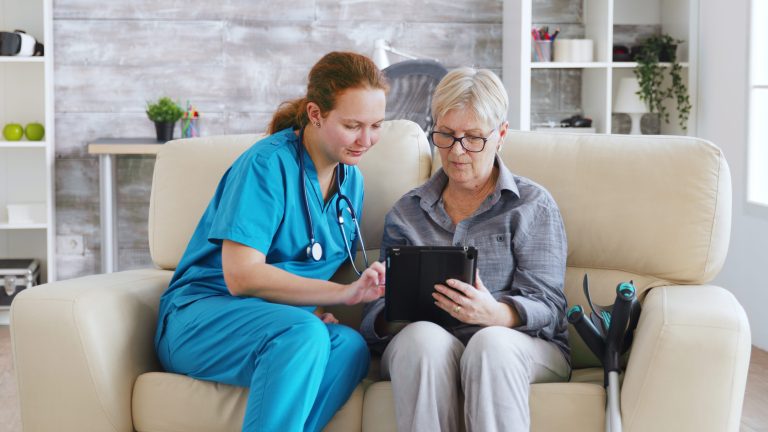

InnoCareHub
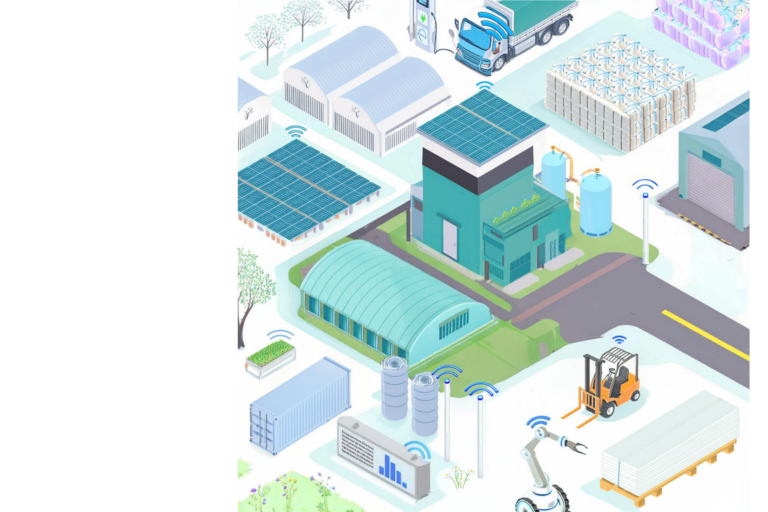
Yhdistämme Kanta-Hämeen kotihoidon toimijat, teknologiayritykset ja alueen asukkaat kehittämään uusia koti- ja etähoidon palveluita ja vahvistamaan digiosaamista.
Contact us
Anne-Mari Järvenpää
Principal Research Scientist, tenure track