Finnish innovation solves the construction industry’s problem – exporting steel trusses becomes more profitable and the carbon footprint is reduced
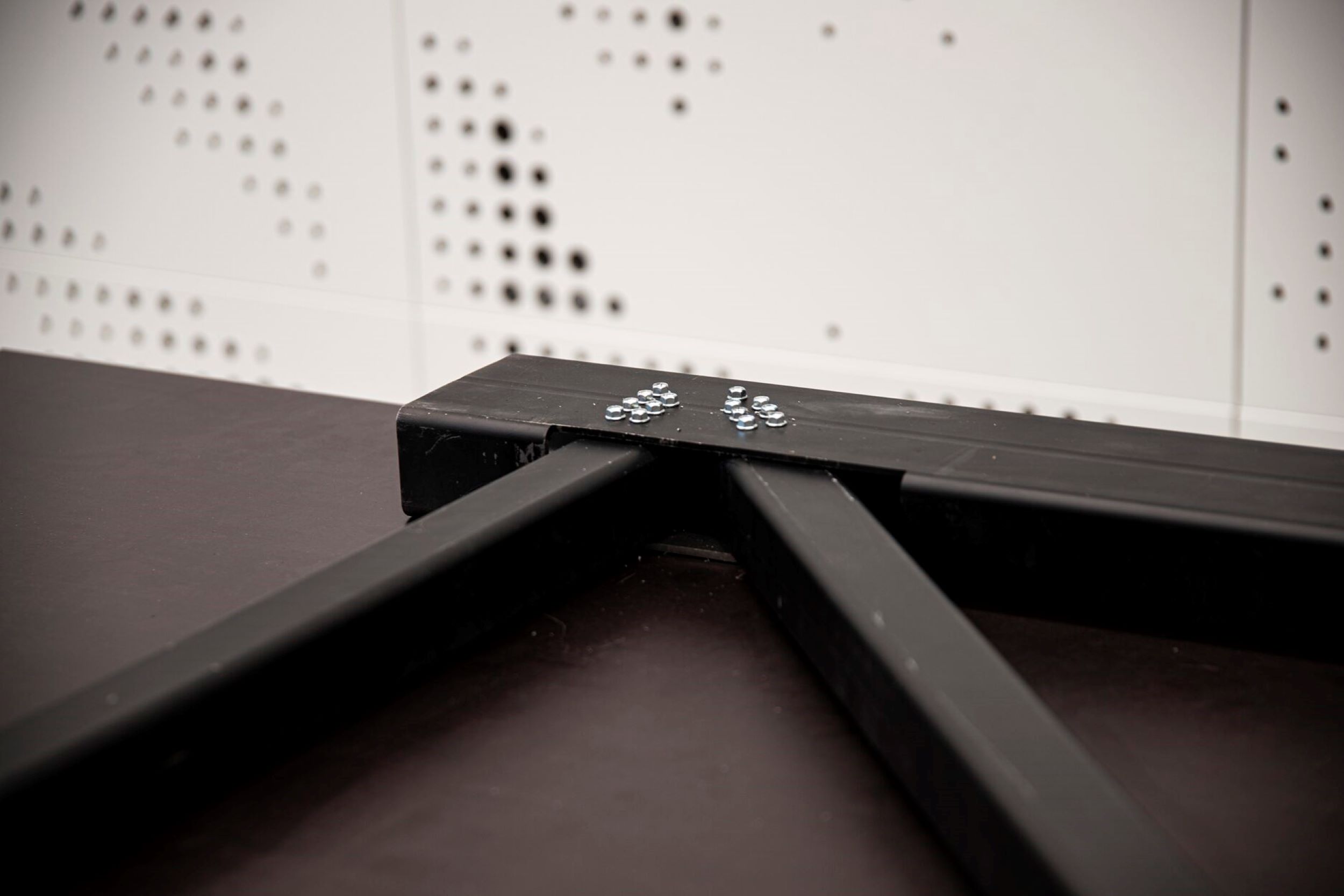
A new joint solution developed at Häme University of Applied Sciences (HAMK) could open export markets for Finnish steel structures and reduce emissions in the construction industry. The joint technique, which does not require welding, enables steel trusses to be transported in parts, significantly reducing export costs. It also facilitates the reuse of structures and, together with the use of low-carbon high-strength steel, can reduce the carbon footprint by up to 80 percent.
Various truss structures are used in steel construction, for example in building roofs, masts and traffic sign structures. Traditionally, steel trusses are welded together, which makes them difficult to deconstruct and reuse. Welded structures also take up a lot of space during transport.
The joint solution developed by HAMK features a patented positioning method for the parts and heat treatment of the holes used in the joint. This method allows for the cost-effective use of high-strength steels in trusses, making the structure much lighter, by up to around 60 percent. In addition, assembly is faster and can also be automated, further reducing production costs.
According to Jarmo Havula, Head of Research and Laboratory at HAMK Tech, the change impacts the entire value chain.
– Previously, it was not profitable to export steel truss structures from Finland abroad due to transport challenges and production costs. Now, a sea container can fit many times more structures transported in parts compared to traditional solutions, says Havula, who is responsible for the invention.
A second patent for the solution is expected soon.
Responds to the construction industry’s need to increase circular economy
Steel production is estimated to account for about seven percent of the world’s carbon dioxide emissions. The construction industry has a continuous need to reduce the use of raw materials and increase the reuse of structures. The new joint solution improves logistics and reduces costs, but it also helps keep construction materials and products in circulation for as long as possible.
– The benefits of existing resources can thus be maximised and the construction industry’s carbon footprint reduced. Calculations show that, together with low-carbon high-strength steel, the reduction can be over 80 percent, says Havula.
The research is being carried out in collaboration with LUT University, University of Coimbra and Fraunhofer Institute of Laser Technology. The project also involves a large number of companies such as SSAB Europe, Stalatube, Weckman Steel, Ukko Works, Suomen Putkilaser, Würth, Linjateräs, Next Inox and Aerial as well as the Finnish Steel Structure Association. The companies represent different stages of steel construction, from material production to joint technology.
– The company partners make it possible for the development work not to remain in the laboratory, but for the idea to be tested and put into practice, he says.
The development work is carried out in the MechJoint research project, which is funded by Business Finland. The project budget is about €680,000 and will last until 2027.
More information: