It’s a Wrap! HAMK’s Research Year 2025

The research activities of Häme University of Applied Sciences (HAMK) strengthened and had a wide impact throughout the year. We have compiled the highlights of our research for 2025 in this news item.
The year 2025 has been a period of significant growth and development for Häme University of Applied Sciences (HAMK) research activities. This year, more than 200 employees have been working on our applied research projects. The total number of ongoing research projects rose to 146. Our RDI (Research, Development and Innovation) funding climbed to an estimated over 16 million euros, including both national and international sources. This enabled us to develop even more impactful solutions for the benefit of the region and society.
Collaboration with businesses and partners was exceptionally close this year. We carried out nearly 600 research and development projects with companies during the year, for example through projects and by providing research services. This cooperation offered businesses the opportunity to access the latest research knowledge and expertise. Interaction with companies also laid a fertile foundation for future research collaboration.
Our students were also able to take part in our research and development work. During the year, nearly 50 theses were completed within projects, and more than 90 trainees worked in our research units. In addition, students were able to tackle joint assignments from research projects and companies as part of their studies.
Success in International and Highly Competitive Funding Calls
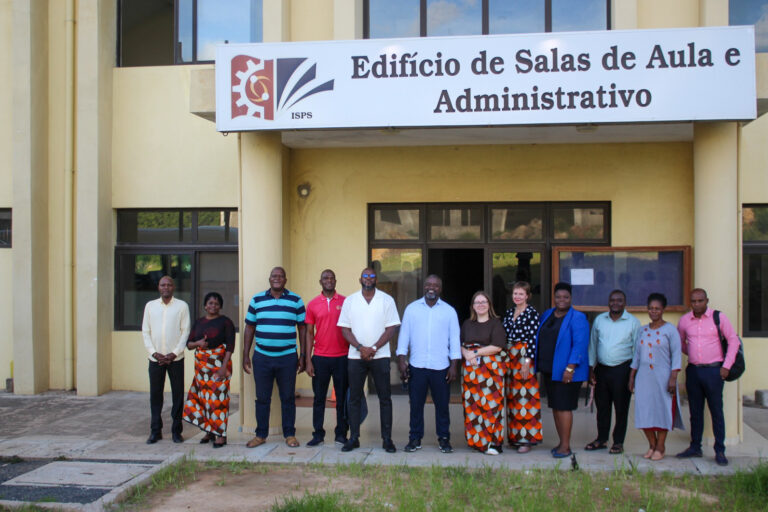
In 2025, we were particularly successful in international and highly competitive funding calls. The consortium we lead was selected from nearly one hundred applications and, as the only one from Finland, became one of six recipients of funding to address the need to develop teacher education in Africa.
We were the first Finnish university of applied sciences to receive funding from the European Space Agency (ESA) for a research project in which we are responsible for implementing a digital interface for monitoring greenhouse gases.
We are leading the Bescaled project, financed by the Interreg Central Baltic programme with a budget of 1.5 million euros, which aims to increase the number of growth companies in the defence and security sector in the Baltic Sea region. At the RUN European University, which we are part of together with nine other European higher education institutions, we are leading a Europe-wide development project that strengthens the innovation and entrepreneurship skills of students and staff.
We have also been successful in the highly competitive funding calls of the Research Council of Finland. We received 1.1 million euros to strengthen regional RDI activities, and, for example, last year we had the highest number of Research Council of Finland-funded projects underway among Finnish universities of applied sciences.
These initiatives further expand our networks and support the solving of global challenges.
We developed our research activities
The visibility of HAMK’s research in national media increased, and our research appeared 84 times in regional and national media during the year. For example, the testing of an intelligent sleeve, originally developed for e-sports, for military use generated significant interest in national media.
We also developed our research activities internally. We sharpened our research profile by launching eight focus areas and established two new units.
The Higher Education Pedagogy Research and Development Unit responds to current challenges such as the interaction between education and working life, student wellbeing and smooth graduation, as well as the wellbeing of the entire higher education community.
Our Innovation Unit, in turn, strengthens the impact of research and development activities, accelerates the commercialisation of research results, and supports students’ start-up and innovation activities as well as entrepreneurship. One significant initiative was also our proposal, together with 11 other universities of applied sciences, to pilot a professional doctorate degree in the next government term.
The year 2025 showed that with cooperation and bold development, a lot can be achieved. We warmly thank all partners, students and staff whose contribution made this year a success. In the future, HAMK research will continue to grow and seek new opportunities to build a better society – together.
Highlights from HAMK’s research in 2025
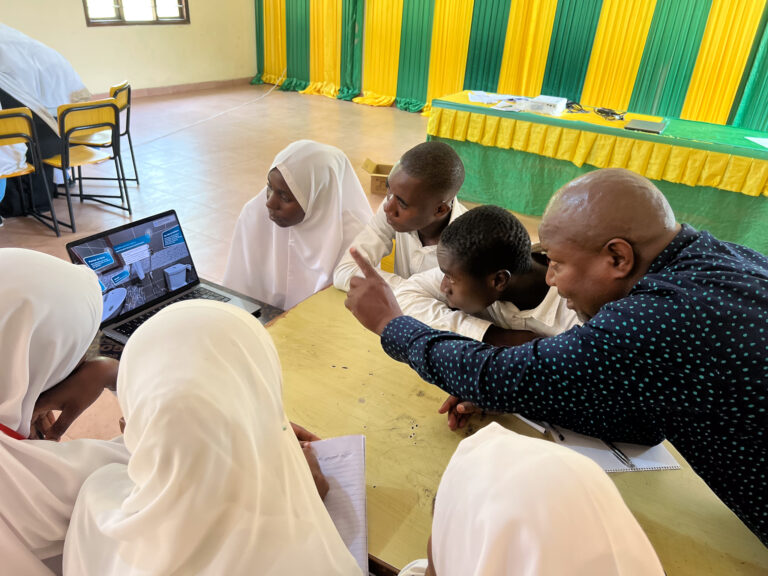
- We trained 160 teachers in Africa and Asia.
- 1,200 teachers in Brazil and Colombia completed MOOCs (Massive Open Online Courses) that our experts created in collaboration with these partners.
- We developed multidisciplinary cooperation with 77 guidance professionals across 8 different regions in Finland.
- 1478 first- and second-year HAMK students responded to the LearnWell survey, which helps us to develop our education. The survey is based on our research and is used to map student wellbeing and learning.
- 100 Haptora eSport smart sleeves were designed and produced for field testing, 70 user studies were conducted with soldiers and e-sports teams, and there were 18 media articles about the smart sleeve.
- 300 pages of system intelligence interview data and 300 survey respondents.
- We utilized over 200 GB of satellite data from Finland in our research to train machine learning models related to agricultural carbon sequestration and land cover classification.
- We converted 40 kg of wood biomass into lignin nanoparticles suitable for glue production, supporting the reduction of the use of fossil natural resources, for example in the construction industry.
- We used 306 kg of waste wood for composting and analysed 175 samples to measure the carbon/nitrogen content of the compost. The composting of waste wood is being studied as a potential replacement for peat in growing media.
- We conducted 1,200 carbon dioxide analyses to measure soil respiration, helping us learn more about the soil’s carbon sequestration capacity.
- We monitored the processes of Finnish biogas plants with over 700 samples, supporting the optimization of gas production in these facilities.
- There were 33 research and development projects with international partners, including 3 with RUN-EU universities.
For more information:
Our applied research makes a world better place