Growing Seasons
Every growing season is different. This page has compiled annual observations of growing seasons from 2017 onwards. More detailed observations during the growing season can be found in the field block information.
Growing Seasons
The growing season of 2025 was in many ways interesting and challenging at the Mustiala teaching and research farm. Almost daily rain became typical for the summer, and the amount of precipitation in Tammela and other nearby municipalities was clearly above average. By the end of June, the Ilmala station of the Finnish Meteorological Institute in Jokioinen had recorded 65 mm more rainfall than the long-term average, and by early September, 55 mm more than average.
During the growing season, there were plenty of perennial silage leys in cultivation due to the scarce yields of previous years. On the cereal side, approximately 10 hectares of winter wheat and experimentally about 5 hectares of winter triticale were sown in the autumn. Among legumes, broad beans and peas were grown, each on an area of 5 hectares. There were about 8 hectares of mixed cereals, with the remaining cereal area sown with oats as a cover crop for the newly established leys. Due to abundant rainfall, the sowing of annual crops was delayed from the plan, but generally the main crops were sown on time by mid-June.
After sowing, the growing season mainly focused on small-scale tasks around the perimeter areas and with trainees, as the harvests effectively prevented weed harrowing and other maintenance activities in the field.
Possibly the most important event of the year on the dairy farm, the first harvest of grass silage, was carried out a week before Midsummer. Supported by abundant rainfall, both the quantity and quality of the crop were successful, providing great relief after previous dry harvest years. Due to continuous rain, not all grass could be harvested for the first cut on time, which partly affected later fodder harvests during the growing season. The second cut was harvested in early August, somewhat overshadowed (in addition to the aforementioned factors) by uneven supplementary fertilisation. The yield was a success in terms of quantity, and besides bunker silo feed, over 300 round bales were made. The third silage harvest was gathered with the help of students from some fields at the turn of September-October, after which there was peace of mind regarding sufficient feed until the next growing season.
Efforts were made to begin the harvest season for annual crops already in early August, but the winter cereals were not yet ready at that time. The real start of harvesting came at the end of August for winter wheat, which yielded an average of around 4–5 tonnes per hectare and was of moderate quality. Due to late sowings, crop maturation took until September in many places, and the oats sown as cover crops in established pastures, damaged by rain, were very challenging to harvest. The yield of cover crop oats varied greatly between 1–5 tonnes per hectare. Between harvests, students were also able to plough a few plots and sow a new disease-resistant winter wheat variety over 10 hectares, and for the first time in a long while, winter rye over approximately 8 hectares. The Allison faba beans harvested at the end of September were a positive surprise with a yield of 2 tonnes per hectare, which also impressed with their reasonably early maturation.
The growing season was, all in all, uniquely instructive and highlighted the good water management properties of the arable land and sufficiently even fertilisation, especially in silage production. Tackling these challenges, we eagerly look forward to what 2026 will bring us.
The snow cover at the beginning of 2024 was strong and, due to drought, it also melted slowly. In early May, the first field cultivation work was able to commence. Sowing began with barley and faba beans, also in early May. Barley sowing was carried out using a seed drill with fertiliser, placing both seed and fertiliser at the correct depth in one pass to ensure rapid germination. However, a cold spell lasting a week following the initial sowing delayed germination. Due to the subsequent record-long heatwave, there was no longer sufficient moisture in the soil for uniform sprouting by the time of the last sowings.
Because of the May heatwave, the first silage harvest took place in the first week of June, and the yield was very poor due to drought. The total rainfall in May and June was only 34 mm. The drought continued throughout the growing season, and rains did not reach Mustiala’s fields until mid-July. The second silage harvest was gathered at the end of July and was considerably more successful. The third silage harvest was collected at the end of September and was the most successful in terms of yield. The success of this latest harvest was attributed to fertilisation combined with rainfall.
Harvesting began 1–2 weeks earlier than usual for winter wheat. The timing of harvest was favourable, and rain did not hinder crop gathering.
The summer’s best performers in terms of yield were winter wheat and whole-crop silage; for all crops, the effect of fertilisation on growth was especially noticeable. The autumn was warm, so more autumn sowing than usual was carried out. Winter wheat was sown on 11.6 hectares and winter triticale on 5 hectares. Autumn cultivations were delayed due to wet fields after autumn rains following harvesting.
As in recent years, various organic clover species and varieties were studied in trial plots on the fields. The trial plot size was a few square metres, and samples were sent for analysis twice during the summer. The trials examine yields and winter hardiness of different clover species.
Yields by Crop 2024
| Crop | ha | kg/ha | |
| Silage; clover + white clover grass | 79.5 | 3785 | kg DM |
| Barley; RGT Planet, Feedway | 13 | 1521 | kg |
| Spring wheat; Leijona, Helmi | 15 | 1919 | kg |
| Winter wheat; Ceylon | 7 | 3373 | kg |
| Whole-crop silage; triticale + green pea | 18.7 | 5296 | kg DM |
| Faba bean; Sampo | 12.3 | 1441 | kg |
| Mixed cereals; Harmony + Hermanni + Argus | 4.8 | 1774 | kg |
The weather conditions in 2023 were very variable. The winter was mild and at the Mustiala measurement site the soil froze to a maximum depth of only eight centimetres. After February, there was hardly any frost. The snow cover varied with shelter, being thickest at 32 cm at the beginning of the year. Of the autumn-sown crops, only wheat overwintered properly; barley suffered somewhat and the broad bean and oilseed rape in the trial plots were completely destroyed.
Spring sowing began with peas on 26 April, but due to rain at the turn of the month, there was a two-week pause in spring work. Sowing was completed on 22 May and emergence was even thanks to soil moisture. However, June was drier and warmer than usual, which caused growth to stall. The first silage harvest was only one third of normal due to the drought.
After June, very heavy rains began: 135 mm in July and 150 mm in August. This particularly promoted the growth of grasses, but the expected grain yields remained low because grain yield components are formed already at the start of summer.
Harvesting started on 14 August with the earliest sown peas. After this, the weather during harvest became unstable and harvesting could only be done between showers. Because of this, grain moisture levels during threshing were sometimes quite high. Harvesting ended with threshing of hemp trial plots on 18 September. Yields were below average.
There were 21 organic farming-related trials in summer ’23 with a total of 183 trial plots. Plot sizes ranged from a few square metres to one hectare. The plots examined various cereal, pulse and grass seed mixtures as well as sowing densities.
Yields by Crop 2023
| Crop | ha | kg/ha | |
| Silage; clover + timothy grass | 82 | 4870 | kg DM |
| Barley; RGT Planet, Feedway | 16 | 2260 | kg |
| Spring wheat; Leijona | 4.5 | 2630 | kg |
| Winter wheat; Ceylon | 8 | 3110 | kg |
| Whole crop silage; triticale + green pea | 21 | 3390 | kg DM |
| Broad bean; Louhi | 10.5 | 1880 | kg |
| Pea; Astronaute | 7 | 2380 | kg |
| Mixed cereals; Harmony + Leijona + Louhi | 8.5 | 1900 | kg |
The start of the growing season was strongly influenced by the winter’s deep frost and snow cover, as well as a protective period in January with rain. Together, these caused an approximately 10 cm ice layer on the field surface, which completely destroyed the autumn broad bean and oilseed rape trials. The autumn wheat plots also suffered severe winter damage, forcing re-sowing except for a small control area.
The thermal growing season began already at the end of April, but due to the cool and wet spring, the first sowing on sandy soil was only done on 10 May. Sowing on clay soils started on 16 May. Thanks to the rains at the turn of May to June, the cereals had a steady start.
The first silage harvest took place between 12 and 14 June. The crop developed more slowly than usual and yields were below average. Causes included the cool spring and winter damage to clover and bluegrass swards in pastures. The second silage harvest occurred in the last week of July, and this yield was also below normal. This was likely due to a ten-day heatwave starting at Midsummer and a rather modest rainfall total of 50 mm between harvests. The third forage crop developed for harvesting only on parts of some silage fields.
Cereal crops and peas developed normally and were low in weeds. Yield levels were reasonable. Broad beans remained short, sparse, and heavily weed-infested. Yield was poor.
| Yields by Crop 2022 | ||||
| area | ||||
| silage | clover/bluegrass pastures | 67.16 | 3084 | kg DM/ha |
| hay | 2.98 | 3241 | kg DM/ha | |
| barley | RGT Planet, Rödhette, Silo | 28.94 | 2437 | kg/ha |
| oats | Niklas, Matty | 18.87 | 2302 | kg/ha |
| wheat | Helmi | 11.98 | 3478 | kg/ha |
| rye | Reetta | 3.58 | 1978 | kg/ha |
| mixed cereals | oats/wheat and oats/broad bean | 6.35 | 2913 | kg/ha |
| broad bean | Vire |
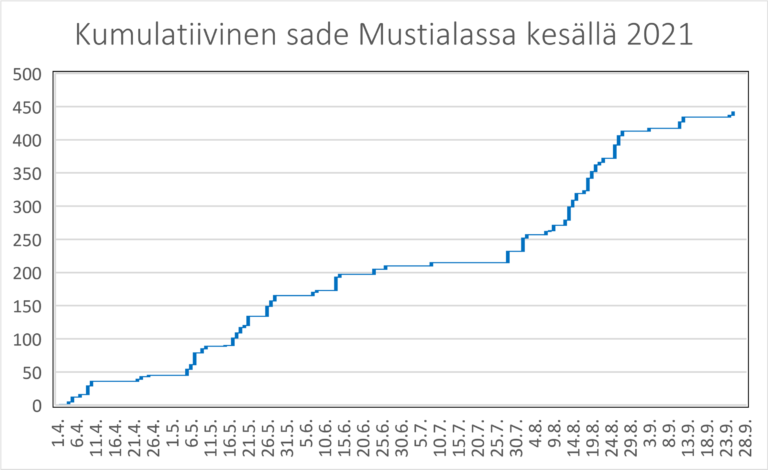
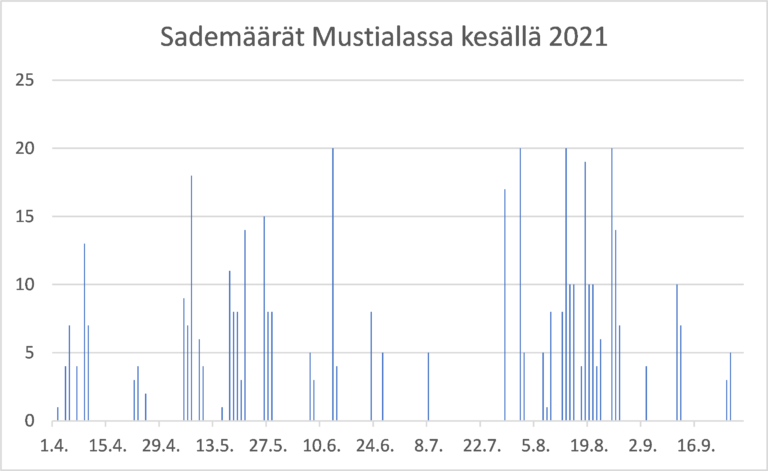
The 2021 growing season began on 8 May. Sowing started on 4 May and ended on 18 June. The extended sowing period was due to heavy rains in May and early June. Re-sowing was largely done in June because of unsettled weather and wet fields.
Late June and early July saw a hot and dry period. The first silage crop was not affected by the drought, but the second silage crop was somewhat poor. The silage harvest dates were:
1st crop 10–11 June
2nd crop 21–23 July
3rd crop 16–18 September
Bitter vetch and cereals suffered from the heat and drought, resulting in low yields. Pastures were also affected, so animals on pasture were given supplementary feeding with bales.
Harvesting began unusually early on 27 July with pea harvesting. Heavy rains in August did not impact the harvest. Harvesting finished on 16 September. Challenges included a high level of weeds in some plots, which complicated cereal harvesting.
There were 20 organic-related experiments and a total of 488 different trial plots.
Yields by crop in 2021:
| Crop | Area (ha) | Kg/ha |
| Winter wheat, Ceylon | 4.44 | 3739 |
| Spring wheat, Helmi | 4.53 | 1977 |
| Barley, Alvari and RGT Planet | 16.57 | 797 |
| Oats, Niklas | 15.33 | 1732 |
| Winter rye, Reetta | 4.65 | 1751 |
| Bitter vetch, Louhi and Kontu | 12.89 | 905 |
| Feed pea, Astronaute | 4.41 | 2864 kg DM |
| Corn silage, Joy and Ambient | 4.84 | 5101 kg DM |
| Total crop silage, protein crops + cereals | 7.48 | 2700 kg DM |
| Total crop silage, whole crop + nitrogen-fixing crops | 4.1 | 976 kg DM |
| Total crop silage, barley | 1.12 | 1735 kg DM |
| Silage, grassland | 74.4 | 5697 kg DM |
| Dry hay | 0.51 | 2353 kg DM |
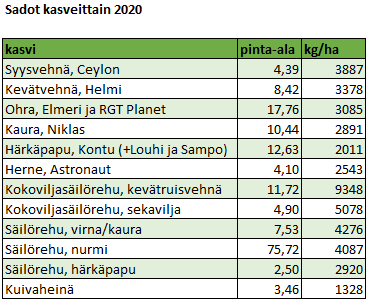
The winter season 2019-2020 was warm, rainy and almost snowless.
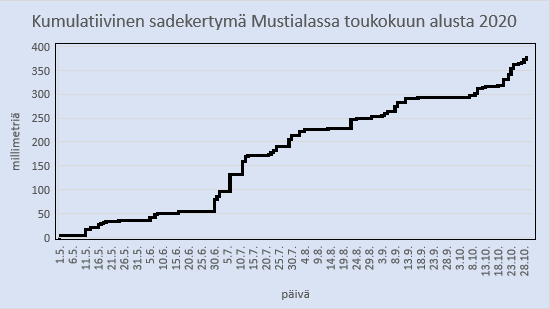
The 2020 growing season began on 2 May. Sowing started on 30 April and finished on 2 June. The prolonged sowing period was due to unsettled weather in May and poor soil frost caused by the warm winter. Early sowings germinated evenly, but some unevenness in seedlings was observed in later sowings.
June saw a hot and dry period, which ended with fairly heavy rainfall. As a result, the first silage yield was very poor and cereals developed many new tillers. The strong tillering of cereals delayed harvesting in some fields until late September. However, there were enough good harvesting days in late autumn.
Yields from the summer of 2020 were moderate. Across the board, yields were lower than the previous year. The water balance of the fields caused considerable variation in yields. There were 26 experiments related to organic farming and a total of 435 different trial plots.
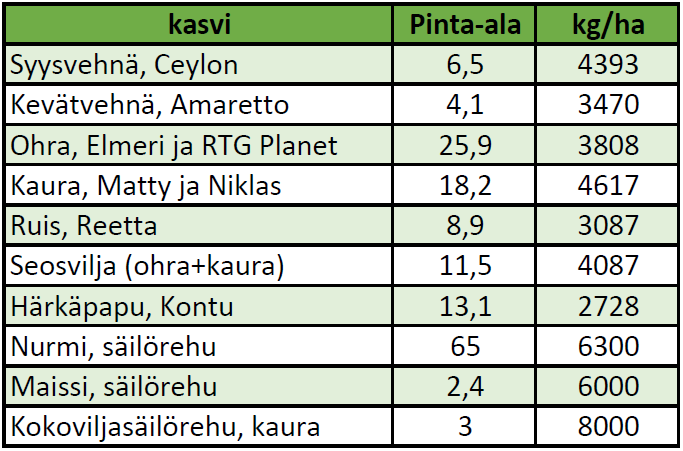
The growing season of 2019 was successful and yield levels were good. The early season rains delayed sowing of maize and grasses, weed harrowing, as well as the application of manganese and zinc. However, the crops remained relatively free of weeds due to the rapid initial development of the cultivated plants. The dryness and cold at the beginning of July somewhat reduced the yields of the second cut of grasses and broad beans on some plots. Nevertheless, yield levels for all crops were better than the previous year.
During the summer of 2019, 14 different organic farming related trials were conducted.
Yields by Crop in 2019
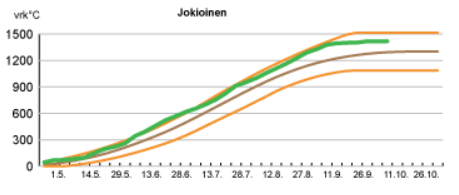
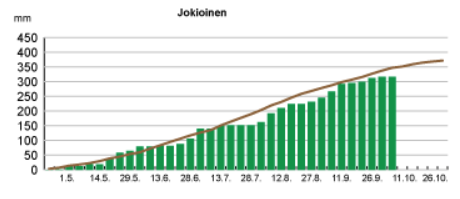
The thermal growing season began on 18 April and ended on 26 October. The length of the growing season was 192 days. The effective temperature sum for this period was 1406 °C.
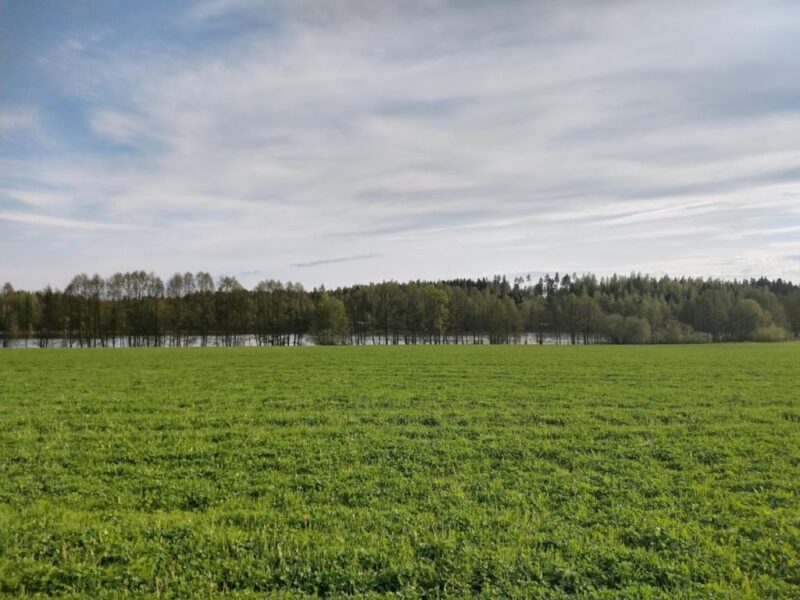
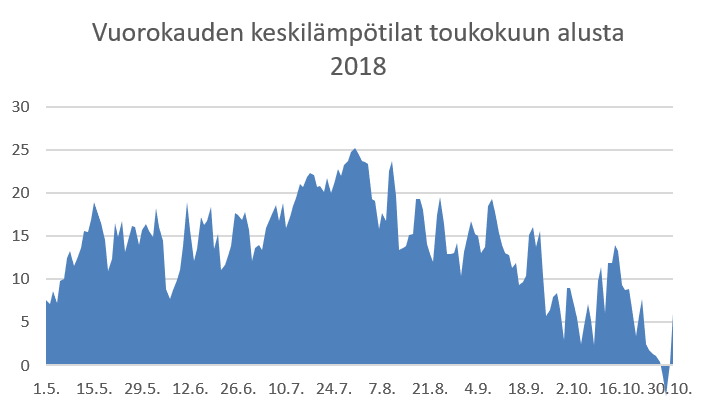
The growing season 2018 was exceptionally dry and warm. The temperature sum was at a record level. Sowing in the spring proceeded swiftly, but the drought caused gaps in the crops. The Midsummer rains caused ungerminated seeds to germinate and the crops became uneven. There was a lot of powdery mildew in the patchy crops.
Yields by Crop 2018
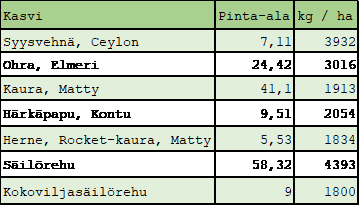
Due to the drought, the oat yield was poor, while the yields of barley, winter wheat and faba beans were reasonable considering the weather conditions. The silage yield was poor and part of the oat area was used to produce whole-crop silage, which was also low due to the short crop height.
Table 1. Yields by crop: crop, area and kg/ha
Fields sown after 15 May yielded on average poorer harvests than those sown earlier. Part of the reason for this lies in the condition of the fields; the driest fields ready for sowing were planted first, while some fields had to wait for the slurry spreading contractor, causing them to dry out excessively in spring.
Table 1. Growth field, area, crop, sowing date and yields as dry matter kilograms
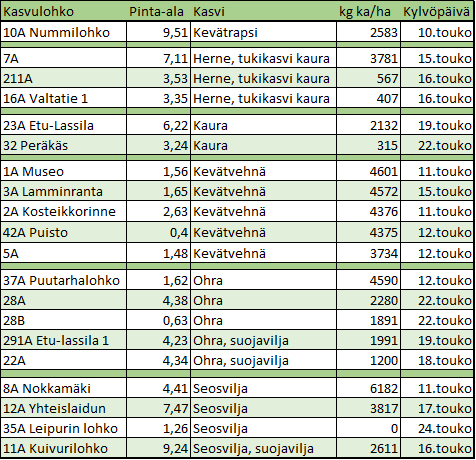
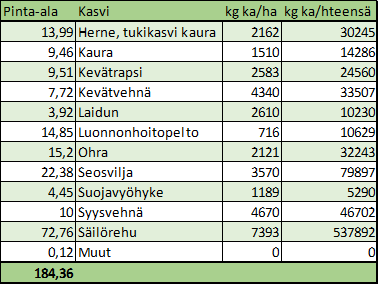
Table 2. Crops, areas, kg dry matter/ha and total kg dry matter.
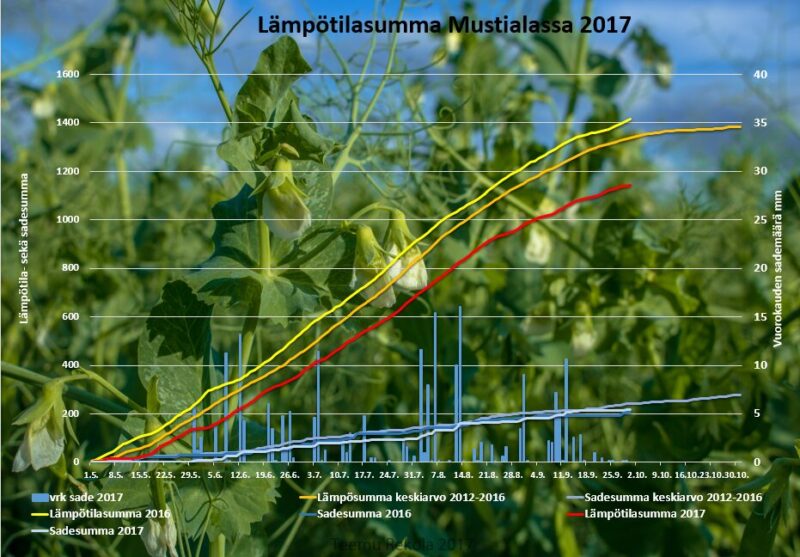
The development of rainfall and temperature sums from May to September at Mustiala. The temperature sum was about 270 degrees lower compared to 2016 and 195 degrees lower than the 2012–2016 average. There have been 64 rainy days between May and September.