KIERTO-VARMA
Circular economy secures material availability


Project information
| Project | KIERTO-VARMA – Circular economy secures material availability |
| Duration | 1.9.2026 – 31.12.2028 |
| Partners | Häme University of Applied Sciences (HAMK) |
| Funders | Regional Council of Häme (ERDF) |
| Budget | 298 174 € (total budget) |
In the KIERTO-VARMA project we are developing and piloting a circular-economy-based operational model and a digital tool for construction companies to assess the criticality and substitutability of building materials.
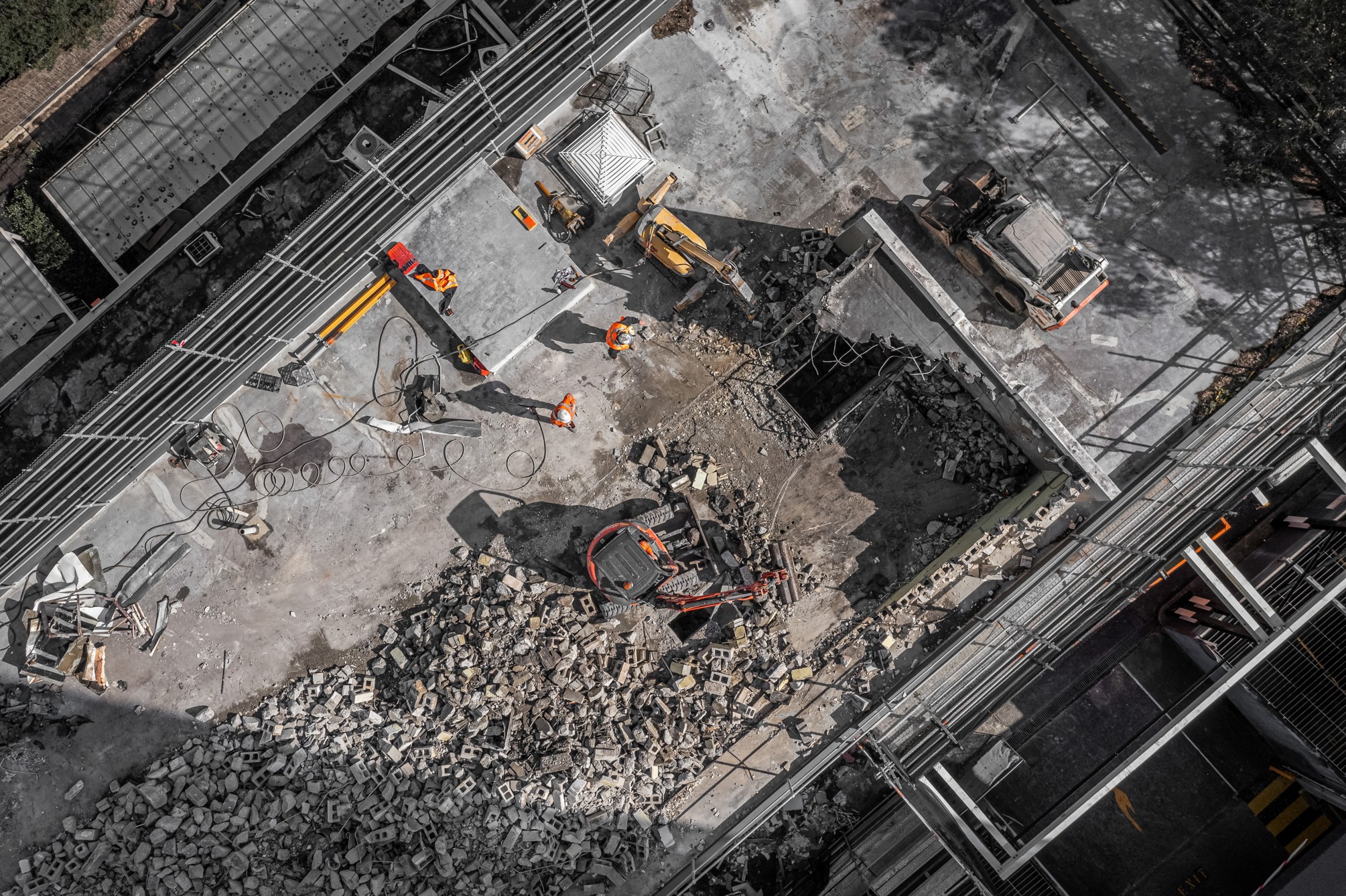
The construction sector is increasingly dependent on the availability of materials and the functioning of supply chains. Market disturbances, price fluctuations and geopolitical crises in recent years have shown that the availability of critical construction materials can deteriorate rapidly. This directly affects the costs, schedules and delivery of construction projects. At the same time, the sector generates substantial quantities of demolition and secondary‑stream materials, whose potential for reuse remains largely untapped.
In the KIERTO‑VARMA – circular economy secures material availability project, we are developing and piloting a circular‑economy‑based operating model and a digital tool for assessing the criticality and substitutability of materials for construction SMEs. We map material flows in the construction sector of Kanta‑Häme, assess material criticality and identify risks related to supply chains. At the same time, we support companies in the adoption and utilisation of substitute materials and promote the uptake of resource‑efficient and low‑carbon solutions and preparedness for supply chain disruptions.
The assessment tool helps companies identify critical materials, evaluate substitute solutions and leverage the opportunities of the circular economy in construction. The tool will be integrated into the DTDP platform being developed in the CIRC‑2‑ZERO project and aims to strengthen material supply security, companies’ resilience and low‑carbon, resource‑efficient construction.
Target group
The project’s target group comprises small and medium-sized (SMEs) construction companies operating in Kanta-Häme, manufacturers of building materials and other actors in the sector, such as demolition and recycling companies, municipalities and research and educational organisations.
Operating area
The project’s operational area is Kanta‑Häme.
Project activities
- Map the main material flows, supply chain dependencies and material substitutability.
- Define three market disruption scenarios and select 3–5 material groups for closer examination.
- Conduct an international benchmarking of circular economy solutions, demolition materials and hybrid structures.
- Develop an assessment model based on the surveys as the foundation for a digital tool.
- Define the assessment criteria, analysis logic, data contents, and input and output data.
- Validate the assessment model in a business workshop.
- Implement the digital assessment tool and define its technical architecture.
- Integrate the tool into the CIRC-2-ZERO project’s Digital Twin Demo Platform (DTDP).
- Validate the platform’s calculation logic and user interface based on company feedback.
- Pilot the tool’s prototype (MVP) with construction companies in practical cases.
- Examine the tool’s use, including in refurbishment, the reuse of demolition materials and in hybrid structures.
- Collect feedback from companies and analyse development needs.
- Compile a clear operating model and guides for stakeholders in the construction sector based on the project’s results.
- Communicate the results through communication channels, industry events and publications.
- Support uptake and replication of the tool and examples of working practices.
Follow us on social media!
Check out HAMK’s social media channels focusing on research!
Contact information
Project Manager: Tarja Mäkeläinen
Project Coordinator: Helena Salmelainen
Specialist: Marina Weck
Architectural Specialist: Catalin Lie