XR Technologies in Onboarding – Insights from Logistics Companies and HAMK to Support Wider Adoption
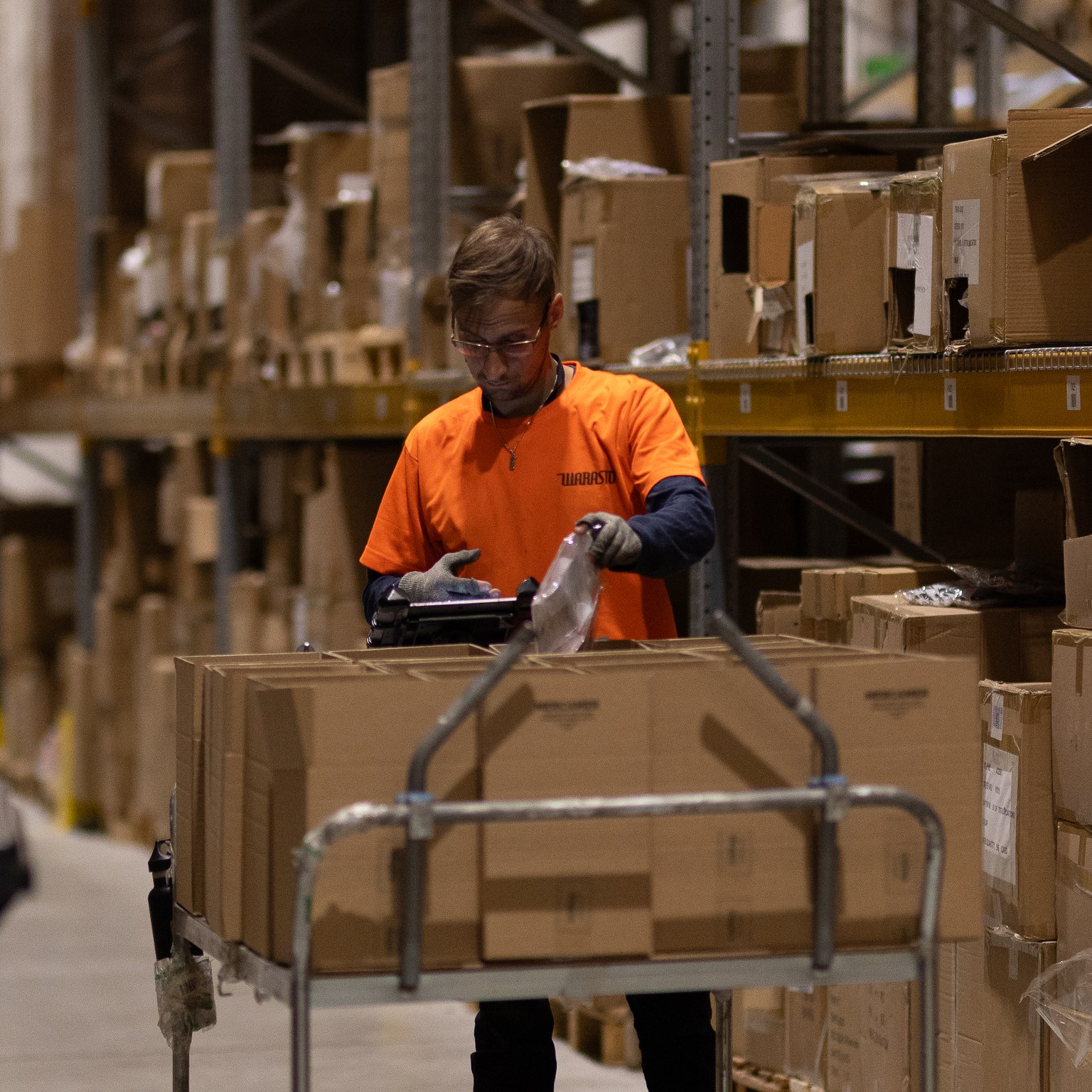




Challenges in logistics onboarding, such as seasonal fluctuations, a wide range of tasks, and multilingual work environments, have prompted companies to seek new, more effective solutions.
In the logistics sector, work tasks are diverse and typically learned through hands‑on practice under the guidance of a more experienced employee. Seasonal fluctuations and staff turnover are common, creating particular challenges for companies’ onboarding and training processes. Digital twins and replicas, XR (extended reality) and game‑engine technologies, as well as other immersive solutions, can help address these issues. These challenges and their potential solutions have been identified and explored in collaboration with logistics companies, educational institutions, and other stakeholders as part of the VIVA – Virtual Warehouse as Learning Environment (ESR+) project. Close cooperation has been carried out with partners such as Warasto Finland Oy and Posti Logistiikkaratkaisut Oy.
At Warasto, a company specializing in focused on warehousing and value-added logistics services, the key challenges include the large number of different work tasks and ensuring consistency in onboarding. According to Warasto’s Marketing Coordinator, Mattia Bonaguro, they currently use video materials as part of their onboarding to standardize the presentation of general information. Ultimately, however, learning the actual tasks happens alongside a more experienced employee who demonstrates safe working methods. This ties up personnel who would otherwise be performing other duties.
Vesa Rinne, Head of District at Posti Logistiikkaratkaisut Oy, identifies similar challenges. According to him, onboarding in the logistics sector is further complicated by strong seasonal peaks. During these periods, a large number of new employees start at once, resulting in many onboarding processes occurring simultaneously. Additionally, as at Warasto, Posti has varying work environments, requiring the production of numerous local instructions, which makes updating them demanding.
Opportunities for Extended Reality in Onboarding
Both Rinne and Bonaguro view digital twins or digital replicas of physical environments as particularly useful tools for facility planning, marketing, and onboarding. A digital twin of a warehouse, for instance, enables more effective planning and simulation of proposed layouts, ensuring their usability. Facilities can also be presented to customers in advance through virtual walkthroughs. “We have found these models extremely useful. Customers can experience the planned spaces virtually and provide feedback,” Rinne says.
While XR technologies have not yet been integrated into onboarding or training activities in these companies, both see potential in this area. They believe XR could support familiarization with warehouse environments, especially if the digital twin includes interactive features such as virtual movement. This would allow employees to explore the warehouse virtually before entering the real environment, improving safety. Rinne also sees potential particularly in onboarding related to order picking and warehouse management systems.
Bonaguro has tested various VR‑based applications that allow users to practice operating machinery virtually. “In my experience, after a few practice sessions, operating the real machine became easier because I had already practiced using it safely in advance,” he explains.
XR Technologies Bring Interactivity to Onboarding
According to Bonaguro and Rinne, onboarding solutions that utilize XR technologies could introduce interactive elements beyond what videos offer. They could replace part of the current onboarding or provide an alternative method for delivering onboarding content. From a safety perspective, for example, XR could illustrate a forklift driver’s limited field of view, helping other employees understand the risks and thereby improving workplace safety.
A general challenge in the logistics sector is multilingualism, with instructions often produced in several languages. The visual nature of digital twins and the possibility to offer multilingual options are viewed as strong advantages that also support safety in multilingual environments.
Future Onboarding with XR Technologies
Both Bonaguro and Rinne believe that game‑engine and XR technologies will become more common in the logistics sector—not only in onboarding and training but also in other applications. “In environments where tasks, surroundings, and processes are standardized, XR technologies are well suited and easy to implement. The challenge, however, lies in rapidly changing environments and tasks that require continuous modifications. On the other hand, basic safety practices are relatively standard, making them an easy starting point. I believe new technologies are a valuable addition alongside traditional onboarding methods,” Rinne notes.
Bonaguro adds that new technologies are still unfamiliar to many companies, and some remain skeptical. In his view, company representatives need low‑threshold opportunities to test the technologies and see their usefulness and potential firsthand.
“At the Logistics Fair, we presented a simple VR‑based onboarding task developed with HAMK. This opportunity to try out an unfamiliar technology attracted significant interest,” Bonaguro says.
He also emphasizes that onboarding must remain accessible and equitable for all employees. While game‑engine and VR‑based solutions can serve as an alternative method, it must still be possible to complete onboarding through other means.
“Companies need support in using these technologies and building the virtual environments. Awareness of the possibilities must be widely distributed within the organization. Enthusiasm from a single individual is not enough—broader stakeholder engagement is required. That’s why pilot opportunities and trials are especially valuable, helping companies understand the possibilities of virtual reality,” Rinne concludes.
VIVA- Virtual Warehouse as Learning Environment
The VIVA – Virtual Warehouse as Learning Environment project (ESR+) is co‑funded by the European Union and implemented by the HAMK Tech research unit in collaboration with LIMOWA ry. During the project, a Virtual Warehouse application is being developed to help companies, educational institutions, and other organisations assess and verify the suitability and benefits of virtual onboarding for training and orientation purposes.