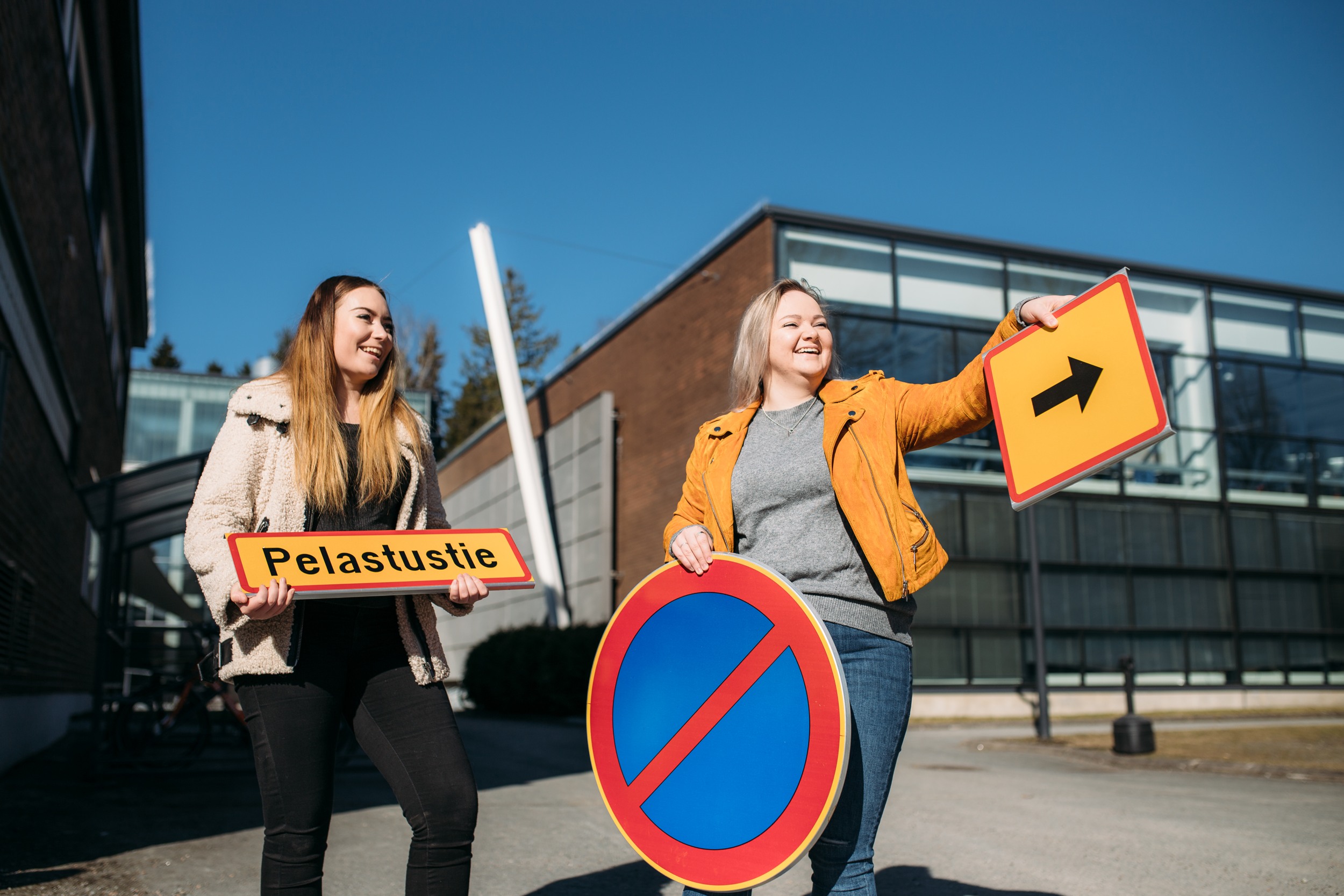
Safety
General Emergency Number 112
Call national emergency number 112 in emergencies when someone’s life, health, property or the environment is threatened or in danger.
Report an emergency:
· Dial 112. if you have a 112 App in your phone, use it.
· Describe the emergency, what has happened and where.
· Follow the instructions you are given.
· Do not hang up until told to do so.
· Redial 112 if the situation changes significantly.
Guiding Emergency Services to the Correct Location
Follow these instructions when an ambulance, fire and rescue service, or police unit is responding to the campus.
1. CALL 112
Provide the exact address and incident location. Answer all questions from the emergency response centre, follow the instructions given, and do not end the call until you are told to do so.
2. PROVIDE THE EXACT ACCESS ROUTE
If the building or location is difficult to find, for example if the building has multiple entrances or the location is behind the building, explain exactly where the emergency responders should go and which route they should use.
3. SEND GUIDES TO MEET THE RESPONDERS
The guide should go to a safe location that responding units can easily find, such as a gate, junction, or the main entrance.
If necessary, use a chain of guides. This means positioning several people along the route, for example:
Campus entrance → Building entrance → Correct floor → Incident location
Agree on meeting points and responsibilities within your teams in advance.
4. BE VISIBLE AS A GUIDE
Clearly attract the attention of the arriving emergency unit by signalling. If necessary, use a high-visibility vest, reflector, hand signals, a flashlight, or your phone’s light.
5. KEEP THE ROUTE CLEAR
Open any required gates and doors. Ensure that access roads, emergency routes, and entrances are free of obstacles.
6. GUIDE RESPONDERS TO THE INCIDENT LOCATION
Lead the emergency responders all the way to the correct location. Do not put yourself at risk. Always follow the instructions of the emergency response centre and the authorities.
Did you notice something? Report a Safety Issue!
Immediately report a safety issue when, for example
- if you notice a safety deficiency in a study or work situation
- if you experience a near-miss or threatening situation
- if you experience harassment or inappropriate behaviour
The form is secured and also allows anonymous reporting.
Suspicious Calls Claiming to Be from the Police, Migri or Another Authority
HAMK has received reports of scam calls targeting international students. The callers may claim to represent the police, Migri, or another Finnish authority and ask for personal or banking information. Please read the instructions below to learn how to identify scam calls and what to do if you receive one.
If someone calls claiming to be from the Police, Migri, or another authority and asks for personal information, banking details, passwords, verification codes, or money, do not provide any information. End the call and verify the matter yourself using the organisation’s official contact details. The call is likely a scam.
What to do if you receive a suspicious call
1. Do not share personal or sensitive information
Do not provide:
- Bank account numbers
- Online banking credentials
- Payment card details
- Verification or authentication codes
- Personal identity code (Finnish personal identity number) or passport details unless you have independently verified the caller’s identity
Finnish authorities do not ask for online banking credentials, payment card details, or authentication codes over the phone.
2. Be cautious if the caller creates urgency or tries to scare you
Scammers often try to pressure victims by claiming that:
- There is a problem with their residence permit
- They are under investigation
- Their bank account must be closed immediately
- Their money must be transferred to a “safe account”
If the caller pressures you to act immediately, the call is very likely a scam.
3. Do not trust the phone number alone
Scammers can make a call appear to come from a Finnish number or even a legitimate organisation. The number displayed on your phone does not prove that the caller is genuine.
4. End the call and verify the information independently
If you are unsure whether the call is genuine:
- End the call
- Find the organisation’s official phone number on its website
- Call the organisation yourself
Do not call back a number provided by the caller.
5. Do not install software or open links
Never install applications, grant remote access to your device, or open links sent by an unknown caller.
6. Report the incident to HAMK
If you receive a suspicious call:
- Inform a member of HAMK staff
- Submit a safety report through HAMK’s reporting channel at www.hamk.fi/safety or Tuudo’s Safety menu.
7. If you have already shared information
Act immediately:
- Contact your bank without delay
- Ask the bank to block any affected credentials, cards, or accounts if necessary
- Report the incident to the police
- Inform HAMK about the incident
Remember: When in doubt, do not share information. End the call, verify the caller through official channels, and report the incident.
Safer Space Principles
At HAMK, we are committed to following the principles of a safer space in all our activities. These principles are designed to help ensure that every event is a positive and rewarding experience for all participants.
We acknowledge that a space or event cannot always be entirely safe for everyone, and we encourage all members of our community and guests to actively contribute to an atmosphere that promotes safety and well-being. Let’s take care of one another.
Our core principles include:
- We respect each individual’s personal physical and psychological boundaries and do not cross them without consent.
- We avoid assumptions and generalisations, and we honour each person’s individuality and identity.
- We engage in constructive dialogue and ensure everyone has the opportunity to participate. We respect each other’s opinions, experiences, and perspectives. We remain open to new ideas and ask questions with a willingness to learn.
- We listen to feedback and adjust our behaviour if someone expresses discomfort caused by our actions.
- We take responsibility for our own actions and apologise if we unintentionally or intentionally cause harm.
- We always address any observed or experienced harassment, inappropriate behaviour, or threats to safety immediately and offer support in resolving the situation.
If you experience or witness harassment or other inappropriate behaviour during an event that continues despite expressing discomfort, you can contact one of the following:
For students:
- Your degree programme manager
- HAMKO’s harassment contact persons
- Student wellbeing services (study psychologist or student welfare officer)
- HAMK Safety Officer
For staff:
- Your line manager
- Occupational safety representatives
- HAMK Safety Officer
You may also report your experiences or observations confidentially via the Safety Report (link).
HAMK University rules
The HAMK University Rules guide behaviour, use of facilities, and safety practices across both campus and digital environments.
Emergency and safety plans for campuses
The campus emergency and safety plans provide instructions for various emergency and exceptional situations. Familiarize yourself carefully and regularly with your campus’s emergency plan.
Safety instructions
Accessible Safety
Emergency number 112
Fire
Bullying and harrasment
Contact us
Each of our campuses has its own security team. HAMK’s security work is planned and developed by the Group Security and Preparedness Group, which consists of the chairs of the campus security groups.



tERHI nOPANEN
Head of education / horticulture and forestry
terhi.nopanen@hami.fi
+358504641607




tERHI nOPANEN
Head of education / horticulture and forestry
terhi.nopanen@hami.fi
+358504641607


Kaunisto Jyri
head of education / Food Industry, agriculture
+358505745131
jyri.kaunisto@hami.fi


Jyrki Hapulahti
Senior Lecturer
jyrki.hapulahti@hami.fi
+358408338211
Kaunisto Jyri
head of education / Food Industry, agriculture
+358505745131
jyri.kaunisto@hami.fi