Ongoing Study Strengthens Collaboration Between Education, Guidance, and Rehabilitation in TELMA Education

The transition from comprehensive education to upper secondary education is a sensitive phase during which young people often encounter social, practical, and academic challenges and expectations.
This transition may place demands on a young person’s self-regulation skills and require considerable adaptability. New people, situations, and ways of working often take time to become familiar. A student may understand the instructions they receive yet still need substantial support in regulating their emotions and behaviour. For this reason, planning appropriate and sufficient support requires an understanding of the expectations and approaches that best suit each individual student.
Häme University of Applied Sciences (HAMK) and the Valteri Centre for Learning Support have launched the Targeting Support in TELMA Education study. The project pilots the SEO-R² Emotional Development Assessment Method and identifies and develops pedagogical models for supporting TELMA students. The study examines how assessing emotional development can help identify new pedagogical solutions and support positive interaction between teaching staff and students, enabling smooth learning and participation in everyday activities.
TELMA refers to preparatory education and training for work and independent living. It is intended for students who require intensive special support due to severe learning difficulties, disabilities, or illnesses. The programme focuses on developing skills needed for working life and everyday living. Learning objectives and support measures are planned individually for each student.
Assessment of Emotional Development
The SEO-R² Emotional Development Assessment Method has been developed since the 1990s, and the first Finnish-language version was introduced in 2016. In Finland, training in the use of the assessment method is provided by Saavuta Expert Services Ltd., a subsidiary of the Finnish Association on Intellectual and Developmental Disabilities (FAIDD).
TELMA refers to preparatory education and training for work and independent living. It is intended for students who require intensive special support due to severe learning difficulties, disabilities, or illnesses. The programme focuses on developing skills needed for working life and everyday living. Learning objectives and support measures are planned individually for each student.
In this project, emotional developmental stages are assessed through a guided discussion with professionals who know the student well. The discussion explores the student’s emotional competencies, interaction skills, strengths, and support needs. Based on these discussions, recommendations are developed for teaching and guidance practices.
The aim is to help adults working with the student better understand their needs in relation to their emotional developmental level and adapt their own practices and pedagogical approaches accordingly. The study will monitor what changes become visible in students’ learning and everyday functioning after the support measures are introduced. At the same time, the project will evaluate how useful educational staff find the SEO-R² assessment method.
New Understanding Through Collaboration
In addition to HAMK and Valteri, the pilot involves four vocational special education institutions providing intensive special support:
- Kiipula Vocational College
- Live Vocational College
- Luovi Vocational College
- Spesia Vocational College
The study will include six TELMA students and the professionals working with them (approximately 12-18 participants). Most students will be in their first year of TELMA education. Data will be collected through assessment discussions as well as baseline and follow-up questionnaires. The study will also explore students’ own experiences whenever possible.
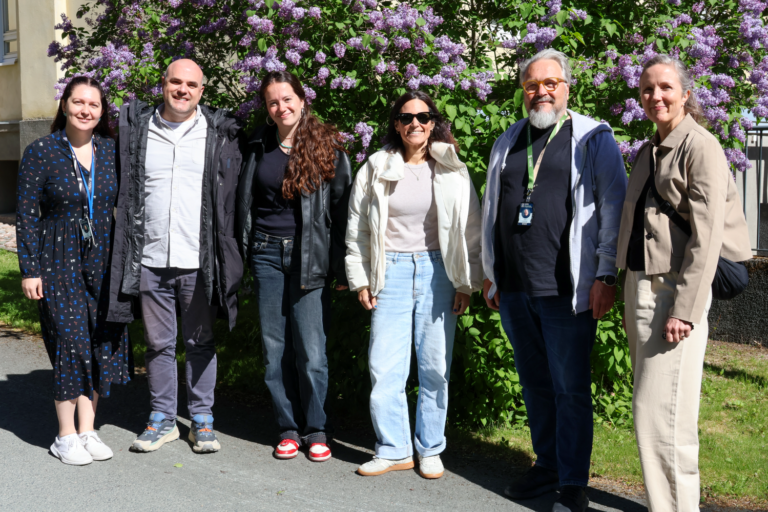
The HAMK Edu Research Unit and the Valteri Centre for Learning Support are conducting the study. The principal investigator and project manager is Sanna Ryökkynen from HAMK. The research team also includes Principal Research Scientist Jaakko Helander from HAMK, as well as Research and Development Coordinator Iines Palmu and Neuropsychologist Satu Peitso from Valteri.
HAMK is responsible for overall study management and evaluation. Valteri coordinates student assessments and supports educational staff in using the assessment method.
The Social Insurance Institution of Finland (Kela) funds the study through its Rehabilitation Development Funding Programme (Decision No. Kela/3599/2026). The project commenced on 1 September 2026 and will continue until 30 April 2028.
The project aims to develop an operational model that could also be used in other upper secondary educational institutions. The results will be published in Kela’s “Developing Rehabilitation” publication series as well as in academic and professional journals.

This is what it’s about
- Project: Targeting Support in TELMA education (preparatory education and training for work and independent living)
- Duration: 1.9.2026-30.4.2028
- Partners: Häme University of Applied Sciences and Valteri School
- Funder: Kela, the Social Insurance Institution of Finland
More info:


Iines Palmu
PhD (education), Research and Development Coordinator
iines.palmu@valteri.fi
029 533 2014

Satu Peitso
Psychologist specialized in neuropsychology
satu.peitso@valteri.fi
029 533 2827