New tools and practices for home care
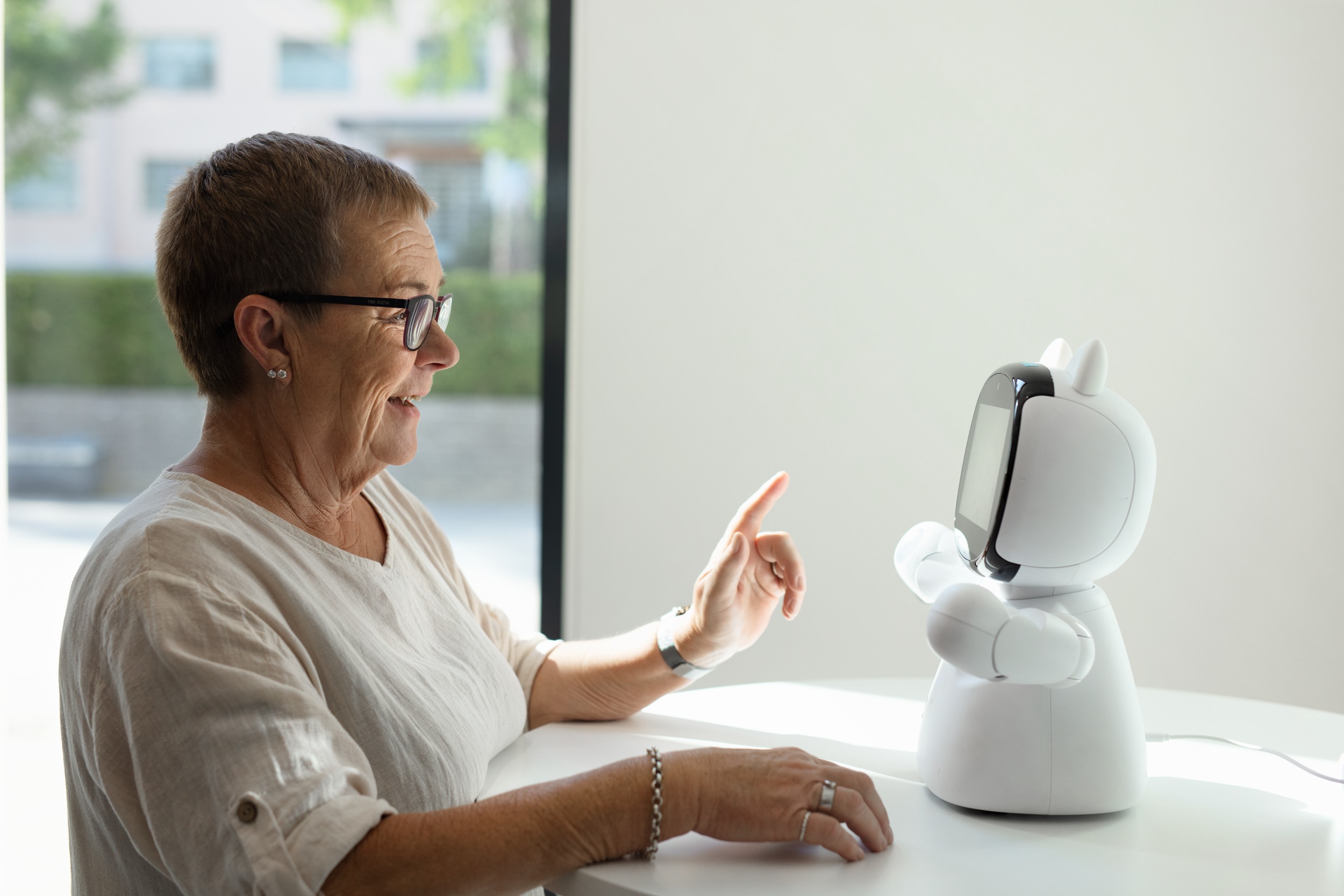
The DigiKH project identified nine areas of competence that nursing staff need in digital home care. These formed the basis of a continuous learning model. The project also developed training for key practitioners in digital home care and, together with Oma Häme’s home care services, a tool that remained in use after the project ended.
In addition to clinical expertise, nursing staff providing remote home care need to be able to assess whether a remote visit is suitable for a client and how to guide them safely via video. Häme University of Applied Sciences (HAMK) and Laurea University of Applied Sciences explored these competence needs with the Wellbeing Services County of Kanta-Häme (Oma Häme) and the Western Uusimaa Wellbeing Services County. The work drew on interviews with 13 clients and four nurses, as well as findings from three workshops.
The project’s findings were brought together in a continuous learning model. It describes how a team can develop digital skills as part of everyday work. It also covers induction for new staff, collaboration between professional groups and well-being at work. One practical example is a shared training calendar: the team agrees in advance which skills to practise, who will provide guidance and when time will be set aside for learning.
Oma Häme gained a shared view of home care teams’ workloads
HAMK researcher Joona Koistinen worked with Oma Häme’s home care staff to develop a tool for monitoring team workloads. Each day, home care schedulers record information such as the number of nurses whose scheduled home visits have been reassigned to colleagues on the same shift. The data appears in a single report. Users reported that it helped them make faster decisions about which teams needed more staff. The report remained in use by Oma Häme after the project ended.
Participants shared what they learned with their teams
In 2025, home care professionals from the two wellbeing services counties took part in pilots of a training programme for key practitioners in digital home care, worth three ECTS credits. Participants worked through learning assignments with their own teams and reported feeling more confident discussing digital services with clients and colleagues. Across the two pilots, there were 20 participants, nine of whom completed the programme. Feedback highlighted the difficulty of finding time to study alongside busy working days.
Eight personal plans for well-being at work
Nursing students prepared eight personal plans for well-being at work for employees of companies providing services in people’s homes. The employees described what made their work demanding and what helped them cope. Drawing on these experiences, the students also suggested changes at workplace level, such as regular team meetings. The project also produced the Minun voimavarani materials to help individuals reflect on their own well-being.
The DigiKH project’s results are discussed in the HAMK Pilkku collection Digiosaamista ja kestävää työtä kotihoitoon. Edited by Päivi Sanerma, the collection contains ten articles in Finnish.
DigiKH project
Digital expertise and sustainable work for home care (DIGIKH) aimed to strengthen home care staff’s digital competence and well-being at work and to develop a continuous learning model. Häme University of Applied Sciences and Laurea University of Applied Sciences carried out the project from 1 November 2023 to 30 April 2026. The project was co-funded by the European Union through the European Social Fund Plus (ESF+).

Lisätietoja: