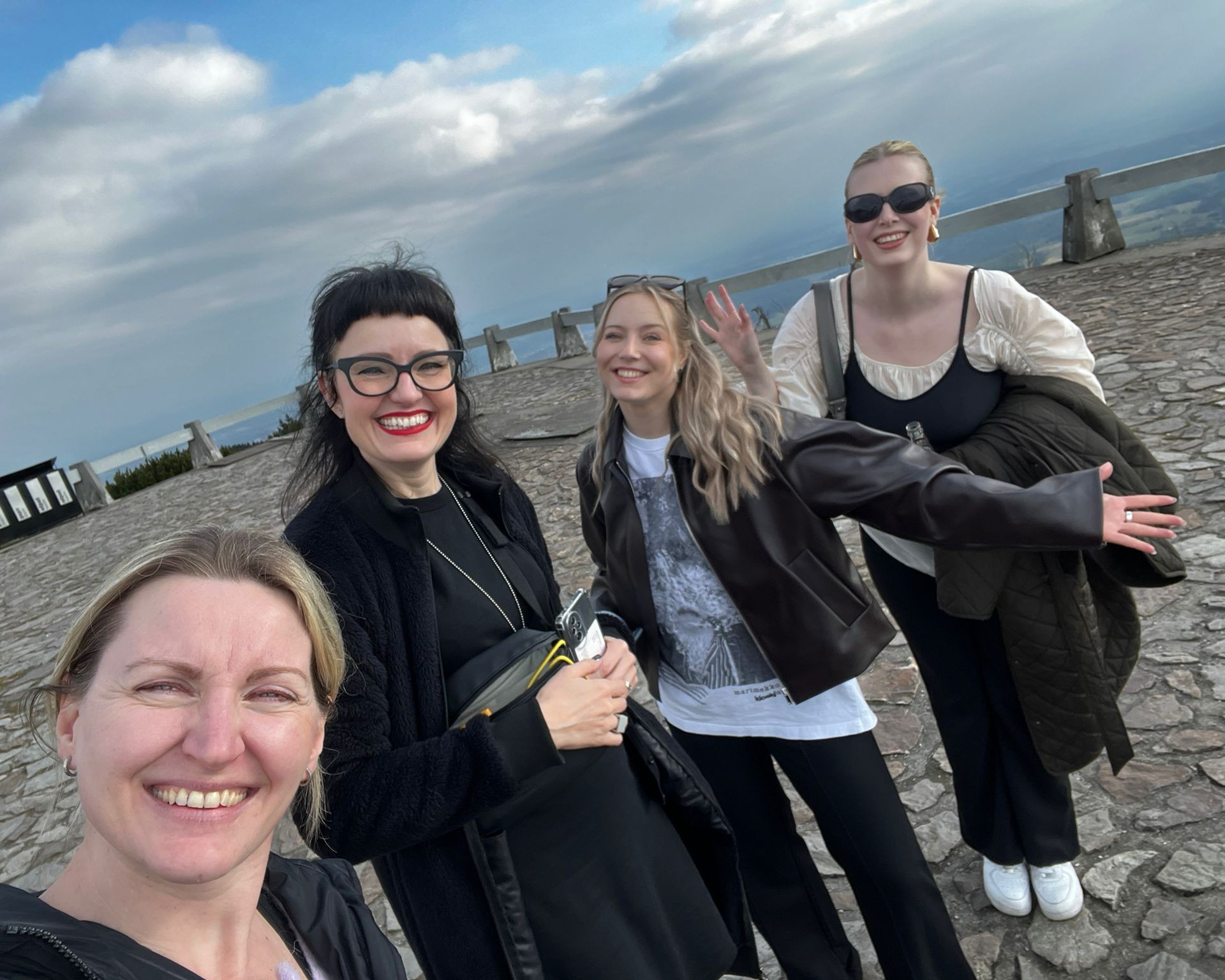
What makes a university’s entrepreneurship community active and vibrant? We set out to explore this question on a staff exchange at the Technical University of Liberec (TUL) in Czech Republic. There we learned about services and practices supporting entrepreneurship, innovation and technological development and saw the students’ role in putting them into practice.
The Regional University Network European University (RUN-EU) is a network of ten European higher education institutions, aiming to share knowledge through collaboration and support regional and international development (RUN-EU, n.d.). RUN-EU collaboration takes many forms, and knowledge is shared between institutions through joint learning modules, events and networks, among other activities. The RUN-EU network also provides staff at the Häme University of Applied Sciences (HAMK) with opportunities to take part in staff exchanges.
In April 2026, two project engineers, Joanna Löfman and Marika Tamminen, from the HAMK’s School of Business, Design and Technology unit’s shared services, visited TUL in the city of Liberec, in Czech Republic. During the week, we explored activities that demonstrated how significant the role of students can be in building a university’s entrepreneurship community.
Heading to Liberec in Czech Republic with an open mind
Planning the trip, we hoped to explore the services and practices related to entrepreneurship, innovation and technological development at other RUN-EU institutions and compare them with HAMK’s activities. We chose TUL, one of the most recent members of the RUN-EU network. We wanted to get to know our new partner university, establish connections with its staff, and see in practice what kinds of solutions they had developed on themes familiar to us.
The timing of our visit aligned well with the themes we wanted to explore. The week included events related to entrepreneurship and innovation, such as Pitch Day Start-up Fair and Ideathon.
The week’s programme looked packed, but there was also time for sightseeing and exploring student life in Liberec. Starting the trip, however, we could not anticipate just how much we would see and experience in a single week and, above all, how many new people we would meet, from colleagues and students to external partners.
We set off with open minds and a sense of anticipation, as this was the first international work trip for both of us. We were curious to see how everyday life and working practices at TUL differed from our own, or whether they would turn out to be all that different.
In addition to comparing working practices, we looked forward to gaining fresh perspectives on our work, meeting colleagues in different roles, meeting students, and building new international contacts. The staff exchange also offered an opportunity to learn about Czech culture and the local university community.
Entrepreneurial activities, pitching competitions and a Czech can-do spirit
The main reason we chose TUL for our staff exchange was that our discussions with the host team revealed a very active culture of support for entrepreneurship. During our visit, we heard staff and students share their experiences of innovation and entrepreneurship activities at TUL, and we attended some key events.
It was particularly interesting to see how staff and students work together to support TUL’s entrepreneurship community. One example of this is the annual START-UP TUL competition where competing teams come up with an idea and, with mentor support, develop it into a start-up concept and a pitch.
The competition has been held 12 times, and we had the opportunity to watch the semi-finalists of its 12th edition at the Pitch Day Start-up Fair event. The event was organized by the Student Business Club, TUL’s student club promoting entrepreneurship, with support from TUL staff (SBC TUL, n.d.). At the Pitch Day Start-up Fair event, teams pitched their business ideas at their own stands, while the jury moved from stand to stand to hear each pitch. The jury consisted of the Student Business Club team, mentors, advisers and partners.
The event was open to the public, and every visitor could contribute to the evaluation by distributing “boosts”, a competition currency that influenced the assessment and whether a team progressed to the final (SBC TUL, n.d.). The event demonstrated how deeply entrepreneurship is embedded in the university community and how central students are to making it happen, both as organizers and participants.
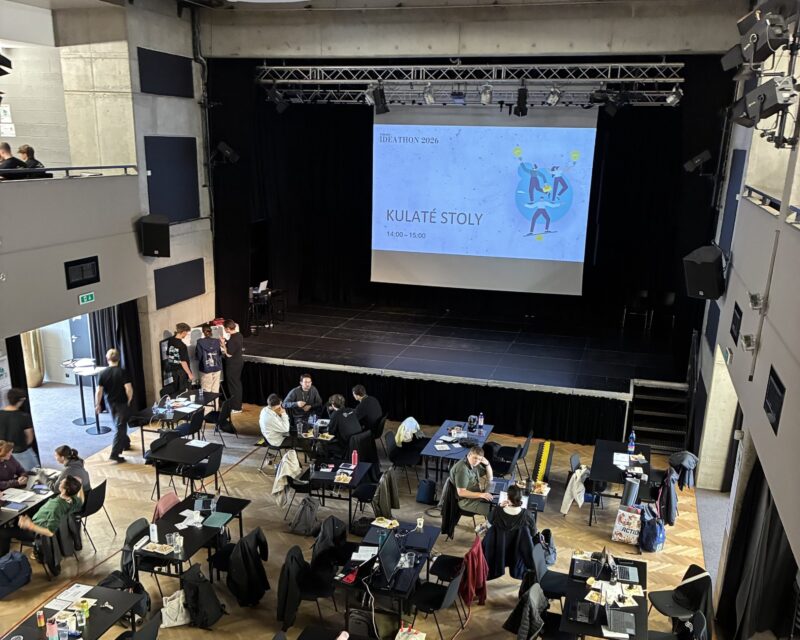
Later in the week, we also attended Ideathon, another important event for the development of regional innovation activities (Image 1). Ideathon is a 24-hour hackathon: the participating teams have 24 hours to respond to a challenge with their own idea, which they then pitch to a jury, with prizes awarded to the best ideas. The competitors were students in upper secondary and higher education. The event was organized by the regional development agency in collaboration with regional stakeholders and businesses (Smart Akcelerator II Libereckého kraje, n.d.).
At the Ideathon, the students could choose from four challenges: “Strengthening health literacy,” “Linserka – A place coming to life,” “Jablonec nad Nisou 160 years as a city” and “Smart students, a richer region”. The “Smart students, a richer region” challenge was organised by TUL as part of the RUN-EU Innothon challenge “Smart Cities, Smart Villages”. The 2026 RUN-EU Innothon aimed to address sustainable development, digital transformation, smart mobility, environmental protection, community well-being and regional development (RUN-EU, 2026). The “Smart students, a richer region” challenge attracted considerable interest, with more than a quarter of the participating teams choosing it. The task was to design a digital solution that helps young people find information, educational opportunities and their own career paths. The aim was to demonstrate through their ideas how technology can support learning, personal growth and the region’s future development.
The students’ active role was particularly evident at events such as the Pitch Day Start-up Fair and the Ideathon. In addition to being the target group for these activities, students were central to building and developing the community. It was especially interesting to see how entrepreneurship and innovation activities at TUL formed a coherent whole as students, staff and regional stakeholders worked towards shared goals. The visit prompted us to consider how students’ own agency and responsibility could also be strengthened in HAMK’s entrepreneurship and innovation activities, and how existing strengths, such as entrepreneurship communities, innovation environments and other activities supporting entrepreneurship, could be connected more closely to achieve shared goals.
Getting to know TUL from HAMK’s perspective
In addition to exploring entrepreneurship, our visit gave us a broader understanding of TUL through meetings with other staff and students and introductions to its services. Overall, the Technical University of Liberec has approximately 7,000 students and 1,200 staff members.
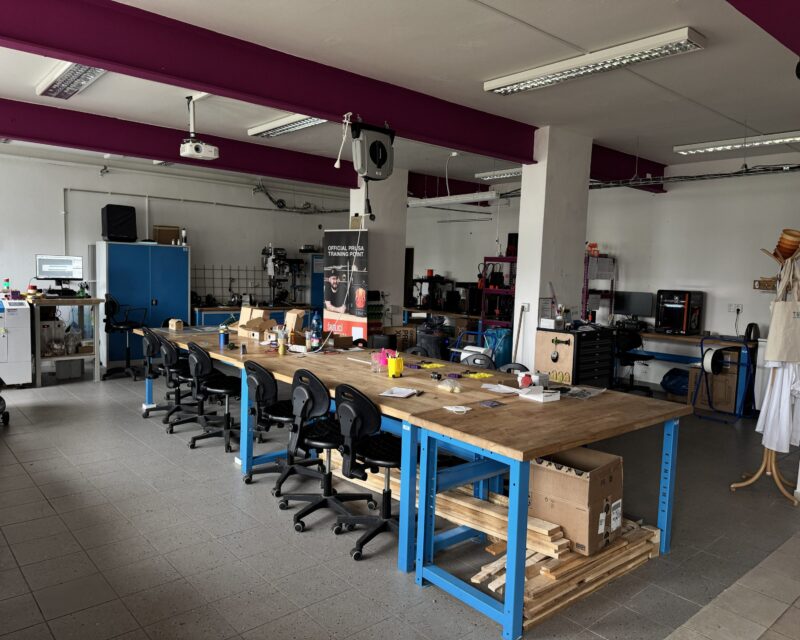
The university combines seven faculties and the CXI Institute, which focuses on research and innovation. CXI is a research institute at TUL specializing in nanomaterials, advanced technologies and innovation. The faculty structure is clearly visible at TUL: degree programmes are firmly located within their own faculties and each of them also has its own visual identity as part of the shared TUL brand. One recurring observation during the visit was the students’ active role in the university community. At TUL, this was not limited to entrepreneurship: the same hands-on culture was also evident in innovation and technological development. For example, we visited TULLab (Image 2), a multidisciplinary environment for making and experimenting. There, students can develop their ideas in practice and draw on expertise from different fields to implement them. We recognized many similarities with HAMK’s Design Factory: the aim is to bring together multidisciplinary expertise, experimentation and practical work.
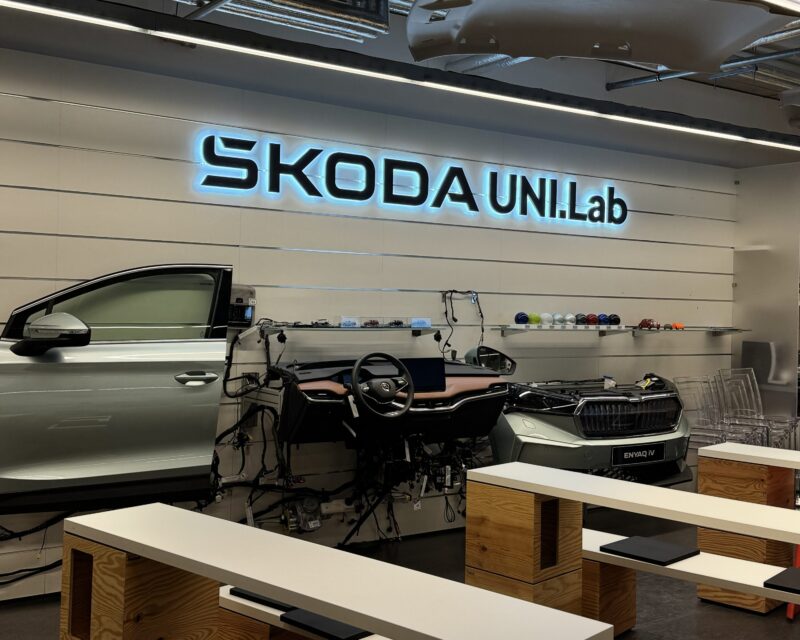
The importance of hands-on work and student participation was also evident at the CXI Institute where we learned about research and development activities, and visited laboratory environments. We saw, for example, materials and cosmetics development, as well as student vehicle projects. In one vehicle project, groups of new students continue the work of previous groups, taking the project forward year after year. In this way, the students’ work is not only a one-off exercise but becomes part of a longer-term development process. Business collaboration was also clearly visible in TUL’s operating environment. For example, the Czech Republic car manufacturer Skoda has a laboratory associated with the university as part of their collaboration (Image 3).
Our observations at TULLab and the CXI Institute complemented the understanding we had gained from the entrepreneurship events. At TUL, the students are offered a variety of environments in which they can move from ideas to experimentation and practical development. From a staff exchange perspective, it was interesting to compare these practices with HAMK’s own innovation environments and consider how we could further strengthen students’ active role at HAMK.
The benefits of the visit extended beyond entrepreneurship and innovation themes and environments. One of the most interesting aspects of the staff exchange was the opportunity to discuss topics familiar from our own work with TUL’s specialists. In meetings on marketing and communications, for example, it quickly became clear that higher education institutions are considering many of the same questions: how to reach prospective students, how to build a shared brand across different fields, and how to develop communications in a changing media landscape.
TUL had recently updated its brand, and its website is the next major development priority. Our discussions also highlighted differences in the use of social media channels. For example, Snapchat does not have the same standing among young people in the Czech Republic as it does in Finland, and TikTok is not one of TUL’s key marketing channels.
Just as we were interested in learning about TUL’s practices, the TUL staff also wanted to hear about HAMK and our work. We therefore had the opportunity to present our own work and HAMK’s activities more broadly. HAMK’s visual brand identity, for example, received positive feedback. The staff exchange provided an opportunity not only to gain new ideas, but also a chance to recognize the strengths of our own organization and share them with TUL.
Key insights from the staff exchange
During the staff exchange, we also explored Liberec as a student city, the Technical University of Liberec as a higher education institution, and the services and events it offers. Our visit showed us that TUL has strong activities supporting entrepreneurship, innovation and technological development. TUL also has strong regional collaboration with various stakeholders, funders, nearby cities and businesses.
Overall, TUL has an active entrepreneurship community, and students play a significant role in developing its activities, particularly in organizing various start-up events. A shared campus and student services bring the different faculties together.
During our visit, we found that HAMK and TUL share many of the same challenges and goals. The visit also deepened our understanding of HAMK’s own strengths, brought new perspectives to development work and helped establish international networks. The activities at TUL demonstrated that students’ active role in entrepreneurship and innovation can be a significant asset in developing a higher education institution.
Our staff exchange at TUL gave us a great deal, but above all it showed that getting started with international collaboration does not have to be complicated. A week at another university offered a chance to step outside our familiar working routines, see things from new perspectives and meet new people. RUN-EU provides an established network, but taking advantage of its opportunities can start simply with your own curiosity: what would I like to see, who could I learn from, and who could I exchange ideas with? All in all, a RUN-EU staff exchange offers opportunities to build international networks, gain fresh perspectives on your work and share expertise across institutional and national borders.
This text is a translation of an article originally written in Finnish. You can find the original article “Opiskelijoiden aktiivinen rooli yrittäjyystoiminnassa teki vaikutuksen TULissa” here.
References
- RUN-EU. (n.d.). About us. Regional University Network European University.Retrieved 6 July 2026, from https://run-eu.eu/about-us/
- RUN-EU. (17 July 2026).RUN-EU INNOTHON 2026 inspires young innovators to shape Smarter Cities and Villages. Regional University Network European University. https://run-eu.eu/2026/07/17/run-eu-innothon-2026-inspires-young-innovators-to-shape-smarter-cities-and-villages/
- SBC TUL. (n.d.). 12. ročník Start-UP TUL je před startem [The 12th edition of Start-UP TUL is about to begin]. Student Business Club Technické univerzity v Liberci. Retrieved 26 June 2026, from https://sbc-tul.cz/12-rocnik-start-up-tul-je-pred-startem/
- Smart Akcelerator II Libereckého kraje. (n.d.).Welcome to Liberec Ideathon 2026 – a 24-hour marathon of ideas, creative energy, and collaboration! Retrieved 4 August 2026, from https://1012plus.cz/en/ideathon
Authors