Cristina Dachin: “The Construction Industry Has Forgotten How to Use Wood in Large Structures”
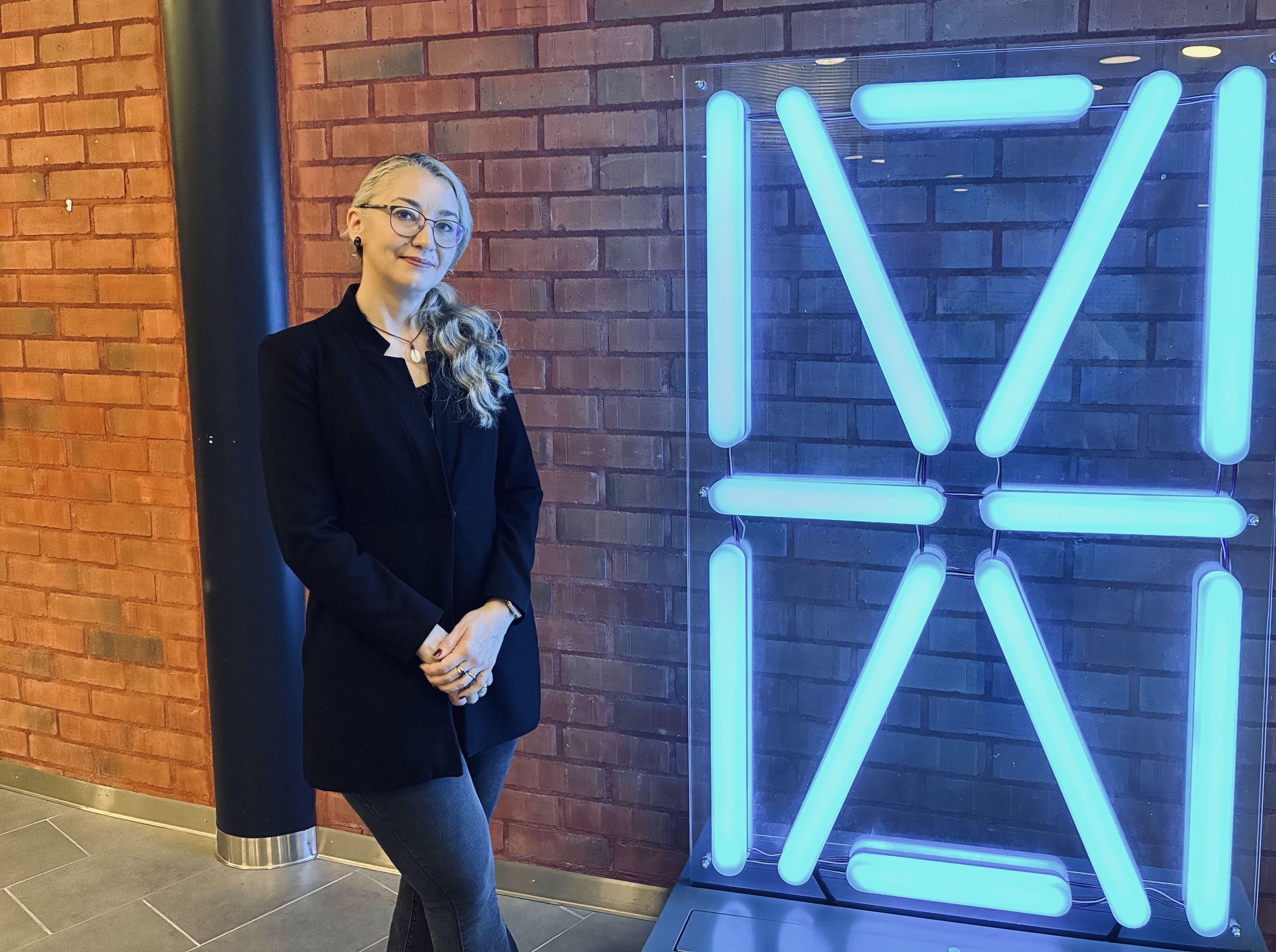
Senior Lecturer Cristina Dachin leads the research area at HAMK focused on timber and hybrid construction, aiming to address a major question: the carbon footprint of building materials. Concrete and steel play a huge role in global emissions, which is why the industry is looking for more sustainable alternatives. Wood is one of them – a renewable, evolving, and still partly untapped resource.
Cristina Dachin is involved in developing solutions that enable the broader use of timber in structures. She points out that wood as a material is not new, but research knowledge and design standards have lagged far behind those of concrete and steel.
“The industry has forgotten how wood can be used in large structures. We don’t have enough researched data, calculation methods, or experts,” she says.
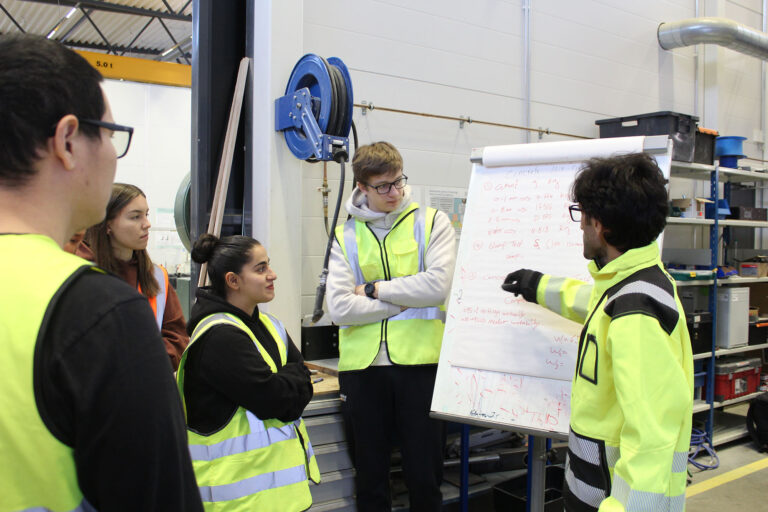
This is why HAMK has established a research area that not only educates new professionals for the field but also conducts concrete, high-quality research on the subject. According to Dachin, the challenge in Finland is particularly a shortage of experts, affecting both designers and laboratory skills.
“We have the equipment, but not enough specialists. That’s why education is hugely important.”
“Back to basics” when time was right
Dachin herself has a strong background in steel structures. She worked in industry for nearly 20 years before coming to HAMK.
“It was actually a return to HAMK. I originally came to Finland from Romania following my boyfriend, who was studying at HAMK at the time. I said I would come only on the condition that I could get a job there too. I worked for a couple of years at what was then the Ohutlevykeskus.”
The work at HAMK could have continued in research, but Cristina was eager to get into construction, to actually building things. She worked in the industry as a civil engineer for about 20 years, until she received an email from Lassi Martikainen.
“Lassi offered me a job at HAMK, and at that point I thought the time was right. Having been in working life, I knew what should be taught. And as they say, the best way to learn is to teach others,” Dachin says.
Having been in working life, I knew what should be taught.
Teaching is still important to Dachin, even though research now takes up most of her working hours. She describes teaching as rewarding, especially those moments when a student’s insight carries over into working life.
“If a student succeeds, that is also a small piece of my own success. Over the years, I’ve received messages from former students telling me they’ve directly benefited from my teaching in their jobs. That feels truly meaningful.”
Recyclability of Structures Could Be Revolutionised
Over time, the desire to learn something new made her switch from steel to timber – and essentially start from scratch.
“I wanted a challenge. I knew the basics of structural design, but wood as a material is completely different. Now I can say we’re already at a very good level here.”
As a current research topic, Dachin and her team are developing a new connector that could revolutionise the recyclability of structures. The aim is to produce timber–concrete composite slabs so that at the end of their lifecycle, the materials can be separated and recycled.
“If this works on a large scale – and it looks like it will – the impact could be enormous. Such innovations, which may seem small, can ultimately change the whole industry.”
Innovations, which may seem small, can ultimately change the whole industry.
The research is carried out in an international network. Partners can be found, for example, in Australia, Norway, and Canada. The shared goal is to develop rules, calculation models, and standards that enable the broader use of timber in construction.
For Cristina, HAMK is a place where truly high-quality research is done. She hopes that industry players will see the potential of applied research.
“It’s often thought that only large universities do top-level research. But when companies see our laboratories and the results of our work, they change their minds.”
For Dachin, the significance of the work is summed up in one idea: if solutions for timber and hybrid construction improve, so too does the chance for future generations to live in a more sustainable world.
“If we succeed in developing a solution that reduces emissions and increases the circular economy, we’ve done something truly important.”