HAMK’s developed environmental sensors help monitor the environmental impacts of the MORE circular economy area.


In HAMK’s KAP project, digital solutions were developed for the Industrial Park MORE circular economy area to enable more systematic monitoring of the area’s environmental impacts and to streamline visits. A key outcome was a control center for the area based on environmental sensors. In addition, a guidance application was piloted to support visitors.
Industrial Park MORE is a nearly 700-hectare business area that hosts around one hundred companies and employs approximately 1,500 people. The area is also developing services related to the circular economy. In the KAP project—Digital Autonomous Services for the Circular Economy—solutions were developed to meet the needs of MORE’s circular economy area. The goal was to enhance safety in the area, improve the use of information, and make operating there smoother.
One of the key outcomes of the project was a regional control center that compiles data collected from environmental sensors. With the help of the sensors developed and built during the project, information on the area’s environmental impacts can now be gathered in a more systematic way than before. The control center helps operators detect and verify what kind of effects the area’s activities have on water and air quality, as well as on soil conditions. The environmental sensors have been handed over to Kiertokapula Oy for permanent use.
When data related to the environment and responsibility is compiled into a single data repository, it becomes easier to monitor and compare the situation in the area. The data collected from the area can be analyzed across different time periods, sensors, and measurement points, and can also be compared with similar data from other areas and open data sources. Through visualizations, individual datasets can be made easier to understand, allowing environmental impacts to be assessed not just on the basis of single observations, but to be tracked using accumulated data.
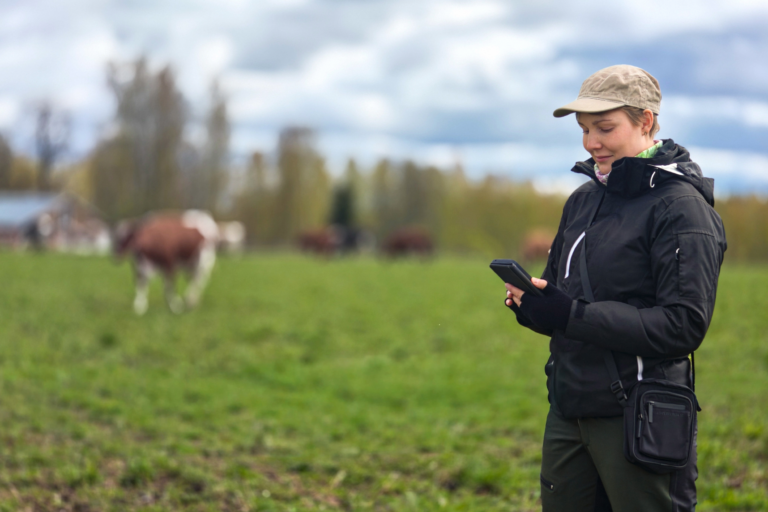
The project also piloted a guidance application designed to make movement within the circular economy area easier and to improve access to information for consumers. In the map view of the mobile application, users could see their own location and service points, which can help with navigation and independent transactions at the Karanoja waste management area.
Additionally, the pilot tested how customers could, even before arriving, review sorting instructions for the waste fractions included in their order, as well as their locations within the small-load disposal area. This would allow loads to be packed in the correct order at home, making the on-site process smoother.
The solutions were developed in collaboration with the area’s operators. This was important because daily life in a circular economy area involves a wide range of needs: the area hosts businesses, provides recycling and waste management services, and serves various types of users. Through cooperation, it was possible to identify which needs digital solutions best address and how they can be integrated into practical operations. Based on feedback collected at the project’s closing event, the development work was considered useful, and the solutions were seen as valuable both in the day-to-day operations of the MORE circular economy area and more broadly in the development of digital services for the circular economy.
The significance of the work is most clearly seen in the increased availability of information about the operations of the circular economy area, and in how this data can be used to develop those operations. Sensor solutions and the area control center make environmental impacts more visible, while the pilot of the guidance application demonstrated how digital guidance could support movement and transactions within the area. Together, these solutions lay the foundation for further development of the circular economy area’s services, making them smoother and easier to monitor in the future.
Background: KAP – Digital Autonomous Services for the Circular Economy
In the KAP – Digital Autonomous Services for the Circular Economy project, we develop services for the Industrial Park MORE circular economy area by utilizing digital technologies.
Our target groups are companies operating in the area, the Kiertokapula waste and recycling station, and the residents of the Kanta-Häme region who use its services.
The project is co-funded by the EU and runs from 1 August 2023 to 31 July 2026.

More information: