Small actions in carbon gardening can enhance carbon sequestration in residential yards
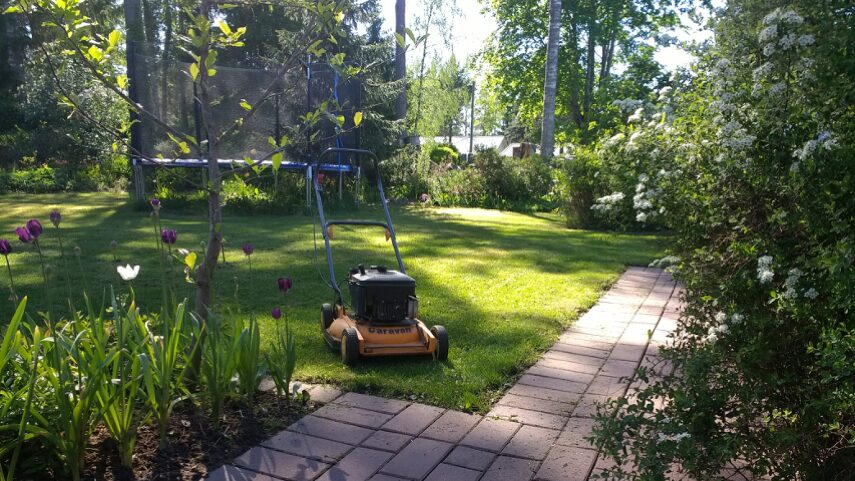
Urban green spaces also play a role in mitigating climate change, and urban greenery supports human well-being and adaptation to climate change. Individual residents in urban areas can influence vegetation’s carbon sequestration and promote climate-smart construction and maintenance solutions in their yards through small practical actions. Together with parks, private yards make up a large share of urban green areas.
A private yard owner can manage their yard in a climate-smart way and promote carbon sequestration by planting multi-layered vegetation. For carbon storage, this diversity should also be considered below ground by favoring both deep- and shallow-rooted plants, as well as plants with both fine and thick roots. Soil health is also improved by the use of organic fertilizers. Covering planting areas, for example with mulch, is beneficial, as bare soil increases soil respiration that releases carbon from the soil into the air. In housing companies, attention should be paid to the amount of sealed surfaces, with efforts made to reduce the expansion of paving and asphalted areas in yards.
There is now a clear way to approach yard work that integrates climate actions into everyday life and offers an opportunity to take part in climate efforts.
Leaves and branches as a resource for carbon sequestration
Carbon stored in vegetation is part of a yard’s carbon stock only when plant material is retained and utilized on site. Branches, leaves, and twigs are not waste but a valuable carbon storage resource in the yard. Climate-smart yard care includes identifying and implementing new ways to use organic materials. Their use depends on the possibilities of the site and yard maintenance practices. In housing companies, the use of organic material can be integrated into yard maintenance by updating service agreements so that plant waste generated on site is processed locally as much as possible.
Tips for climate-smart yard care from the exhibition
In May, the Carbon Gardening exhibition aimed at urban residents is on display in the libraries of Paloheinä, Itäkeskus, and Kannelmäki in Helsinki, as well as in the main library of Hyvinkää. The exhibition presents small actions that can help transform a private yard, a housing company yard, or nearby green areas into better carbon sinks and storage areas. The topic is explored through three themes: increasing vegetation, soil care, and making use of branches and leaves.
“There is now a clear way to bring climate actions into everyday yard work and an opportunity to take part in climate efforts,” says Outi Tahvonen, who leads research for the Carbon-Smart Urban Greenery work package in the Co-Carbon project at Häme University of Applied Sciences.
The exhibition can also be explored online in a virtual format.
A more sustainable future is built through carbon-smart urban greenery
CO-CARBON is a multidisciplinary research project aimed at measuring and modeling the carbon sequestration capacity of urban greenery. New solutions for the planning, implementation, and maintenance of carbon-smart urban green spaces are developed not only through scientific research but also interactively together with residents, companies, cities, and other stakeholders.
Project duration: October 1, 2020 – September 30, 2026
The CO-CARBON project is carried out in collaboration with the University of Helsinki, Aalto University, the Finnish Meteorological Institute, Häme University of Applied Sciences, and the University of Copenhagen. The project is funded by the Strategic Research Council (SRC) operating under the Academy of Finland.
More information: