€3.5 Million Research Project Seeks to Combine Superior Acoustics with Structural Safety
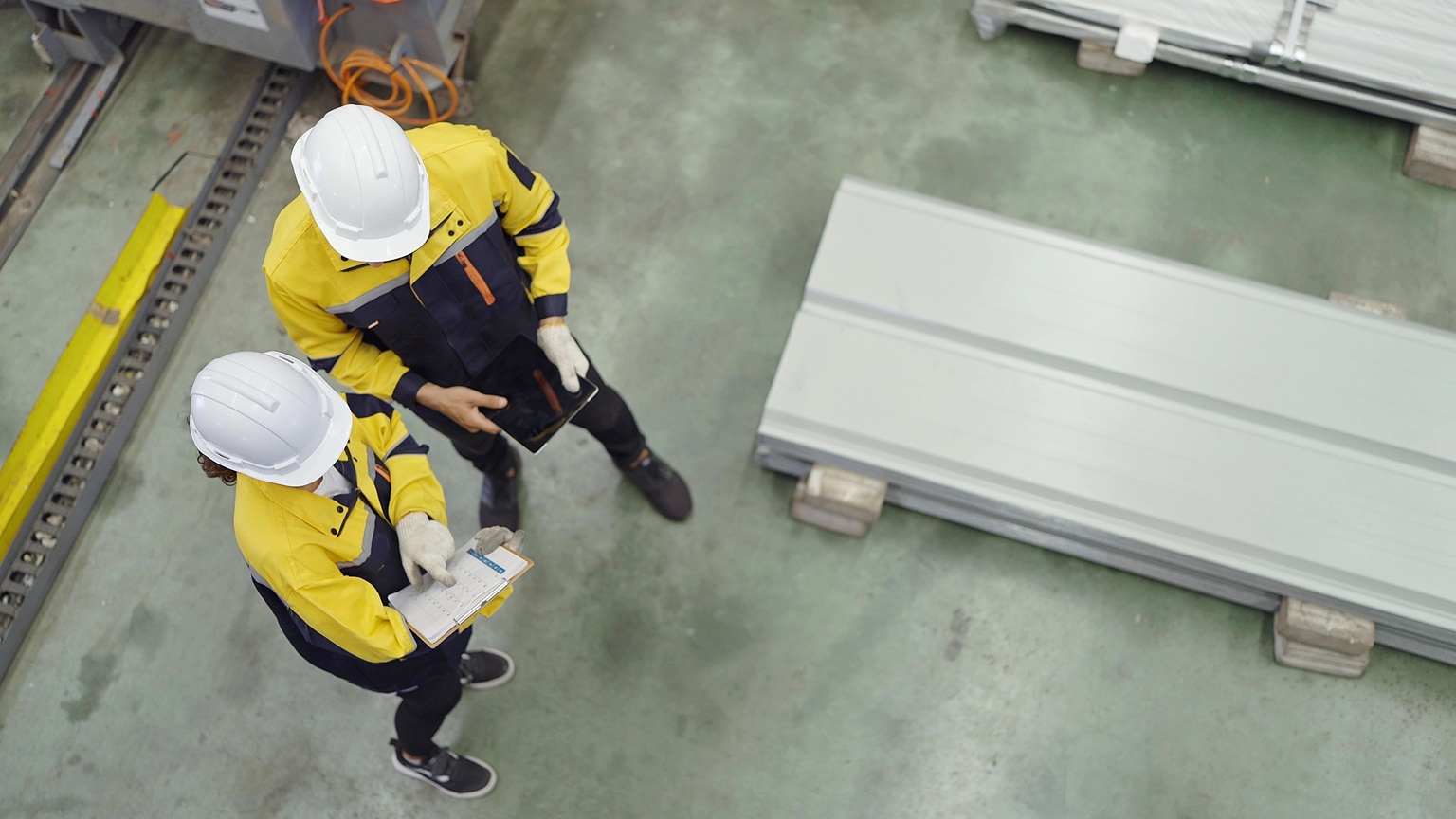
The acoustics of public buildings have been improved by adding small perforations to steel roof panels. However, these perforations also alter the structural behaviour of the panels and may affect their load-bearing capacity. Häme University of Applied Sciences (HAMK) is leading a research project that aims to enhance indoor acoustic quality while maintaining the strength required for safe structural performance.
In the new research project, Häme University of Applied Sciences is working with universities and businesses to develop design guidelines for innovative ceiling panel solutions that combine structural strength with acoustic properties. This is driven by developments in recent years, which have seen an increasing focus on improving the comfort of buildings, for example in hospitals, schools, sports halls and shopping centres. An important aspect of this is acoustic comfort, meaning how sound behaves within indoor spaces. In response to growing demand for acoustic solutions, steel industry companies have developed roof structures that also improve indoor sound quality.
To enhance sound absorption, steel roof panels have been designed with small perforations. Together with insulation materials, these perforations help absorb sound and reduce noise levels inside buildings. However, they also change the structural behaviour of the panels and may affect their ability to withstand loads caused by snow and wind. Furthermore, research on the performance of perforated roof panels in fire situations remains limited.
Safe and economical design guidelines help reduce construction costs and support the design of buildings that can be adapted to changing needs over time.
“Our research advances the development and scaling of innovative roof panel technologies. There is a growing need for buildings that are more sustainable and resource-efficient, helping to reduce environmental impacts,” says Zhongcheng Ma, Principal Research Scientist at HAMK and Project Manager of the project.
Structural and functional roof decking with PERFORations and Microprofiles (PERFORM)
Structural and functional roof decking with Perforations and Microprofiles (PERFORM) project runs from 1.9.2026 – 28.2.2030 and is funded by the European Union Research Fund for Coal and Steel (RFCS).
The research is done with seven partners: Tampere University, Aalto University, University of Coimbra, VUB Brussels University, Ruukki Construction, Joris Ide and TUU Building Design Management.
More info: