New Tools for Farmers to Improve Nutrient Use Efficiency
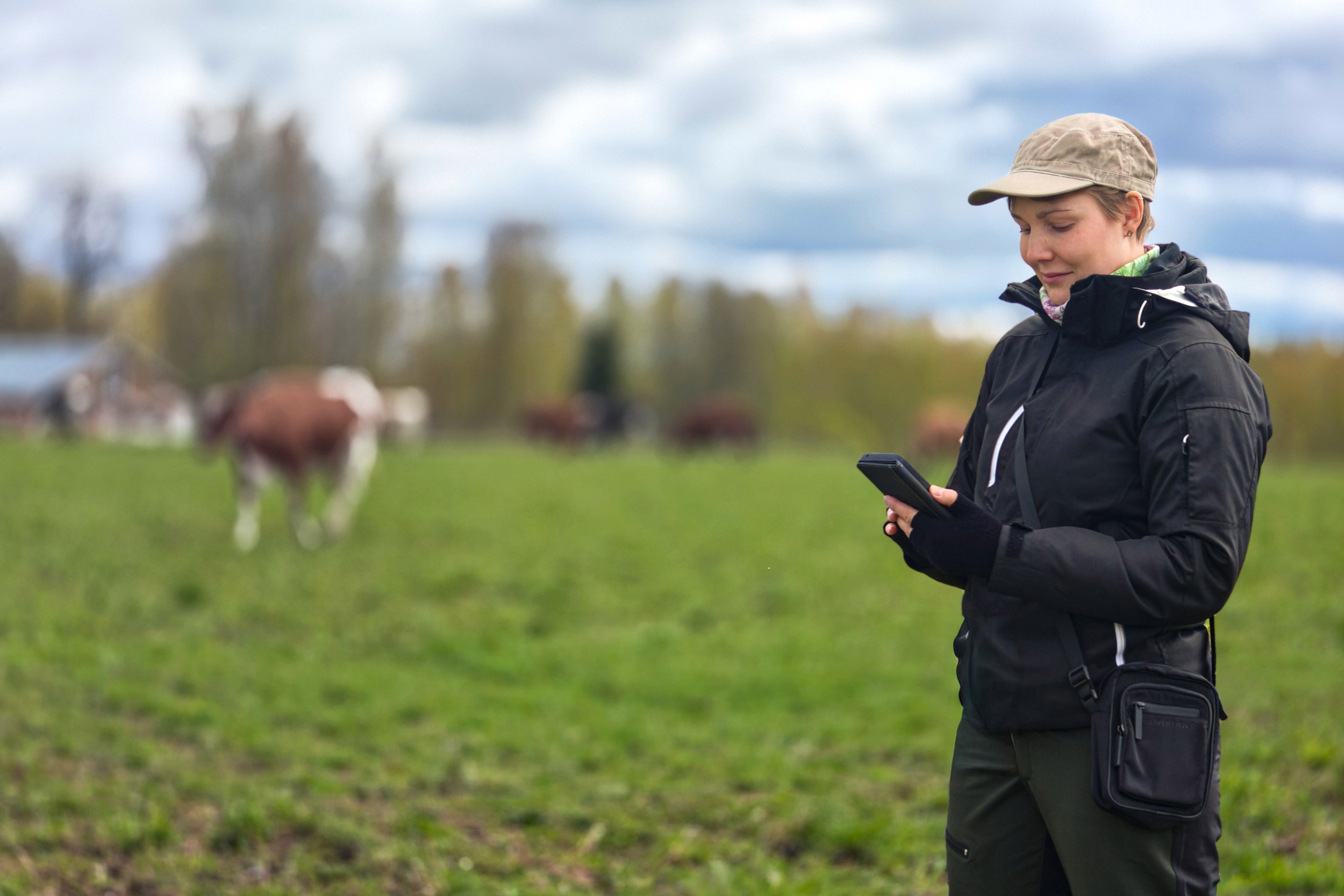
In the first-ever transnational call for EIP projects, two projects from Finland were awarded funding. The F.I.N.E. project, coordinated by HAMK, studies and promotes sustainable nutrient use and circular economy practices in agriculture.
The first synchronized transnational call for EIP projects (EIP = European Innovation Partnership) was organized jointly by Finland, Estonia, and Latvia. No similar project call has been implemented elsewhere in the EU, and the call attracted considerable interest. The innovation projects aim to solve problems related to primary agricultural or forestry production and to develop new innovations or operating models. The work is carried out in close cooperation between researchers, experts, and primary producers.
Two projects from Finland were selected for funding, one of which is F.I.N.E. – Farm Innovation for Nutrient Efficiency, coordinated by HAMK. The project aims to reduce nutrient leaching and improve the efficiency and recycling of nutrient use at farm level. Measures may include, for example, improving soil health and utilizing digital tools. The project is divided into subprojects implemented in Finland and Latvia, and the transnational project consortium includes primary producers as well as research and expert organizations from both countries. The methods developed and the results obtained will be shared for joint use and application. The project also cooperates and exchanges information with an Estonian partner project.
The prices of fertilizers used in agriculture have been rising continuously, and price fluctuations make procurement planning increasingly challenging. For geopolitical reasons, fertilizers have become an increasingly valuable production input, and decisions concerning their use are being considered more carefully than before. In Finland, inorganic fertilizers are widely used, but interest in other alternatives, such as manure and recycled fertilizers, has also increased. The uncertain solubility and nutrient content of organic fertilizers, the machinery available on the farm, and weather variability, among other factors, still make many farmers hesitate to use recycled fertilizers.
To improve nutrient use efficiency at farm level, more tools are needed to support farmers’ decision-making and the monitoring of the impacts of measures.
Tiiti Kämäri, Senior Specialist, RDI
In the Finnish part of the project, nutrient flows and potential leakage points on pilot farms will be examined together with farmers, and suitable solutions will be sought to improve operations and address the identified challenges. A toolkit will be designed for farmers, containing measurement and observation methods that will enable them to monitor and verify the impacts of their measures themselves and use the information in their own farming. Developing digital services and data management to meet farmers’ needs is also a key part of this work. User-oriented and clear services can improve farmers’ data-driven decision-making and facilitate the management of fragmented information. More broadly, the project will also produce information to support national decision-making, promoting nutrient management that is both environmentally sustainable and feasible from the farmer’s perspective.
F.I.N.E. – Farm Innovation for Nutrient Efficiency
Häme University of Applied Sciences HAMK serves as the administrator and lead implementer of the Finnish part of the project. The co-implementers are Jamk University of Applied Sciences and Invenire Market Intelligence Oy. The project’s innovation group also includes five arable farms from different parts of Finland. The project is implemented through transnational cooperation involving primary agricultural producers as well as research and expert organizations from Finland and Latvia. The project also cooperates and exchanges information with an Estonian partner project.
The project is a transnational EIP project and has received funding from the European Agricultural Fund for Rural Development (EAFRD). The funding has been granted by the Economic Development Centre of Southeast Finland. The project results will be freely available for use.
Budget: 387 059,40 € of which the EU contribution is 166 435,54 €
For more information: