Giving a Voice to Foreign-Language Speakers in Social and Health Care Services
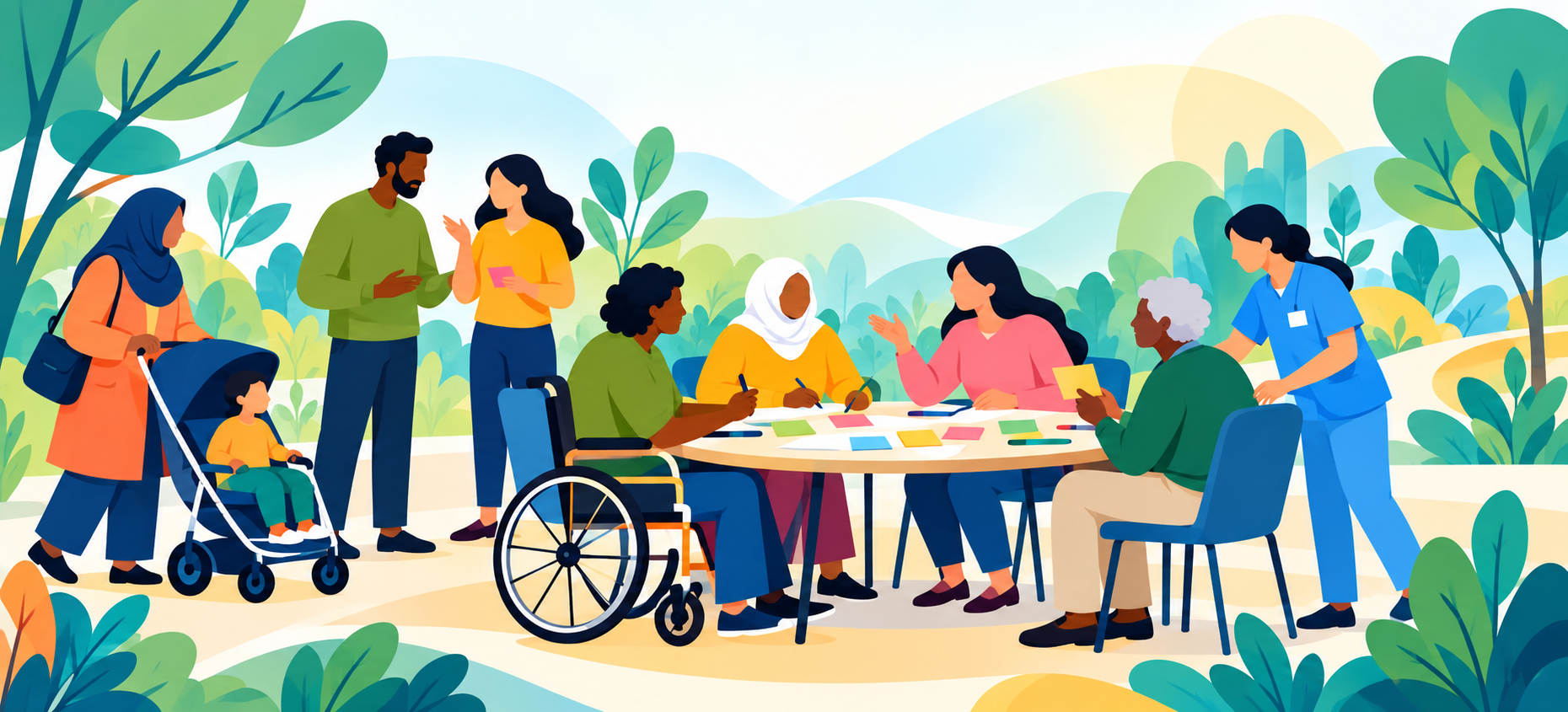
There is a desire to incorporate the experiences and perspectives of foreign-language clients more strongly into the development of social and health care services. The new “Achieving Accessibility Together – Inclusion of Foreign-Language Speakers in Social and Health Services” project is developing operational models for well-being service counties of Etelä-Pohjanmaa and Kanta-Häme that will help make services more accessible and equal for everyone.
Many non-native speakers face challenges in social and health care services that are not always apparent to professionals or decision-makers. It can be difficult to find information, navigating the system can feel complicated, or there may be uncertainty about how to use the services. At the same time, service users have valuable firsthand knowledge about what works and what should be done differently. How could social and health care services be made more accessible to people whose native language is not Finnish? The best answer comes from those who use the services themselves.
To bring this information to light and put it to use in Kanta-Häme and Etelä-Pohjanmaa, a joint development initiative was launched in which service users can actively participate in the planning and development of services together with the region’s universities of applied sciences (Häme University of Applied Sciences and Seinäjoki University of Applied Sciences).
The premise is simple: services are not developed on behalf of foreign-language speakers, but actively in collaboration with them.
Many non-native speakers face challenges in social and health care services that are not always apparent to professionals or decision-makers. It can be difficult to find information, navigating the system can feel complicated, or there may be uncertainty about how to use the services.
A growing and diverse population needs effective social and health services
Although the proportion of foreign-language speakers in the population is lower in both Kanta-Häme and Etelä-Pohjanmaa than the Finnish average, their numbers are growing rapidly. In 2024, there were 11,117 foreign-language speakers in Kanta-Häme and 8,229 in South Ostrobothnia (Statistics Finland 2025). Now is a crucial time for both regions to establish practices that support equal access to public services and seamless access to services. The goal is for everyone to receive the support and information they need, regardless of their linguistic or cultural background.
At the heart of this development effort are development groups composed of clients who use social and health services and their native language is other than Finnish. In both regions, groups are being formed whose members will participate in the development of services throughout the entire process. Participants will have the opportunity to share their own experiences, evaluate current practices, and come up with new solutions.
Tangible Results for Professionals and Clients
The collaborative development process will result in, among other things, a multilingual and plain-language service guide, new methods for collecting client feedback, and an operating model for client councils for non-native speakers in the well-being counties.
In Kanta-Häme, we are responsible for bringing together co-development groups, organizing workshops, and piloting new multilingual service solutions in collaboration with the wellbeing services county. We are currently looking for users of social and health care services from diverse linguistic backgrounds who would like to take part in developing services that are more accessible, easier to understand, and more user-centred.
If you’re interested, would like to join the developer group, or know someone who might be interested, please feel free to contact us. You can find the contact details at the bottom of the page.
This is what it’s all about
- Duration: 1.9.2026-31.1.2029
- Partners: Seinäjoki University of Applied Sciences and Häme University of Applied Sciences
- Funders: European Social Fund plus (ESF+), the national funding authority is Economic Develoment Centre of Inland Finland
- Budget: 413 778€ (whole budget) 181 344€(HAMK)
Contact us: