Understanding Microbes Can Improve Biogas Plant Performance
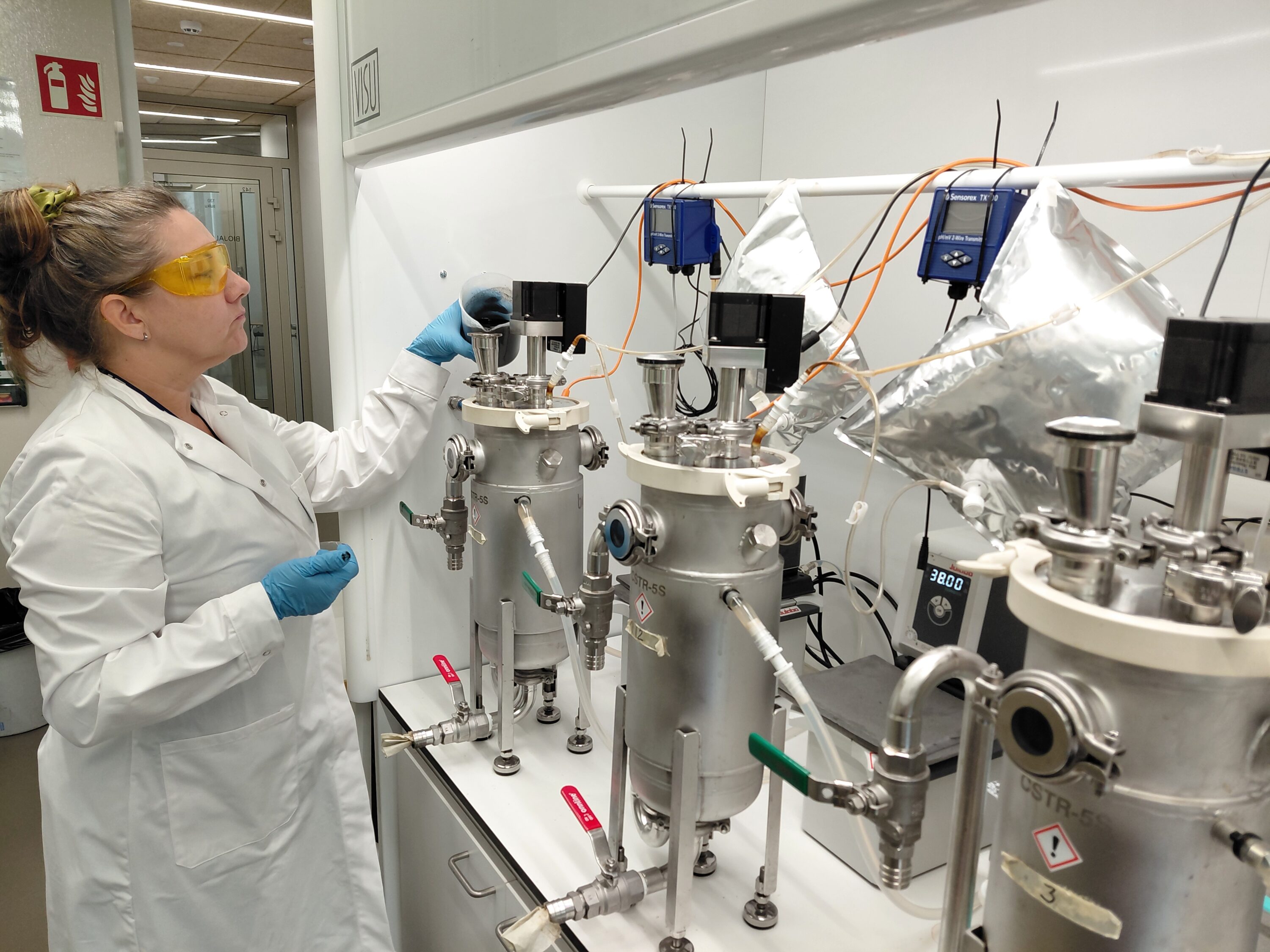



The invisible inner life of a biogas reactor, its diverse microbial community, determines the performance of the entire process. Until now, this microbial world has been studied mainly in laboratories, but it is now being investigated in full-scale biogas reactors as well. The results will help biogas plants optimize their processes and improve operational efficiency.
Biogas plants are part of the broader bioeconomy, supporting the circular economy and nutrient recycling while improving self-sufficiency in energy and fertilizer production. Anaerobic digestion in biogas plants is a key method for treating agricultural and industrial side streams, biowaste, and municipal sludge. It plays an important role in waste management and wastewater treatment, as organic matter is broken down under oxygen-free conditions, producing biogas and a nutrient-rich digestate.
In our new ADmolbio project, we are exploring novel and intelligent approaches to monitoring biogas reactor processes together with biogas operators and water utilities in the Kanta-Häme region. At the same time, the project promotes the circular economy and the use of renewable energy. All existing biogas plants in Kanta-Häme are involved in the research project.
In the biogas process, microorganisms break down organic matter in a series of stages, ultimately producing biogas. The methane-producing microorganisms that operate in the final stage are slow-growing and require special care to ensure stable and efficient reactor operation.
“Monitoring microbial populations helps us manage the biogas process. If a particular microbial group is affected by changes within a reactor containing thousands of cubic metres of material, the entire process can slow down or even stop. Understanding what is happening behind the scenes enables us to make rapid corrective actions when needed,” says Satu Tiainen, Project Manager of the project.
Investigating Microbial Behaviour Under Changing Conditions
The ADmolbio project aims to increase knowledge of microbial populations in anaerobic reactors. This will facilitate the production of higher-value products and create specialized expertise in the Kanta-Häme region.
We seek to strengthen regional expertise in the biogas sector through both research and practical implementation. To achieve this, we expose reactors to controlled stress conditions to investigate how microbial communities respond to environmental changes. Reactor conditions, such as temperature, are altered either rapidly or gradually. Samples are collected from our own research reactors as well as from several biogas plants operating under varying conditions. DNA is extracted from these samples and analysed using sequencing technologies.
“This allows us to identify the microorganisms present in the samples, determine which species dominate under different conditions, and monitor how microbial communities change as reactor conditions vary,” Tiainen explains.
“Based on the sequence library created during the project, we will build a knowledge base that can be utilised by biogas operators. As knowledge accumulates, we also intend to explore the development of a rapid PCR-based method for monitoring reactor status through indicator micro-organisms identified by the method,” adds M. Minna Laine, Project Specialist in the project.
Growing Biogas Sector Supported by Research
There are currently approximately 100 biogas plants operating in Finland. In recent years, the biogas sector has experienced significant growth. Expansion has been particularly strong among farm-scale biogas plants, but investments have also been made in facilities processing biowaste, industrial side streams, and wastewater sludge. Continued growth is expected in the coming years, with dozens of new plants currently being planned. This demonstrates that the Finnish biogas sector is in a strong growth phase, further strengthening its role in promoting renewable energy and the circular economy. (Finnish Biocycle and Biogas Association, 2026)
HAMK has been conducting biogas-related research and development in cooperation with companies for nearly 20 years. The focus of research has evolved from waste treatment towards integrated solutions emphasizing biogas, nutrient recycling, and circular economy principles. Research is carried out within the HAMK Bio Research Unit, where we develop biogas processes, investigate the utilization of various biomasses and side streams, and provide research and analytical services for industry.
Our work is supported by a versatile biogas laboratory where processes can be developed and tested under controlled conditions. Extensive research experience, strong research infrastructure, and close collaboration with industry partners provide excellent opportunities for developing innovative biogas solutions.
The knowledge generated through this project will improve the management of biogas processes and support the operation of biogas plants and anaerobic digestion facilities. The results will also benefit companies involved in designing, constructing, and operating biogas plants, providers of analytical services, as well as research and product development activities.
Overview
Name: Microbial diversity determination in anaerobic as a tool for plant operation – ADmolbio
Funding: European Union, Helsinki-Uusimaa Regional Council and Regional Council of Häme
Duration: 1 March 2026 – 31 December 2028
Budget: 325 485 €
Partners: Häme University of Applied Sciences
More information: