From Hackathon to Prototype: How HAMK Students Turned a Food Waste Challenge into an Innovation
At an innovation hackathon held in Forssa, four students set out to tackle the same challenge in two separate teams. More than a year later, they presented their joint prototype at the final gala of HAMK Design Factory’s study programme. Between these two milestones came a startup pitch, a bootcamp at Aalto University, three different prototype directions, and moments when the future of the project was far from certain.
The students’ project, SustainaMart, began with a question they were unwilling to leave unanswered: How could technology help reduce food waste?
Their journey through the innovation activities of Häme University of Applied Sciences (HAMK) and the Regional University Network – European University (RUN-EU) demonstrates how a short student event can lead to long-term development work. It also reveals just how much effort lies between an initial idea and the presentation of a finished prototype.
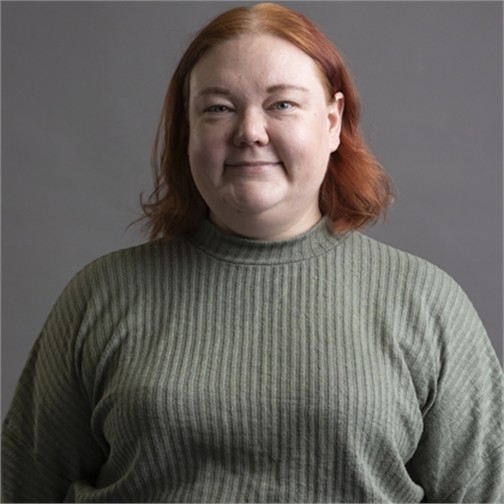
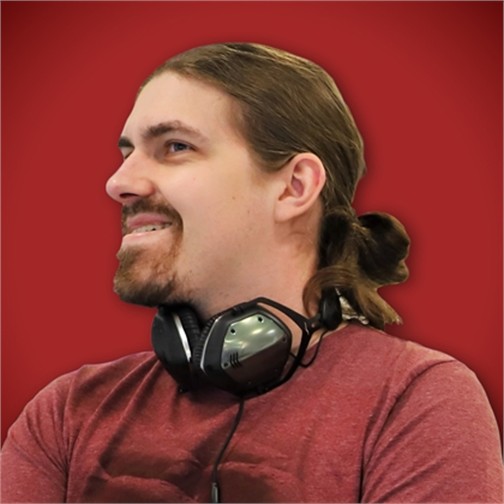
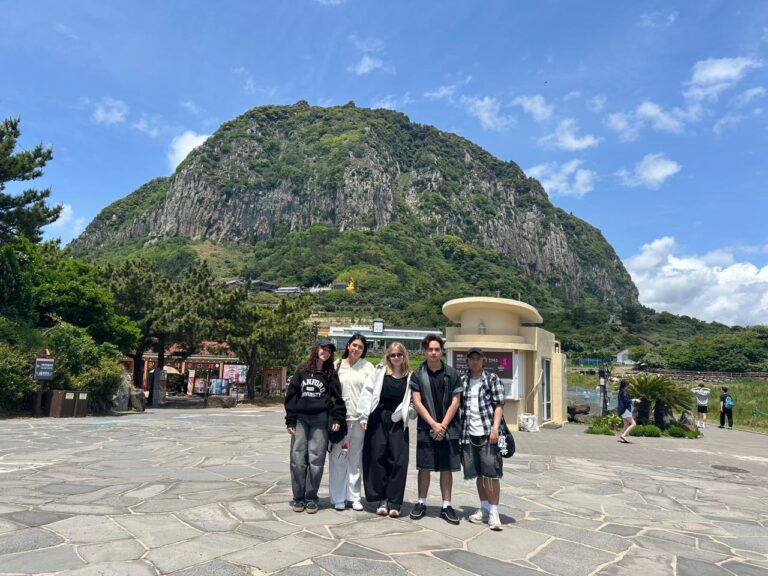
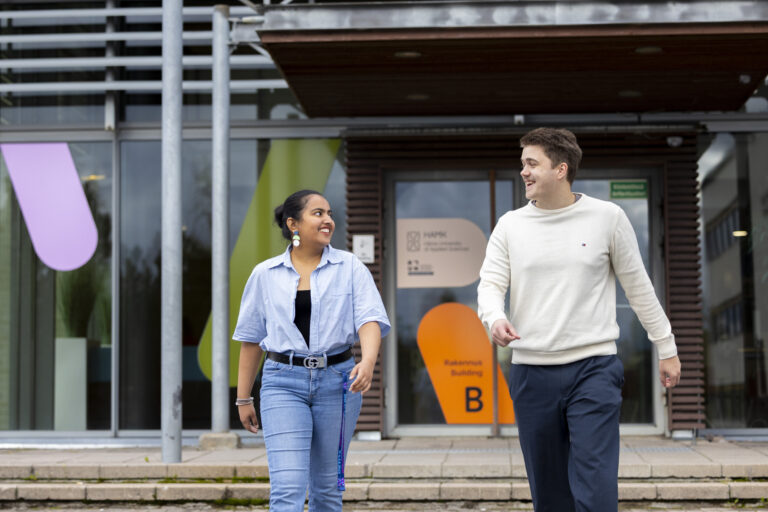
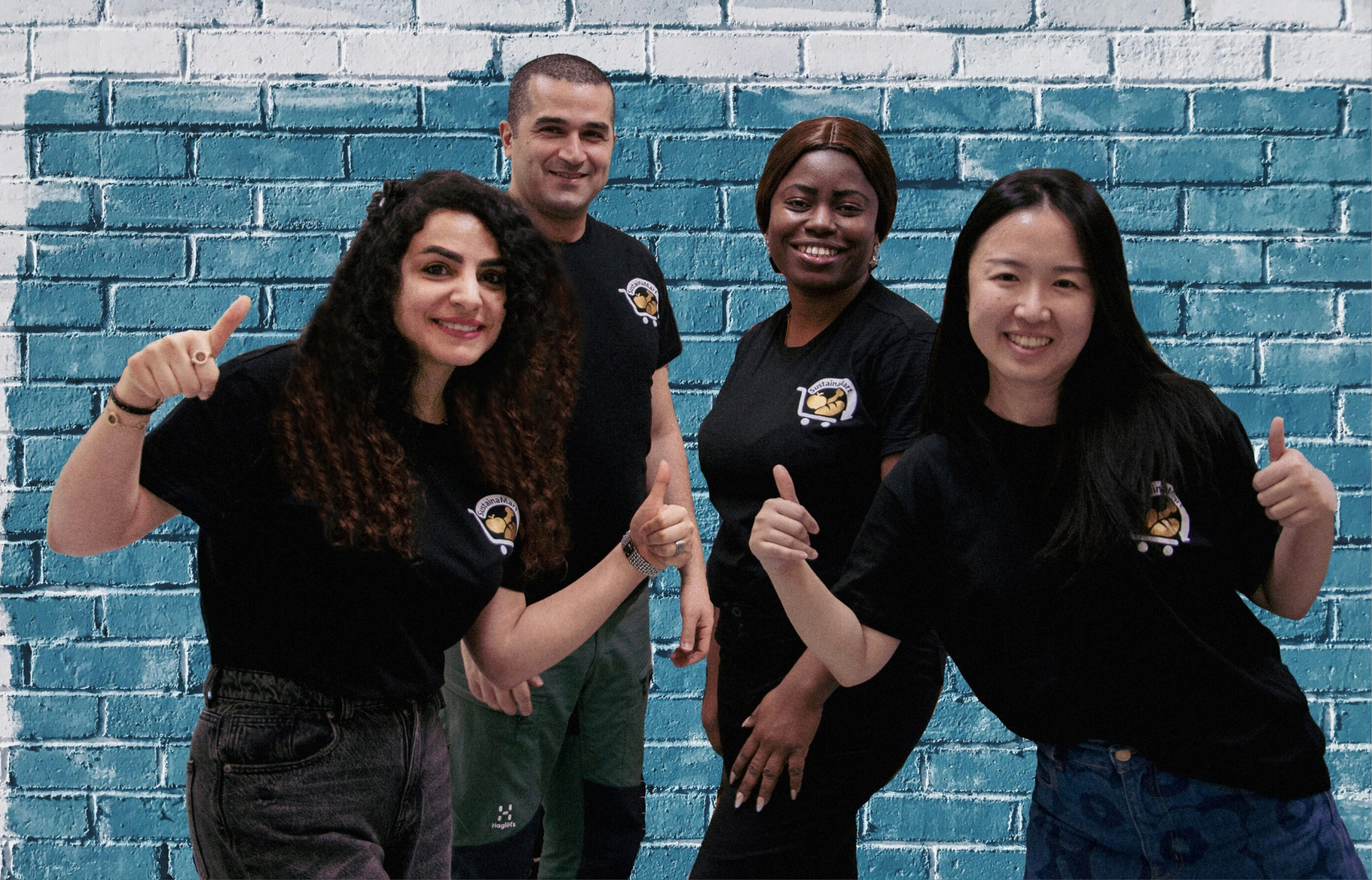
Payam Farzaneh, Janet Ojo, Khadijeh Doozandehjahromi and Wenqi Shen study Information and Communication Technology and Circular Economy at HAMK. Originally from Iran, Nigeria and China, the students brought different experiences and perspectives to the challenge.
A Shared Concern, Two Separate Teams
It all began with the RUN-EU INNOTHON Food Waste Challenge in February 2025. Wenqi and Janet worked in one team, while Payam and Khadijeh worked in another. At this stage, the four students did not yet know each other well, and SustainaMart did not exist.
What connected them was their concern about food waste. The challenge highlighted its environmental, economic and societal impacts and encouraged students to consider what they themselves could do to address the problem. For students of technology and circular economy, the topic connected their studies to a real-world challenge they wanted to help solve.
“At this rate, we have no future,” the students reflected.
This thought became the motivation behind their work. Food waste is an enormous issue, and the students need to identify a specific area where they could make a difference. Recognising the problem was the first step. Developing a solution meant exploring where their skills and ideas could create genuine value.
The INNOTHON format provides space for precisely this kind of early exploration and experimentation. As part of RUN-EU’s innovation activities, the hackathon brings students together to develop solutions to real societal and business challenges. Participants do not need a ready-made business plan or previous innovation experience. Instead, they begin with a challenge and work collaboratively to build a potential solution.
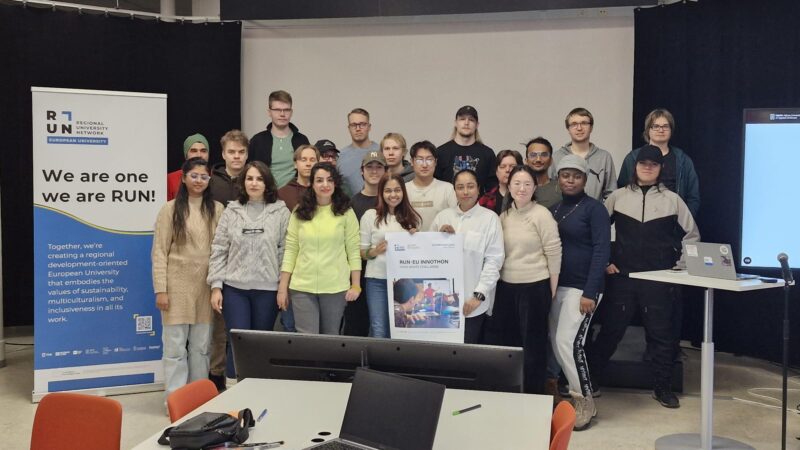
Both teams developed their own ideas during the event. The intensive experience provided a starting point, but there was still a long way to go from their initial concepts to a tangible solution. The next opportunity emerged through someone who recognised the potential to take their work further.
Taking the Idea to FRUSH
The FRUSH event, held in Forssa, brings together businesses, researchers and innovators working in sustainability and circular economy. Its startup competition gives emerging ideas an opportunity to reach a business audience.
For the students, this meant entering an entirely new environment. At INNOTHON, they had developed their ideas alongside other students working on the same challenge. At FRUSH, they needed to communicate their ideas to people looking at them from outside the team.
Pitching also serves as a practical way to test an early-stage concept in front of an audience. For these students, presenting at FRUSH in spring 2025 was part of the transition from exploring food waste as a broad issue to systematically developing their own solution.
Following the pitches, Markku Mikkonen, a lecturer at HAMK Design Factory, interviewed the student teams and selected them for the Interdisciplinary Solution Foundry (ISF) programme.
The students who had started in two separate INNOTHON teams now joined forces. Wenqi, Janet, Payam and Khadijeh began working together on the same challenge as one team.
This brought together two sets of early-stage ideas. It also presented the students with a new task: finding a shared direction they could develop over the coming months.
Nine Months of Development Work
HAMK Design Factory’s ISF programme provided the team with a longer timeframe and a structured environment for developing their project. The nine-month programme is worth 15 ECTS credits and guides student teams from understanding a challenge through iterative development to a working prototype. Development work is supported by a budget of €3,000–5,000.
For SustainaMart, the programme created opportunities to explore several alternatives. The students could build on their previous work while reassessing the direction their project should take.
Their studies in Information and Communication Technology and Circular Economy offered different but complementary perspectives. Technology opened possibilities for developing a solution, while the circular economic perspective kept the focus on resources and waste. Combining these perspectives requires continuous reflection on how a technological solution could genuinely contribute to the problem the team had chosen to address.
The programme’s duration also turned teamwork into a long-term commitment. The four students had to maintain a shared project alongside their other studies, make decisions together and keep moving forward even when the right direction was unclear.
The development process tested not only their ideas but also their ability to work together.
A Bootcamp That Helped the Team Rethink Its Direction
A bootcamp organised at Aalto University Design Factory became a turning point for the project. Working in a different environment, alongside other innovators and with new methods, gave the team an opportunity to examine their developing solution from a fresh perspective.
By this stage, the students had already taken their idea from a hackathon into a long-term development programme. The bootcamp challenged them to evaluate what was working, what was not, and which assumptions needed closer examination.
It helped them gain a deeper understanding of their project, even though the path towards the final concept was still far from straightforward.
“Like snakes slithering in every direction,” the students described their exploratory phase.
The SustainaMart team’s research led to three different prototype directions, each approaching the food waste challenge from a different perspective.
From Three Prototype Directions to One Concept
Developing several prototype directions made the project more demanding than simply following one original idea from beginning to end.
Gradually, the work began to come together as SustainaMart. The concept combines technology, circular economic thinking and a user-centred approach, with the aim of reducing food waste.
Its development reflects the team’s efforts to identify where a technological solution could make a tangible contribution to a much larger problem.
The prototype gave the team a concrete outcome to present at the end of the programme. It transformed months of development work into something visible and tangible that the students could share with others while explaining the original food waste challenge they had set out to address.
The significance of the project therefore extended well beyond the initial pitch. The students had explored competing alternatives, revised their thinking and built a solution they could present at the programme’s closing event.
As their solution evolved, so did their understanding of the challenge itself.
Overcoming Difficult Moments
There were also times during the project when the team questioned whether they should continue. The pressure of their studies and the uncertainty of an open-ended development project sometimes made progress difficult.
In addition, the students were working across cultural differences in an international learning environment, where reaching a shared understanding could not always be taken for granted.
The students describe their teammates as the most important reason they kept going.
Their experiences from Iran, Nigeria and China gave them different starting points for examining the challenge. These differences influenced how they thought about food systems, uncertainty and potential solutions.
Making use of these diverse perspectives requires discussion and trust. The team had to work through disagreements while maintaining their shared commitment to the project.
According to the students, learning to do this was one of the experiences that ultimately made SustainaMart stronger.
“Opportunities like the RUN-EU INNOTHON take students outside their comfort zones, encourage them to work with international teammates, and help them grow both as students and as individuals,” the team reflects.
SustainaMart at the Final Gala
The team presented their work at HAMK Design Factory’s ISF programme final gala in March 2026.
The event marked the culmination of the nine-month development programme and brought together the work that had begun with a food waste challenge in February 2025.
The final gala gave the students an opportunity to demonstrate where their project had arrived after months of research, experimentation and reassessment.
Where SustainaMart goes from here will depend on the team’s next decisions and the further development of their solution.
How Can an Idea Continue to Grow After an Event?
SustainaMart’s journey illustrates how different opportunities can connect around a single student project.
RUN-EU’s INNOTHON provided an accessible starting point. The FRUSH event gave the students an opportunity to pitch their idea beyond their immediate learning environment. HAMK Design Factory’s programme then provided the time, guidance and resources needed to continue developing the solution.
This RUN-EU story offers an example of how a student idea can continue to evolve long after an alliance event has ended.
INNOTHON is part of RUN-EU’s Future Innovators Labs (FILs), which connect innovation centres across Europe and support hands-on learning in science, technology, engineering and mathematics (STEM), as well as social innovation and entrepreneurship.
RUN-EU brings together ten higher education institutions across nine countries.
“When an opportunity like this comes along, you have to seize it,” says Janet Ojo.
For Janet, Payam, Khadijeh and Wenqi, seizing that opportunity meant returning to the same challenge time and again, through new versions, changing ideas and uncertain moments.
More Information