Construction students innovate new opportunities for vacant spaces
First-year construction students had the opportunity to tackle a topical urban development challenge this autumn, as HAMK’s ‘Diili’ Deal project focused on developing new uses for vacant properties in collaboration with the City of Hämeenlinna’s Facility Services. The assignment focused on underused properties owned by the city and on finding new ways for them to serve local residents.
The innovation project, which began in late August, brought together students from HAMK’s Finnish- and English-taught construction programmes to develop solutions for the future use of vacant properties. The project addressed a real-world challenge, as municipalities are continuously looking for new uses for buildings that are no longer needed for their original purpose. The assignment was provided by the City of Hämeenlinna’s Facility Services.
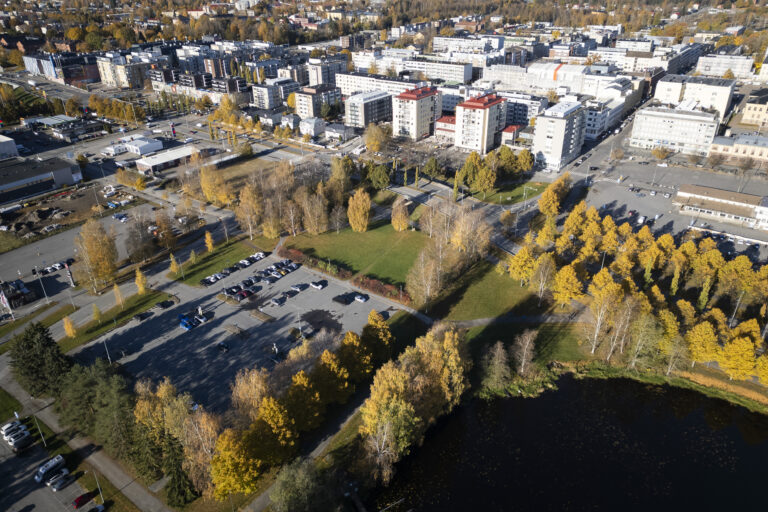
The students had two sites in Hämeenlinna city centre to focus on, each with a different starting point: Keskuskoulu (Central School) and the site of the former Linna shopping centre.
For Keskuskoulu, the task was to explore what kinds of new activities and functions could be introduced into the existing building and how the premises could serve different users in the future.
Linna shopping centre the focus was on temporary use. The existing buildings are set to be demolished, after which the block will eventually be redeveloped with new construction. The students’ task was to explore how the site could be used in the period between demolition and new construction, and what kinds of activities could bring life to the area while serving local residents.
The two sites offered students different perspectives on the built environment: one focused on finding new uses for an existing building, while the other explored the temporary use of an urban space undergoing transformation.
Ideas evolved as the project progressed
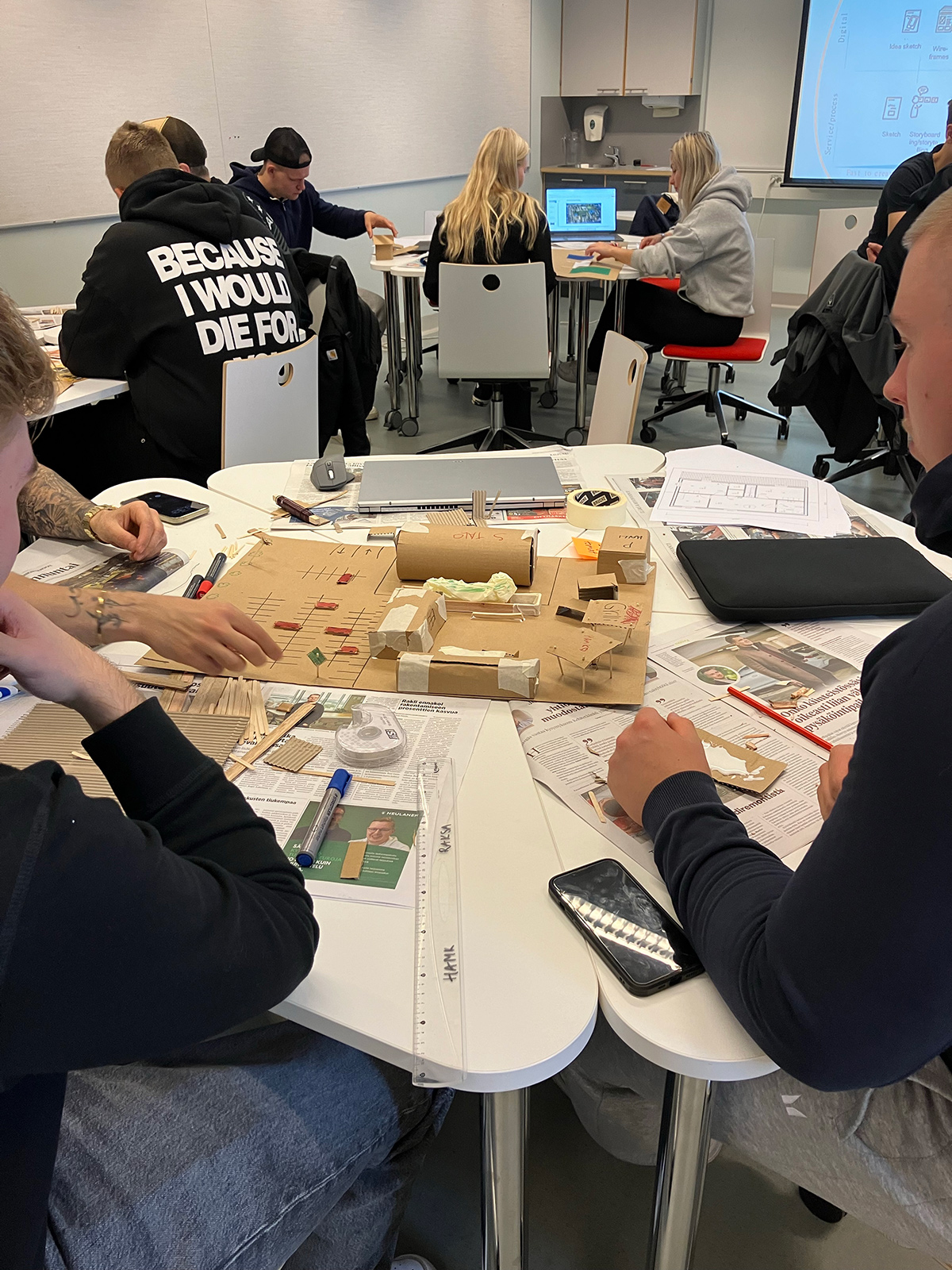
Throughout the project, the teams conducted background research through methods such as interviews and a survey aimed at local residents. The findings were used to develop the concepts further, helping to ensure that the proposed solutions responded as closely as possible to the actual needs and wishes of local residents.
The final presentations highlighted how the students had developed and refined their ideas over the course of the project. As part of the process, the teams also built physical prototypes of their concepts.
Based on feedback from prototype testing, the concepts were further refined, taking into account adaptability, the technical requirements of the buildings and the feasibility of the proposed solutions. Many of the concepts showed potential for further development towards piloting and practical implementation.
Prototyping helps make an idea tangible, test it in practice, and identify its strengths and areas for improvement already during the design process.
A new life for Keskuskoulu earns the winning prize
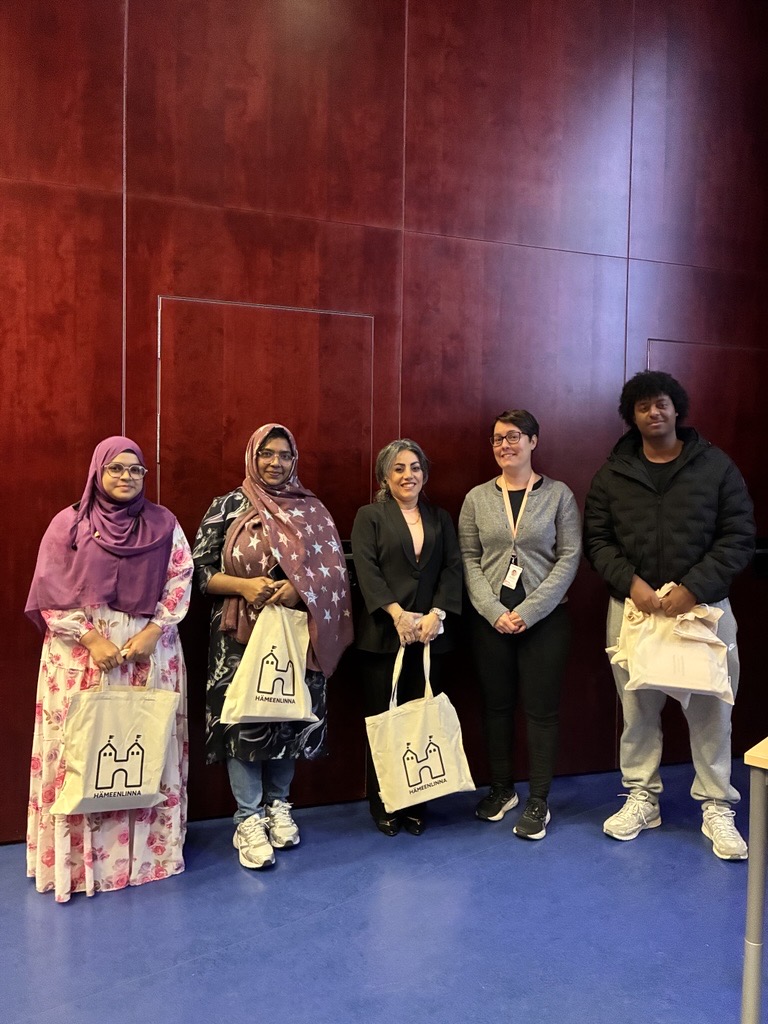
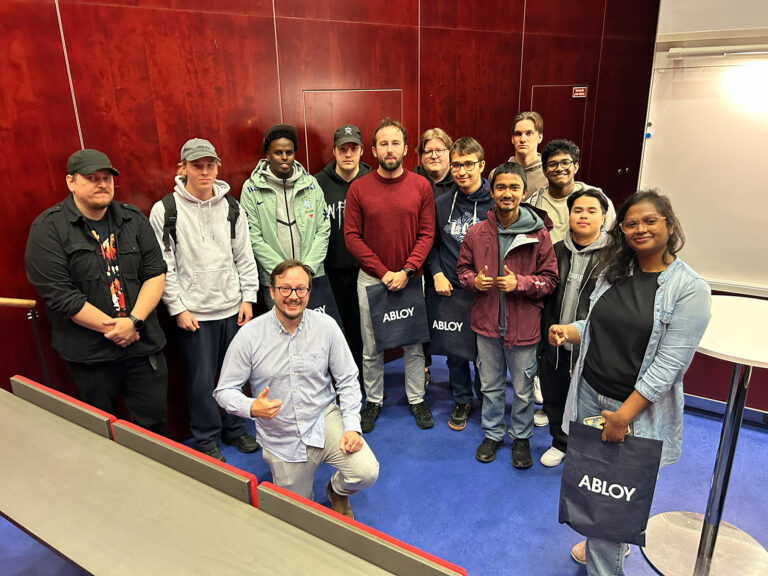
Facility Services awarded the winning team.
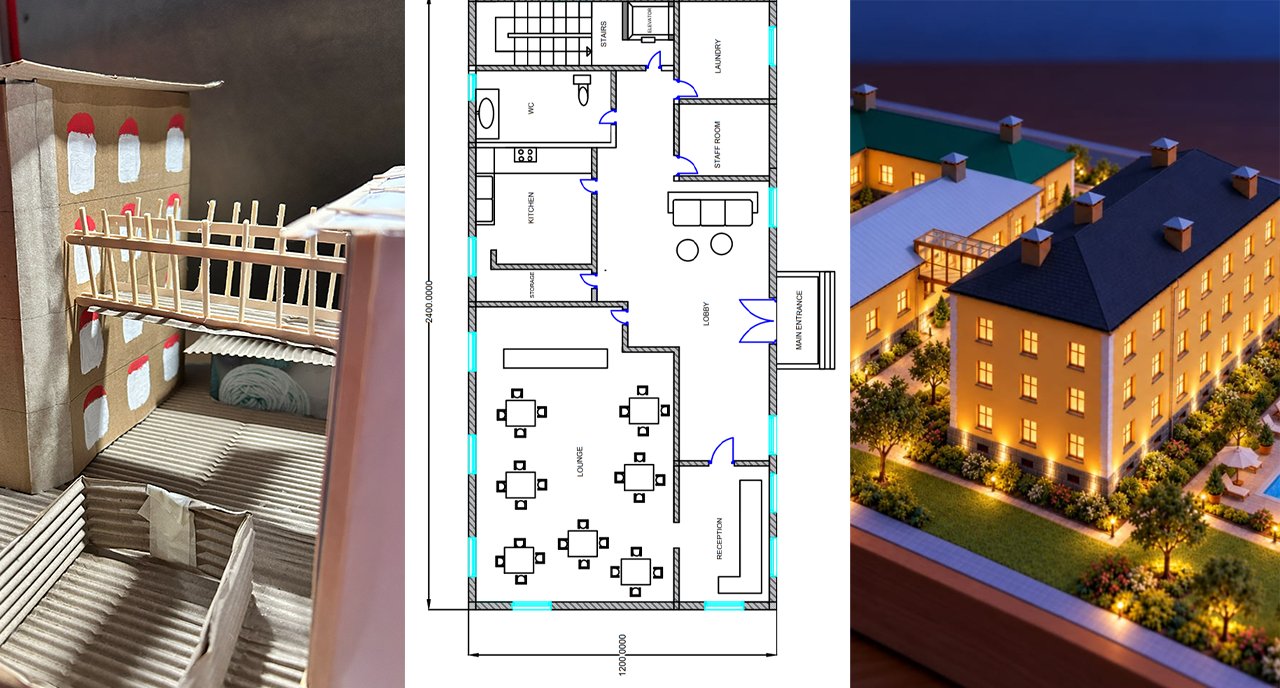
The Concrete Crew team was awarded for its proposal for the future of the old Keskuskoulu building in Hämeenlinna city centre. The team looked at the potential of the historically valuable building from a new perspective and proposed transforming it into a multifunctional complex combining a hotel, restaurants and commercial spaces.
The oldest parts of Keskuskoulu date back to 1881, and the building has been mostly vacant since 2017. A new owner and a new purpose are currently being sought for the property. In the students’ proposal, the historical value of the building would be preserved while giving it a new role as part of a vibrant city centre.
For the partly protected site, the team applied the principles of adaptive reuse, where an existing building is renovated and adapted for a new purpose rather than demolished. The proposal combines hotel accommodation with restaurants, cafés and commercial spaces, creating activity in the building throughout the day and serving both visitors and local residents.
Learning for the builders of the future
In the Deal project, students practised co-creation, customer-oriented design and teamwork. The aim was to develop user-oriented, concrete, creative and sustainable solutions while also considering feasibility and financial viability.
The project resulted in a wide range of proposals aimed at making the urban environment more attractive, encouraging physical activity and well-being, and strengthening community and vitality. Many of the solutions also considered the role of nature, culture and local history in the development of the urban environment.
Read more about the degree programmes
HAMK’s construction degree programmes provide students with a strong foundation in construction engineering and the development of a sustainable built environment. The studies cover areas such as structural and building design, construction technologies, and sustainable construction from a building life cycle perspective.